Dulwich Society Twitter
Published: 6th April 2023

Sharon O'Connor
Sharon has lived in Dulwich and been a member of the Dulwich Society local history group since 2004. Now retired, she was assistant archivist at Dulwich College which holds a treasure trove of information on the area of Dulwich as well as the school and its alumni.
Sharon O’Connor, from the Dulwich Society local history group shares how to set up and run a local history Twitter account and how this has helped them.
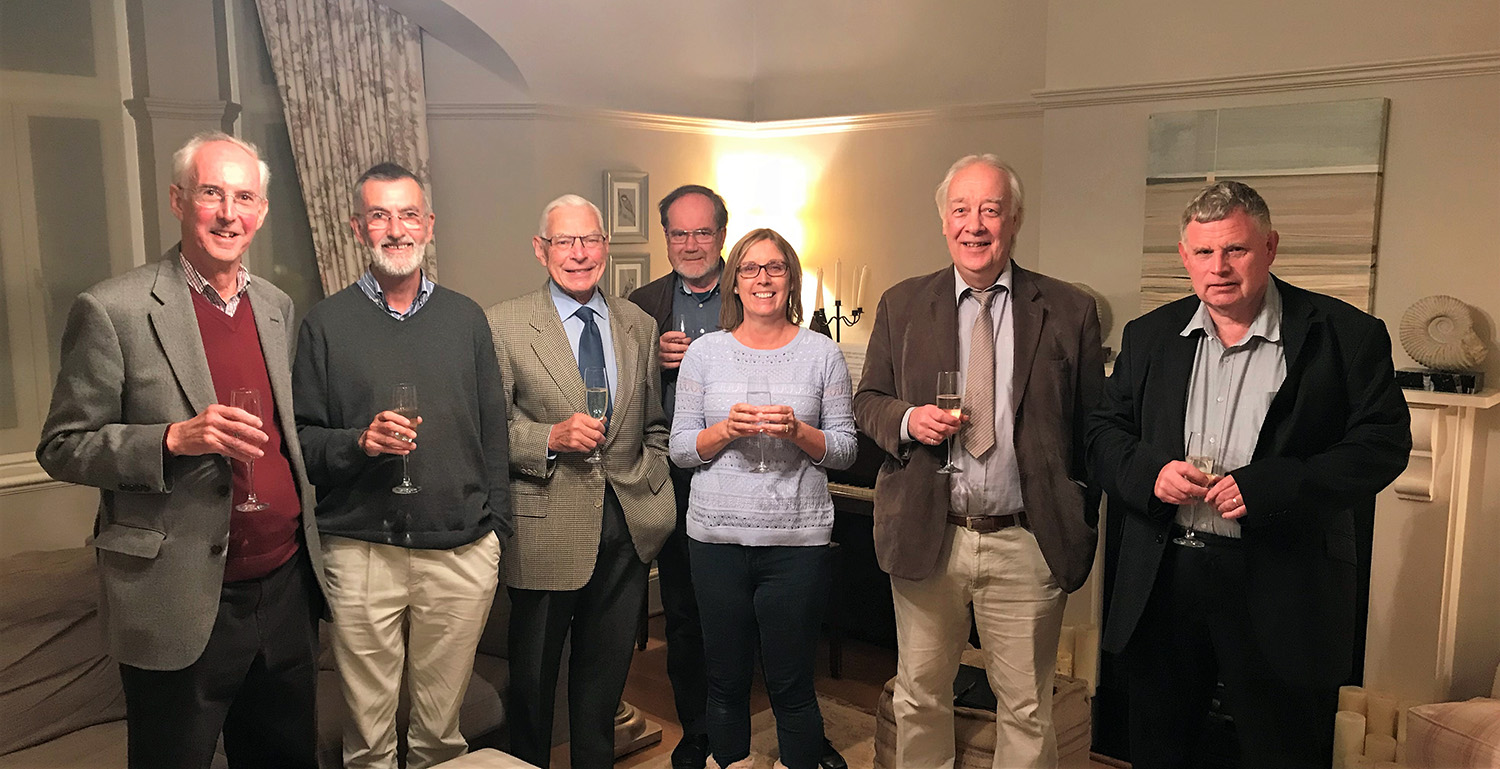
The Dulwich Society team
Social media gets a lot of criticism, much of it justified, but it can also be a tool for good: a way for likeminded people to connect and share common interests. That’s why we started a local history Twitter account, even though we knew little about social media at the time.
The easy part is setting up an account. Go to twitter.com/signup and click the ‘sign up’ button. You'll be guided through the steps and prompted to enter your name and phone number or email address. Then you choose a Twitter ‘handle’ (that’s your name): we are @DulwichHistory. That’s it! The harder part is deciding what to tweet and how to interact with other Twitter users. The BALH workshops were invaluable here and before we did anything else we attended one of those - they really do tell you everything you need to know but here is what we found useful.
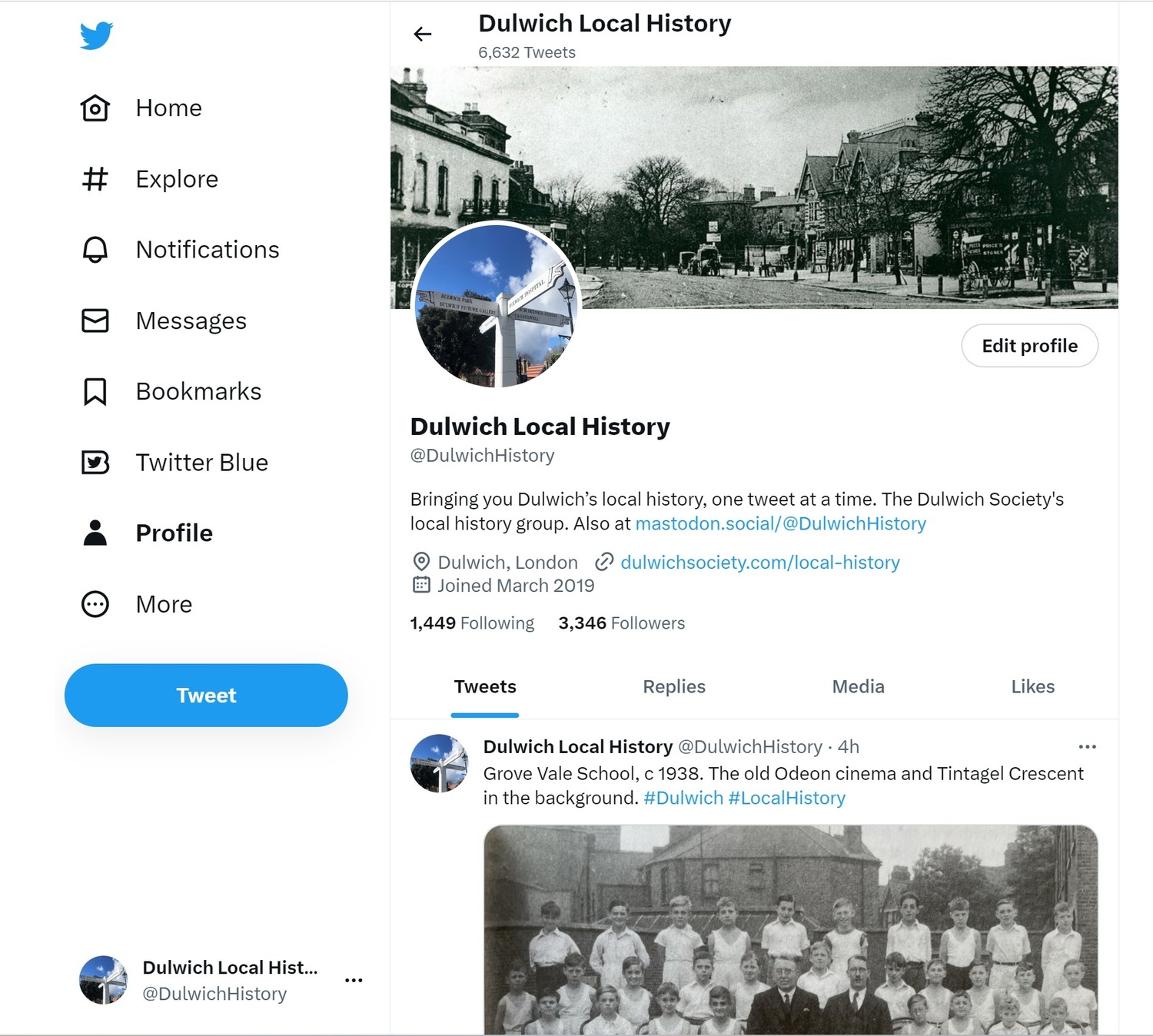
Choose a photo of your area to put in your profile and add a link to your website if you have one. We learnt that it’s a good idea to start following similar accounts straight away (search for the name of organisations you know). Hopefully they will follow you back and then people will start ‘seeing’ you. We already knew about hashtags – the way you put # in front of a word to make it easier for likeminded people to find you – but we found it’s a good idea to only use two or three as too many are off-putting. We use #Dulwich of course but also #LocalHistory.
It's really easy to tweet: there’s a box at the top of your Twitter account that says ‘What’s happening?’. Start typing in there – introduce your group - and press return and you’ve made your first tweet. As you would expect, we post facts about our local history, anything from a Dulwich anniversary, ‘then-and-now’ images of a road, to a clip from an old film that used a Dulwich location. We also publicise our local history events. Images are helpful and on Twitter they don’t have to be high quality (as they do on Instagram for example) so your old postcards etc are perfect. It’s easy to forget that most people in your area won’t have seen the old images that you as a local history buff take for granted, or know what was in your area in the past. During lockdown we found that younger people were especially interested to learn about the place where they were now spending so much time, and that has persisted as many people work from home at least part of the time.
Most of our followers are happy to simply read a tweet, others contribute further information or ask us questions. For example, a photo of a Dulwich boundary stone prompted questions about the location of other markers and led to us learning about more and making a map of surviving ones. Tweets about the history of a local factory, now a business centre, led to them hanging vintage photos in their offices and cafe. When it tweeted a photo of Mathews the Dulwich hermit, the BBC journalist Ros Atkins responded that it was just like him during lockdown!

We now have 3,300 followers and receive up to 100,000 ‘impressions’ per month. This does not mean 100,000 people are interacting with us but it is a measure of our reach. In turn, we follow local accounts such as schools and other amenity groups and we retweet if they have things of interest to our followers. We also regularly direct people to our website where they can find articles, historical maps etc. It’s a good symbiotic relationship and means we reach people beyond our membership, spreading the #LocalHistory word!
Our Twitter feed of local history snippets connects people with widely disparate interests: the man in Texas who is interested in WW2 and is a fan of our WW2 plaques commemorating Dulwich’s civilian deaths; the woman whose family emigrated to Australia but who is still interested in the corner of East Dulwich where she was born; and the tram enthusiast who has helped us date local photos due to his encyclopaedic knowledge of trams. Come and join the conversation: @DulwichHistory
https://www.dulwichsociety.com/local-history
The views and opinions expressed in this blog are those of the author and do not necessarily reflect the official policy or position of the British Association for Local History (BALH). Any content provided by our contributors is of their own opinion and is not intended to malign any individual, group, organisation, or entity.