Local history society directory

Local history society directory

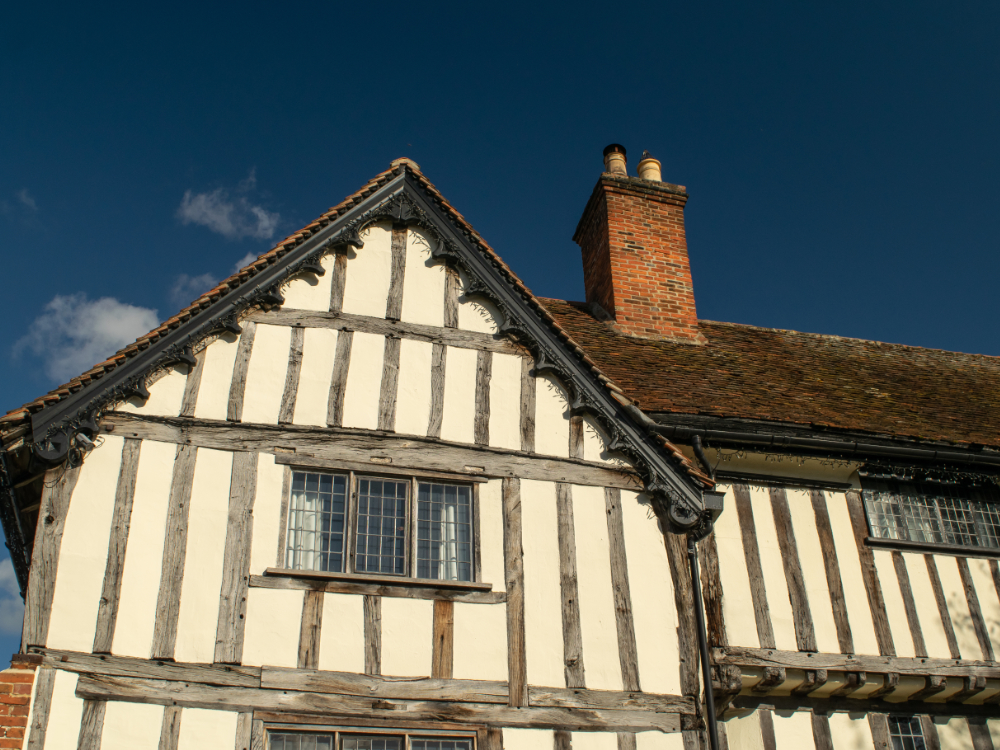
Find a local history organisation near you or to support your research project.
Local history resource directory

Local history resource directory

Explore our Resource Directory — a curated collection of archives, maps, publications, and specialist websites to support and inspire your local history research.

Become a member

Become a member

Join a national network of local historians and societies — with publications, support, increased visibility, and member benefits including discounts and dedicated insurance.
Quarterly publications

Quarterly publications

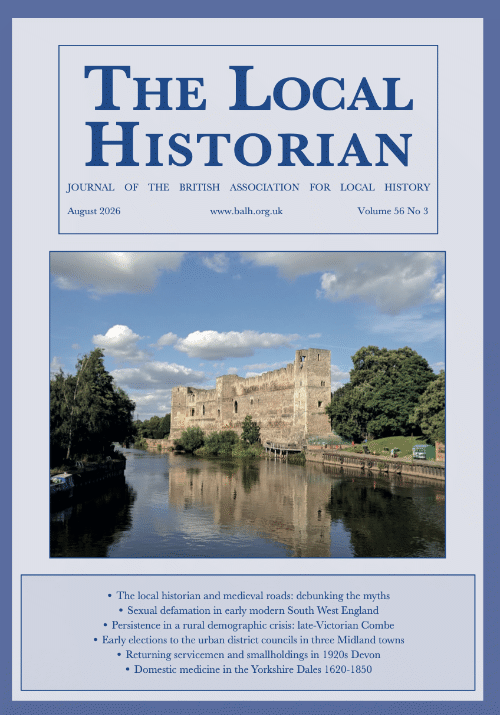
The Local Historian, our academic journal, was first produced in 1952 and is considered one of the foremost local history publications. It is published four times a year in conjunction with Local History News.

Our educational work

Our educational work

BALH aims to encourage interest and enthusiasm for local history amongst learners of all ages and to share and promote best practice, knowledge and skills.

Featured member society

Featured member society

BALH member societies may now add details of their work to our website, which will be highlighted here. Contact us for further details

Why BALH?

Nick Barratt Historian and Author

Supporting your academic research

There is an increasing interest in local history as a key element of academic studies – not just the content that has been published by local historians over the decades as a key research resource, but also in co-produced projects. Grant-awarding bodies such as the Arts and Humanities Research Council (AHRC) have placed an increasing emphasis on collaborations and partnerships when considering the award of research funding, and BALH provides the perfect platform for academic researchers to locate key groups and ongoing activity.

Nick Barratt, Historian and Author

Meet the team

Heather Falvey Reviews Editor for The Local  Historian

Heather Falvey, Reviews Editor for The Local Historian

Heather, Reviews Editor for The Local Historian, has been a BALH member since 1993, starting with a Certificate in Local History at Cambridge. A tutor in local and social history at Oxford and Cambridge, she has been involved in local history publishing for over 20 years as Secretary of the Hertfordshire Record Society. Her research focuses on early modern social unrest, with a PhD from Warwick and multiple publications. She has edited historical texts, including Baroness Elizabeth Dimsdale’s Receipt Book and Walter Morrell’s Manufacture for the New Draperie, and is currently editing the letters of Humphry Repton’s family.

Heather Falvey, Reviews Editor for The Local Historian

From our archives

The Amateur Historian Volume 1 Number 6 June July 1953

Enclosures in the nineteenth century

Franklin, T. Bedford

pp 178-181

Study of the last major phase of the enclosure movement, associated with the increases in food production required by the growth in urban populations. Enclosure in the 19th century was a much speedier process than in previous centuries, and it tended to benefit the larger landowners who were much better placed to negotiate the exchange of plots of land to suit their plans to expand production. Smaller landowners often suffered by being given more remote or less viable plots and by losing grazing rights on common land. They were also less able to meet the costs of enclosure. Many therefore lost their freehold land altogether. Agricultural yields did rise, however, as better breeding methods were adopted and the enclosed fields were cultivated more effectively. The example of Shutlanger in Northamptonshire is used to illustrate the process of change.

The Amateur Historian Volume 1 Number 6 June July 1953

Subscribe to our e-newsletter for regular updates

  • Your details will be used solely to send you news and information communications from BALH and will not be passed on to a third-party.

Thank you for subscribing