Mancunian opposition to the South African crisis (Summer 1899).
Published: 12th October 2026
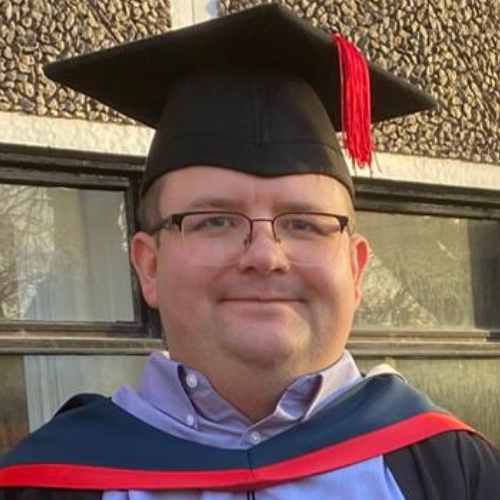
Tom Trafford
tom.trafford@hud.ac.uk
Tom Trafford graduated with a first-class degree in Contemporary Military and International History from the University of Salford in 2024. He graduated as valedictorian in history and politics and was awarded the John Garrard Award to mark this achievement. His performance at undergraduate level led to him being a recipient of a widening-participation scholarship from the University of Salford, which enabled him to become the first student to study an MPhil in Contemporary History at the university. Tom was awarded his MPhil with no corrections in October 2025. In January 2026, Tom commenced his PhD studies at the University of Huddersfield, where he received the Vice-Chancellor’s scholarship.
In summer 1899, a diplomatic crisis developed between Britain and the South African Republic, following appeals by British expats to the British Government that the Boers were unfairly denying them the voting franchise and, fair representation in the Volksraad, the Republic’s elective chamber.

L-R Charles Prestwich Scott, John Morley, 1st Viscount Morley of Blackburn, Leonard Courtney, 1st Baron Courtney of Penwith
The two governments held the Bloemfontein Conference (31 May 1899 – 4 June 1899) to resolve this diplomatic crisis. Sir Alfred Milner, the High Commissioner of South Africa, represented the British Government and demanded a five-year franchise and an increase of seats in the Volksraadmfor the Rand. Paul Kruger, President of the South African Republic, offered concessions but the conference ended without agreement. However, in August 1899, Kruger offered a five-year franchise and to increase the Rand’s seats in the Volksraad to ten. Although Kruger’s offer was more than Milner had demanded at the Bloemfontein Conference, the British Government rejected it due to the conditions attached to the offer.
The increased tensions between Britain and the South African Republic resulted in several anti-war organisations being formed. Manchester was the only regional city that was able to sustain a localised peace committee independent of the national peace organisations based in London. In Manchester, opposition to the conflict, centred around the Manchester Transvaal Committee. Members of the Manchester Liberal Party founded the Transvaal Committee as a vehicle to voice their opposition to the Government’s South African policy. The Transvaal Committee consisted of a five-member executive committee, which consisted of: Chairman Edwin Guthrie, Vice-Chairman C.P. Scott, Treasurer Arthur Howarth, Honorary Secretaries Hugh Fullerton, and Alexander Porter. Despite being the Vice-Chairman, Scott was the main political power behind the Transvaal Committee due to his positions as Editor of the Manchester Guardian (1872-1929) and MP for Leigh (1895-1906).
The Transvaal Committee’s crowning achievement was the organisation of a large peace meeting at St James Hall, Manchester on 15 September 1899. Scott with the help of his friend and subordinate at the Guardian, L.T. Hobhouse organised the meeting on behalf of the Transvaal Committee. After several days of correspondence and a visit to Manchester by F.W. Hirst, Charles and Hobhouse were successful in convincing John Morley, the Liberal MP for Montrose Burghs to be the meetings headline speaker. Morley had initially been reticent to address the meeting as he viewed Charles and Hobhouse as ‘unpractical and too fanatical.’ Scott was determined that the British public viewed the meeting as apolitical, he achieved this by convincing Leonard Courtney, the Liberal Unionist MP for Bodmin to join Morley in addressing the meeting. Courtney was not the only Liberal Unionist politician, Charles convinced to address the meeting, he persuaded John Albert Bright who had held the Birmingham Central constituency between 1889 and 1895, to chair the meeting. However, it is important to note that Bright was moving towards the Liberal Party, who he stood for at the 1900 General Election in the Montgomery Boroughs constituency. Charles with Hobhouse’s help was successful in developing an alliance between politicians who had varying political allegiances, enabling them to come together and express their shared opposition to the British Government’s South African policy.
Bright opened the meeting and outlined that the Transvaal Committee had organised the peace meeting to oppose the prospective war in South Africa. As the meetings headline speaker, Morley addressed the meeting next. Initially, the crowd drowned out Morley, until he used his regional connections to convince the audience to allow him to speak, proclaiming: ‘I have yet to learn that a Lancashire audience is unwilling to listen to a Lancashire lad’. Following Morley’s proclamation, the audience fell silent and allowed him to address them for over an hour. Morley culminated his speech by declaring: ‘I am doing my best to prevent such a monstrous calamity [war in South Africa]’. Following which the crowd erupted in thunderous applause. Morley then proposed a resolution which recognised the need for franchise reform in the South African Republic but added that ‘this meeting believes that this reform can best be secured by pacific means and by that strict respect for the existing independence of the South African Republic to which Ministers of the Queen have so repeatedly pledged themselves’. Courtney seconded Morley’s motion and went on to address the audience on the legality of the South African crisis position, arguing that the Government’s negotiating position broke the London Convention (1884), which had granted the South African Republic independence over its domestic policy, while maintaining Britain’s suzerainty over the Republic’s Foreign Policy. He concluded by stating it was: ‘perfectly clear that the majority of the people of Manchester are on the right side – the side of peace’. Following Courtney’s speech, Bright put the resolution to the vote with most of the audience supporting it. He concluded the meeting by declaring: ‘it was delightful to know the meeting had such a good result, and it had showed conclusively that Manchester is not full of jingos’.
The meeting was the largest anti-war meeting held outside London, attracting 10,000 peace activists from across Britain. However, those at the meeting came away with differing views of its effectiveness. Hirst recorded that Hobhouse asserted Morley’s one hour speech was ‘worth months of ordinary life’. In his memoir, Morley noted he was proud of his performance: ‘the grand potent monosyllable with which I wound up was not to be resisted.’ In comparison, Scott was much more pessimistic on the effectiveness of the meeting: ‘You could hear a pin drop. He [Morley] was awfully pleased. He thought his eloquence had convinced them, but it was not that. They’d all gone.’ Despite Scott’s pessimistic view of the impact of the meeting, it was a remarkable achievement to organise and successfully hold the largest anti-war meeting outside London in the face of a hostile British public.
The views and opinions expressed in this blog are those of the author and do not necessarily reflect the official policy or position of the British Association for Local History (BALH). Any content provided by our contributors is of their own opinion and is not intended to malign any individual, group, organisation, or entity.