Scoring the Hales - Exploring the roots of Local Football in Northumberland
Published: 6th May 2023

Jon Tait
Jon Tait is a member of the Rothbury & Coquetdale History Society and has written a number of local history books with a particular focus on football.
Shrove Tuesday - The ball bounced awkwardly on the grass of the pastures and I chested it up before volleying just wide of the narrow greenery-clad goals. It was a moment that won't live in Alnwick Shrovetide football history but will stick long in my memory, not least because I was playing for St. Michael’s with my teenage son. I’d earlier beaten a man and squared for another player to screw a shot horribly wide so thought the next chance I get, I’m hitting it.
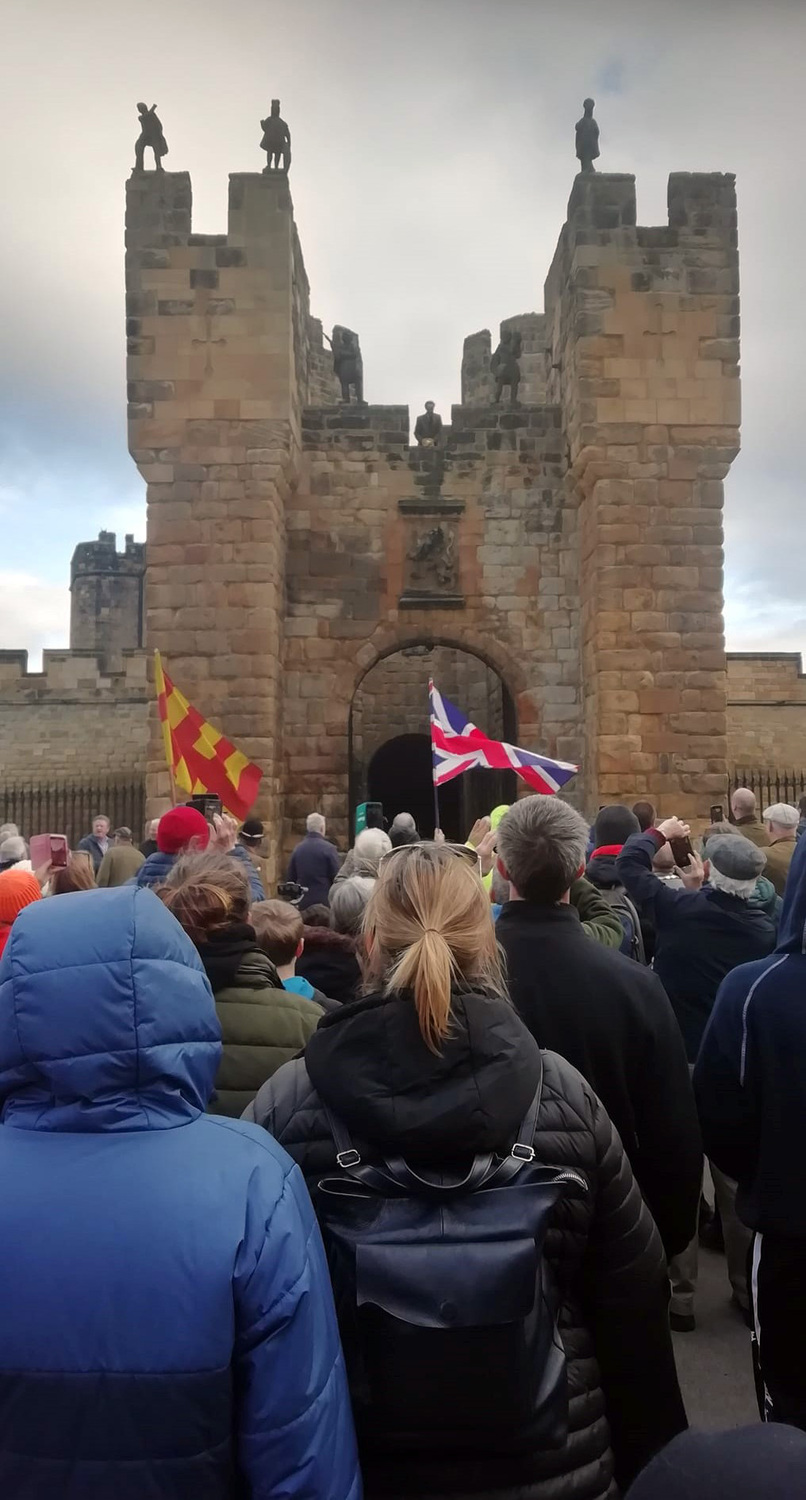
We hadn’t intended turning out in the historic fixture when we arrived at Alnwick castle’s barbican and the Duke of Northumberland tossed the match ball down into the crowd. But walking down in a procession led by the Union Jack and Northumbrian flags to the subtle skirl of the smallpipes, I got swept up in the sense of occasion.
When St Michael’s took the lead with a young lad running through and tapping into the empty goal for the opening hale, I could see my son was eager to get involved so we strode down onto the field to compete in the over 250-year-old annual match.
The bulk of the 80-odd players were tracksuit-clad teenagers with a number of American students, both male and female, and a good few veteran locals. The parishes of St Michael’s and St Paul’s have been playing the game since at least 1762 and the Alnwick game is one of only five surviving ‘mob football’ Shrovetide matches in Britain. Around 500 gathered on a grass bank to spectate.
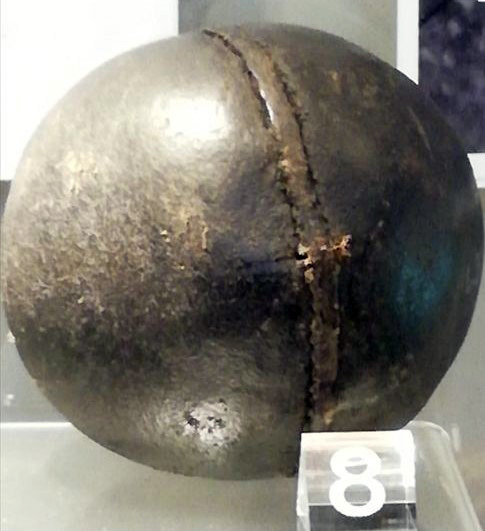
These are the roots of the game in the country and it was a joy to take a small part in a traditional match - the one in nearby Rothbury being banned in 1867 with the small leather ball stuffed with hay that they used being housed in the nearby Bailiffgate museum.
The Shrove game at Rothbury was started when the baal was placed on a rock known as the Football Cairn on the moors above the market town. It was originally played between the married and unmarried men in the village before taking place against the neighbouring village of Thropton.
The Rothbury hale was the church porch and the Thropton hale – two miles away – was the bridge over the Wreigh Burn. In 1862 83 players turned out for Thropton and 75 for Rothbury, who claimed their 32nd succussive victory. But people got sick of the disputes, trampled gardens and smashed windows resulting from the mob game and it was ended just five years later.
I queried an official which side to join as we went onto the field and when he asked where I was born, the Ashington answer put me East of the A1. Players from outside Alnwick go into the St Paul’s side if they’re from West of the road and those from the East into St Michael’s, who won by 2 hales to 1 after around an hour’s play on the unmarked furlong-long pitch.
Play is stopped by a hunting horn, not a whistle, and the match ball is thrown in the river Aln at the end and keen youngsters leap in to get it to the far bank and keep it. As we all filed away back up over the bridge and past the castle into the town the overwhelming feeling was one of community and tradition.
Ironically, just four days later I was back in the Ducal town as Alnwick Town hosted Rothbury in the Northern Alliance’s George Dobbins League Cup for the first competitive meeting between the two early pioneers of Association football in Northumberland since 1885.
Alnwick had been formed in 1879 and the Hillmen in 1881, though they had played a version of the game known as ‘Border Rules’ football earlier against neighbouring Redesdale since at least 1876. That last fixture between the two sides had ended 0-0 and Alnwick went on to compete at a higher level when local Leagues began to be formed.
The gap between them now is just one Division with Alnwick in the Alliance Premier and Rothbury in Division One, so it looked like a giant killing could be on the cards as the visitors created a couple of decent chances in the second half but just couldn’t break the stalemate. It finished 0-0 again 138 years after the last meeting with Alnwick going through 8-7 on penalties.
You could almost feel the ghostly presence of the faded players of the past watching on.
The views and opinions expressed in this blog are those of the author and do not necessarily reflect the official policy or position of the British Association for Local History (BALH). Any content provided by our contributors is of their own opinion and is not intended to malign any individual, group, organisation, or entity.