The Historical Rillington Study Group: an unofficial Local History Society
Published: 2nd May 2022
In 2004, I started a one-place study of the parish of Rillington, North Yorkshire situated at the northern edge of the Yorkshire Wolds on the A64 between Malton and Scarborough.
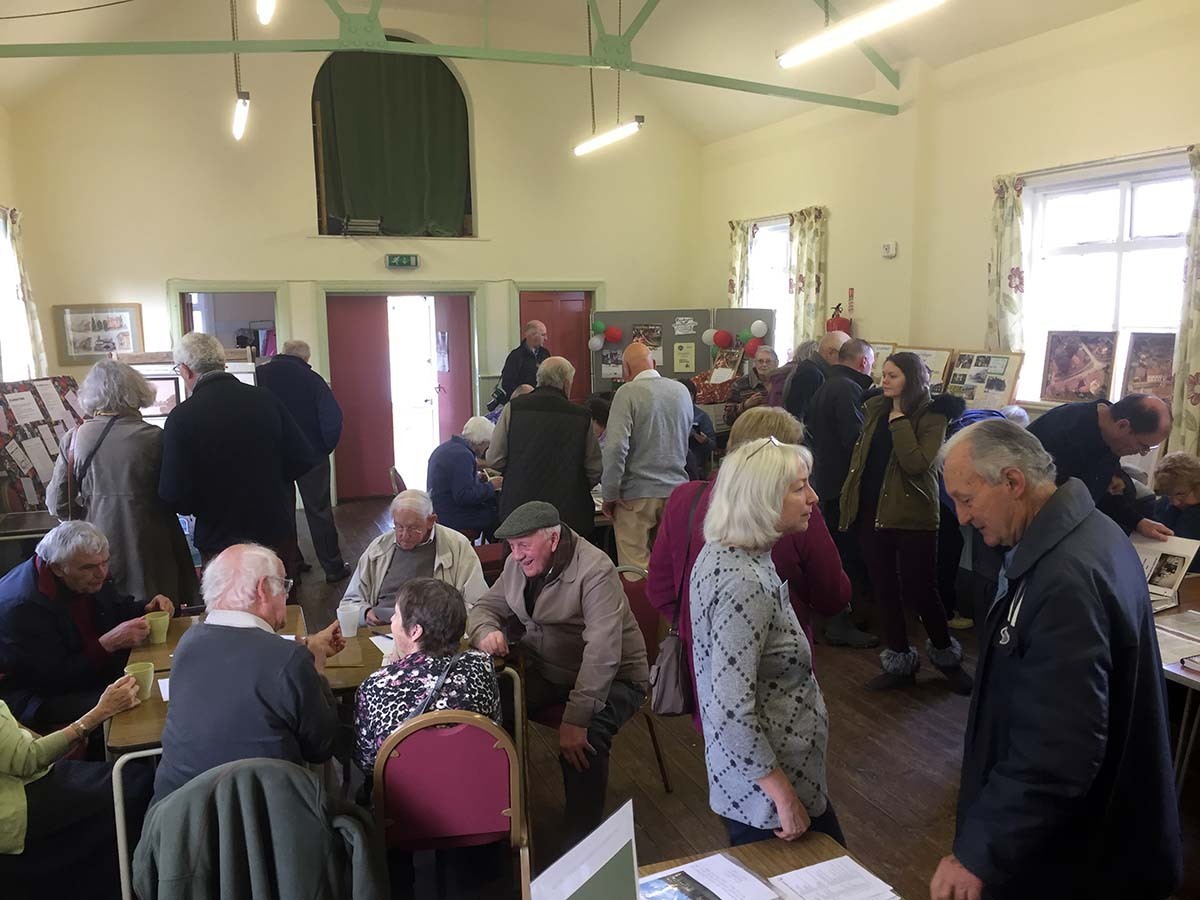
Community Day
This rural community emerged due to the presence of fertile soil conditions left by glacial Lake Pickering and to this day remains an active farming community. The name probably derives from the word “rill’ which describes a small stream that crossed the old roads. Historically, the parish consisted of the township of Rillington and the chapelry of Scampston. The latter contains a Grade II listed house built c.1700 and home to the St. Quintin and Legard baronets. Like many English rural villages, it endured major upheavals in the past including the Norman Conquest, the Dissolution of the Monasteries, the Enclosures, the Industrial Revolution and the coming of the railways.
My interest grew innocuously at first and consisted of research into families for clients during my days as a professional genealogist. The study developed into a synthesis of local history, family history, house history and population studies and focussed on topics such as education, religious worship and transport. For a time I happily ploughed my own furrow - walking the footpaths, taking images of the graveyard and old properties, acquiring old postcards, newspaper articles, maps & wills. That was before serendipity set off a chain of events following a chance meeting with a local resident who was similarly interested in the parish of Rillington. Val is a retired schoolteacher who, for many years, provided a portal to the past by collecting old photographs, maps, documents and interviewing villagers preserving memories of those long since gone. She shared her written notes at gatherings called ‘Tea with Nostalgia’ while being the ‘go-to’ resident for any queries. Val’s groundwork in the village history resulted in her involvement in the setting up of Ryedale Family History Group (RFHG). A few months later she introduced me to two other active members of the community - Ana, the Publicity Officer for RFHG and author of Rillington War Memorial 1914-1918 and 1939-1945 and Robin, whose farming family history can be traced back to the first entry in our parish baptismal register in 1638 who also provided valuable and colourful childhood memories. These ‘locals’ listened to reminiscences and encouraged others to donate family photographs which have helped us identify individuals and properties.
Their enthusiastic chatter was infectious. We decided to combine our sources, ephemera and reminiscences and work together to capture the local history of the village as best we could. New ‘entertainment’ topics emerged from the local drama group, sport, historical pageants and feast days. Although I’m a member of East Yorkshire Local History Society, none of us wanted to form an official body and have to appoint officers and submit accounts. We wanted to work together for the enjoyment of it and the formula has served us well. The Historical Rillington Study Group is the nucleus for our general activity and the Rillington One-Place Study is the product.
Prior to local government reorganisation in 1974, archival records for Rillington were based in the East Riding of Yorkshire (ERY) although the parish is now situated in North Yorkshire. Further investigations uncovered records based at the Borthwick Institute for Archives at the University of York, Special Collections at the Brotherton Library at the University of Leeds, Hull History Centre and North Yorkshire County Record Office, Northallerton.
We hold data sets for the community including census, parish registers of baptism, marriage and death, civil registration certificates for families of interest, 1672 Hearth Tax, 1848 Tithe Apportionment Schedule and Map, 1910 Valuation Office Survey, 1939 National Register, 1941-1943 National Farm Survey, memorial and monumental Inscriptions for the churchyard and cemetery, glebe terriers, manorial documents, deeds and OS and footpath maps. More recently, I’ve been exploring several coats of arms belonging to armigerous families and how they connect to the wider ERY community through marriage and land transfer.
We’ve held several community days, which apart from social media, have also been advertised the old-fashioned way with postcards in local shops and village noticeboards. Our initial fears of “will anybody come?” were totally unfounded and replaced with the joy of witnessing the community past and present chatting around tables, identifying faces on old school photographs and being captivated by our old maps and newspaper articles. The best compliment came from the vicar who thanked us for bringing the community together.
The pandemic of the last two years, a timeline entry we’ll never forget, has put paid to any community events and reduced meetings between ourselves although we’ve managed a couple of ‘garden’ and ‘open garage’ meetings. We continue to help with queries which come to our website https://www.rillingtonops.org.uk and our Facebook page https://www.facebook.com/Rillington-One-Place-Study-1383902688599572. Through active participation and questions received from people wishing to know more about their ancestors, we’ve discovered so much more from reminiscence and memory which fills in details between the extant records. Fascinating stories abound describing how tanks rolled down the main road to pick up supplies from the railway station during the Second World War and how dairy farmers placed milk churns in the river to float them to the next town.
We can identify individuals in family groups and how they connect through kinship to other families both in the village and contiguous parishes. We see how the community formed relationships through occupations, churches and chapels, friendly societies, military service and local entertainment. Analysis of outcomes such as mortality, migration and land transfer record societal change. Our favourite record is a poem written by Dr. Thomas Allanson, the local surgeon and keeper of a private lunatic asylum which contains astute and amusing observations of people and their way of life in mid nineteenth century Rillington. Some of the ancestors of current farming families can be found in the earliest entries in our parish registers in the seventeenth century, while some have been discovered emigrating to the Americas from letters back home.
I don’t think this project will ever be completed as the latest snippet of information always leads to further research and uncovers another hero or villain on their own journey. However, one of our aims is to capture the microhistory of Rillington as a legacy for the current inhabitants and especially for the youngsters who will discover that the exterior of their quiet village belies the significance of a place once connected to the monks of nearby Byland Abbey.
The views and opinions expressed in this blog are those of the author and do not necessarily reflect the official policy or position of the British Association for Local History (BALH). Any content provided by our contributors is of their own opinion and is not intended to malign any individual, group, organisation, or entity.