The Tale of Philip Gibson
Published: 3rd March 2021

Dr Amy Blakeway
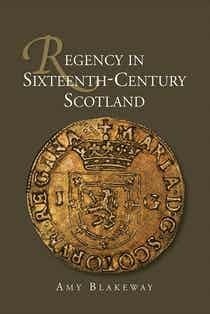
Dr Amy Blakeway is a lecturer in Scottish History at the University of St Andrews. She is the author of Regency in Sixteenth Century Scotland and her second book on James V's Parliaments will be published by Palgrave in 2021. She is currently working on a new study of the Rough Wooings and its impact on domestic governance in Scotland, and is passionate about sharing the wonderful sources housed in Scotland's national and local archives!
March 1545 was a scary time for the doughty burgesses of Haddington. Located only forty miles from the English border, Haddington was a prime target for English invasion. Since Scotland and England had now been at war for a little over a year, and in 1544 an English army had swept north to burn Edinburgh, we might forgive the town’s residents for being afraid: and it is hardly surprising that their archives, carefully recorded in secretary hand, bear witness to the preparations they made to defend themselves against the worst excesses of invasion.
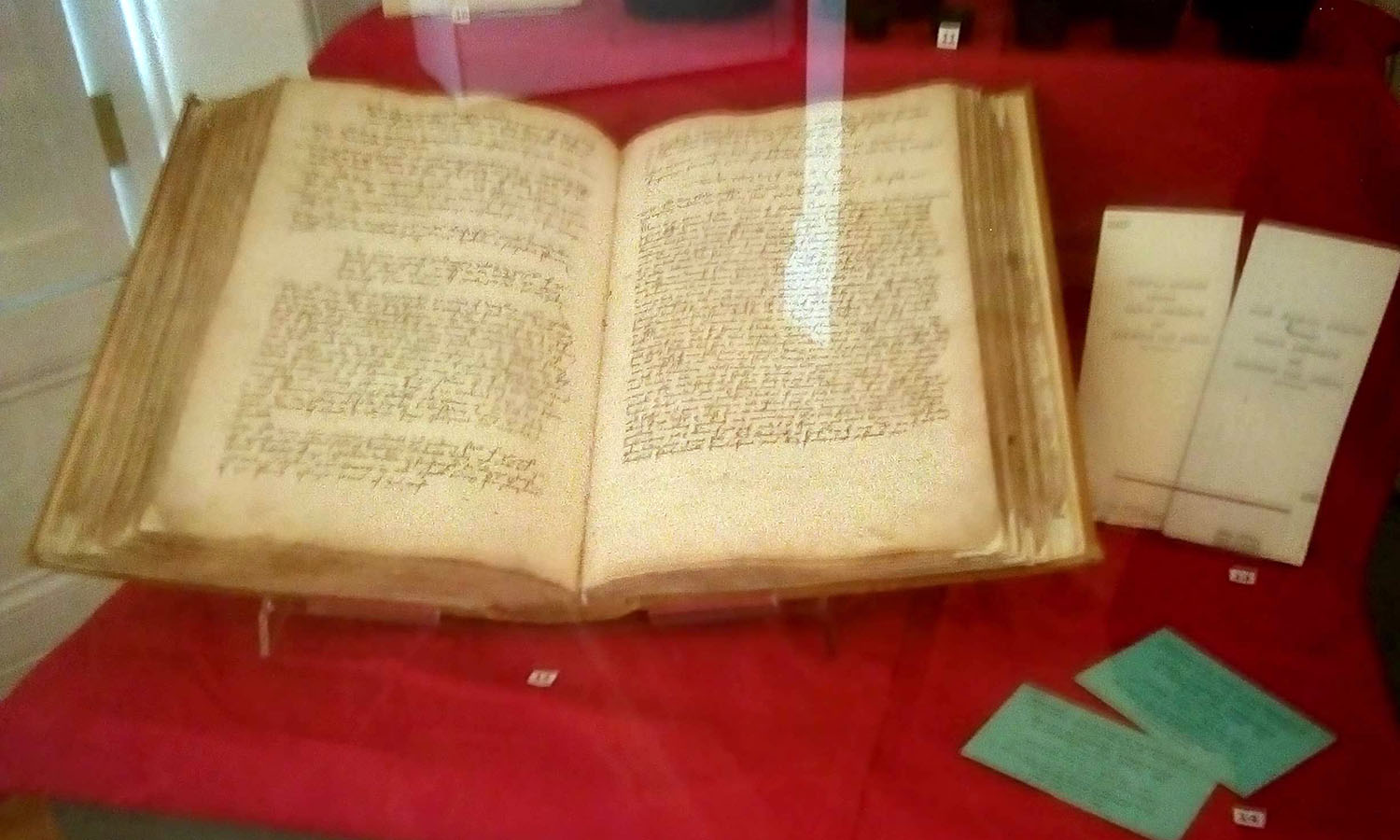
The burgh council book containing Fat Phil's excuse.
Part of a display during a 2018 exhibition at the John Gray Centre.
That month, however, one man at least was able to make his life a bit more comfortable. On 28th March Philip Gibson appeared before the Haddington burgh council and asked them to copy into their official burgh records a letter he had recently received from James Hamilton, earl of Arran. Since Mary, Queen of Scots, was a child and as her closest kinsman Arran was ruling Scotland on her behalf as Regent, this piece of correspondence came straight from the top: and it was about to make Gibson’s life a lot safer. Arran (or, more accurately, his secretary), had written that because Gibson was
‘hevelie vexit with infirmitie of the gravell and utheris seikness And infirmities And als is corpulent of persoun swa that he may not gudlie Induire travel without grete danger of his lyfe…’
he was henceforth excused from civic responsibilities such as serving on inquests, and, more pertinently in the immediate circumstances, military duties – such as joining any armies summoned to defend Scotland against a future English invasion.
As someone who spent most of her teenage years trying with all her might to manufacture excuses to get out of the dreaded PE, this ultimate sick-note immediately grabbed me. Apart from anything else, the very idea that fear of death from a riding accident induced by a perhaps overly healthy appetite might get you out of the possibility of dying for Queen and country against an invading army seemed darkly humorous (and Fran, the fantastic archivist at the John Gray Centre in Haddington did come over to see why I was disturbing the tranquil reading room with barely supressed laughter).
However, this letter also raised serious historical concerns. Most obviously perhaps is the issue of centre and locality: Gibson had contacted central government in Edinburgh in order to get his ‘exemptioun’. Curiously, he’d actually got the exemption on 1st May 1544, paying ten shillings for it to be sealed by the privy seal. Why did Gibson wait nearly a year to get it copied into the burgh’s own registers? There is no way of knowing for sure, but there are a couple of possibilities. Perhaps rumours he was not doing his duty had swirled around the town, or perhaps he was worried about loosing his documents in an English invasion and this extra copy provided extra protection in case the invading army burned records they found on their travels. This was all too realistic a prospect – in the years after the war Scottish records are littered with references to documents lost ‘in the burning time’, towns such as Perth and Aberdeen arranged to move their records outwith the town or hide them, and Haddington itself paid a pension of eight merks to Robert Maitland every year for at least five years after the war had ended for rescuing the town’s registers from the English army. Indeed, earlier in his career, in 1534, Philip Gibson had himself returned to the town council some of those very records which he had kept in safe keeping during the 1532-3 war with England.
These activities in turn suggest another important factor revealed by this document – the way in which connections and status could help some people make their lives easier during this war. Gibson was a burgess of Haddington, so part of the town’s elite, and had held a range of positions of responsibility throughout his life – and he also had the contacts and means to access central government bureaucracy in Edinburgh. Realising this is probably what facilitated him getting his sick note prompted me to mentally christen Gibson ‘fat Phil’ – this was a local fat cat enjoying eating his cream.
But was I being unfair? Gibson’s excuse did say he had the ‘gravell’ – this was used to describe kidney stones, which without modern medicine must have been very painful indeed. Indeed, the phrasing of Gibson’s excuse was almost directly echoed in the sixteenth-century poem Freris Berwik which described a character who was ‘awld and micht not wele travell And als he had ane littill spyce of gravell’. This was clearly an illness widely accepted as an excuse to avoid moving around – even if the satirical Freris Berwik suggests it was sometimes mocked.
On balance: probably not. He was dead by June 1548, when one of his neighbours was awarded a number of animal skins which had belonged to Gibson, now described as ‘umquhile’ - deceased. The skins had been escheated (forfeited) to the crown because Gibson had ‘left [the skins] behind him in the said toun in Inglismannis possessioun’ when the English were besieging Haddington. Throughout the wars of the 1540s burgesses had been told to stay in their towns and defend them when the English besieged them, but Gibson obviously chose to flee the invaders. Obviously, when he wanted to do so Gibson was still perfectly capable of getting on the move – either seeing himself described as ‘corpulent’ had been a motivation to get fit or Gibson had been enlarging the truth in 1544! The gift of the skins, like Gibson’s letter, was given under the Privy Seal: after his disloyalty the government administration which had once helped to protect Gibson turned against him and his heirs.
Taken as a whole, the tale of Philip Gibson not only gives us insight into how one man navigated his way through the dark days of Anglo-Scottish war, but exposes issues of how power and status can infer protection which resonate today. Of course, it’s also a snapshot into the wonderful information held in local archives for this period and how richly they can intersect with central governmental and literary sources. Perhaps too, however, it’s most importantly a warning against taking excuses for avoiding exercise at face value…such a shame that my foot hurts too much to go for a run later on…
The views and opinions expressed in this blog are those of the author and do not necessarily reflect the official policy or position of the British Association for Local History (BALH). Any content provided by our contributors is of their own opinion and is not intended to malign any individual, group, organisation, or entity.