A study of a local industry: the stocking knitting industry of later 16th century Norwich.
Published: 1st November 2021

Lesley O'Connell Edwards
Lesley researches the history of knitting, especially knitters and stocking knitting in 16th century England. She researched the stocking knitting industry of later 16th century Norwich for her dissertation for her recent MSc in English Local History at Oxford University. She is currently researching the structure of the export trade in knitted stockings, using port books and variety of local records. She is part of the Holy Hands research team, which carried out the first systematic study of knitted liturgical gloves.
There has been very little academic study of the history of knitting, especially the production of knitted items in a single location in a specific period. Lesley O’Connell Edwards’s newly-published article in the journal Textile History is an exception to this: it is a socio-economic study of the stocking knitting industry of Norwich in the later 16th century.
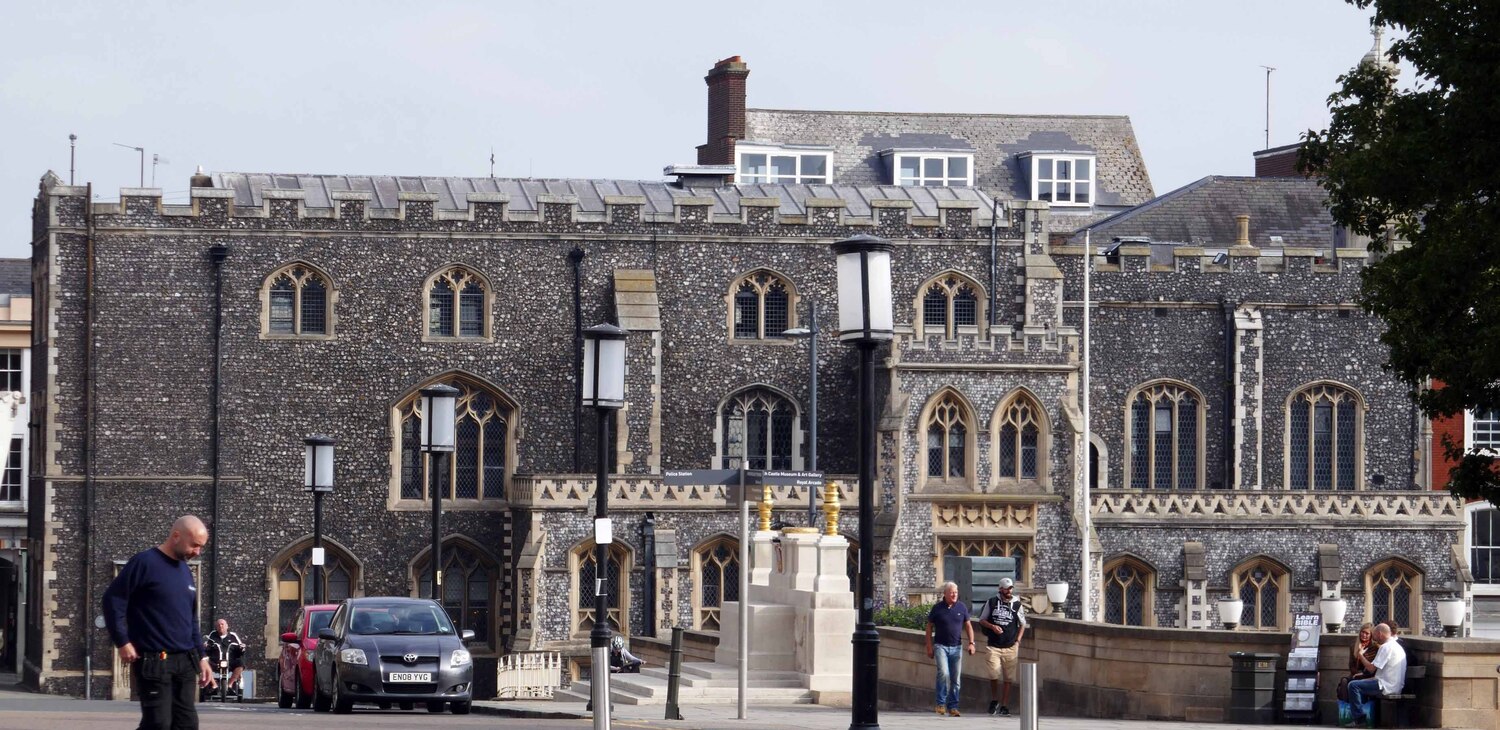
Norwich was noted for its production of fine stockings, and around seven per cent of the city’s poor gained an income from knitting in 1570. Lesley is an established historian of knitting: and this study includes material from her recent masters’ dissertation in English Local History at Oxford University.
This research shows how local and national sources can be combined to understand a local industry. Hand knitting was a domestic employment, without a structure or a regulatory organisation, so material comes from a wide range of sources. Despite the erratic nature of the survival of sixteenth century records, it was possible to find enough evidence to paint a picture of the knitting industry in Norwich. Some sources, including the 1570 Norwich census of the poor, and the city’s financial records, provide enough material to give a quantitative analysis. Other sources are less detailed, but still expand our understanding of this industry. These include personal papers, such as letters, inventories and household accounts, and national government records including Port Books and State Papers.
The article includes an analysis of the 136 child and adult female poor knitters listed in the census of the poor, which shows that there was no one stereotypical knitter in Norwich: adults could be all ages and marital statuses; and children of all ages might be knitters. Although poor, by no means all these knitters were in the receipt of alms from the city. Quantitative data are provided for a minimum volume of production in the 1580s: for example, in 1584/5 125s 10d was paid in aulnage tax to the city on 2,975 dozen pairs. The production of stockings from the supply of wool to the finishing process is discussed; as is the trade in finished stockings.
Lesley’s article is available by subscription at the Textile History website https://www.tandfonline.com/doi/full/10.1080/00404969.2021.1923342; some institutions have access to the journal through Taylor and Francis online portal. Textile History is a peer-reviewed journal published on behalf of the Pasold Research Fund.
The views and opinions expressed in this blog are those of the author and do not necessarily reflect the official policy or position of the British Association for Local History (BALH). Any content provided by our contributors is of their own opinion and is not intended to malign any individual, group, organisation, or entity.