BALH Regional Conference: Maps and Buildings
Published: 11th November 2024

BALH Team
admin@balh.org.uk
Following a successful 2022 regional conference ‘Unexpected Sources for Local History,’ BALH returned to Taunton on 12th October 2024 - this time for a look at how maps and building can provide a tangible and accessible route into the study of local history. Concepts, references and sources were woven across the five presentations linking the day into a well-crafted whole.

Joseph Rogers has visited over 100 tithe barns whilst researching material for his recent book. Joe began his talk with an introduction to the purpose, construction and use of tithe barns since the medieval period and went on to demonstrate instances when a ‘tithe barn’ might not be a tithe barn! Some medieval barns latterly given the title ‘tithe’, were not intended for the purpose of storing corn gathered as tithe payment; more correctly they are grange barns that served the farming needs of the abbey. Joe showed how imposter tithe barns continue to appear in the landscape, including one constructed in 2008 near Crewkerne, Somerset as a wedding venue.
Drawing on notable Somerset examples, including barns at Dunster, Glastonbury and Pilton, Joe explained how these barns often owe their continued survival to conversion and reuse as visitor attractions, museums, wedding venues, restaurants and family homes.
Lucy Browne demonstrated how close study of a seventeenth century map can provide a fascinating window into village history. The map she examined records land belonging to the manor of Nymet Tracey alias Bow, Devon c.1640, is held by Kent Archives and exists as three separate sections – a challenging task!
The tripartite map records plot acreages and the names of owners and occupiers. Buildings are depicted in relief, and, although unlikely to be accurate representations, those with chimneys can be more confidently judged as residential buildings. Lucy compared the three sections with a nineteenth century large-scale Ordnance Survey map, and finding field shapes common to both, was able to resolve how they fit together. Understanding the purpose behind a map’s creation can help explain the relative importance of what was included and what was left out. When reset on its original east-west axis, it becomes clear that the centre of the map focuses on the church, and likely the manorial heart. Lucy then suggested a study of neighbouring parishes might help determine manorial boundaries, and that the wills of recorded owners and occupiers could help to identify the various properties.
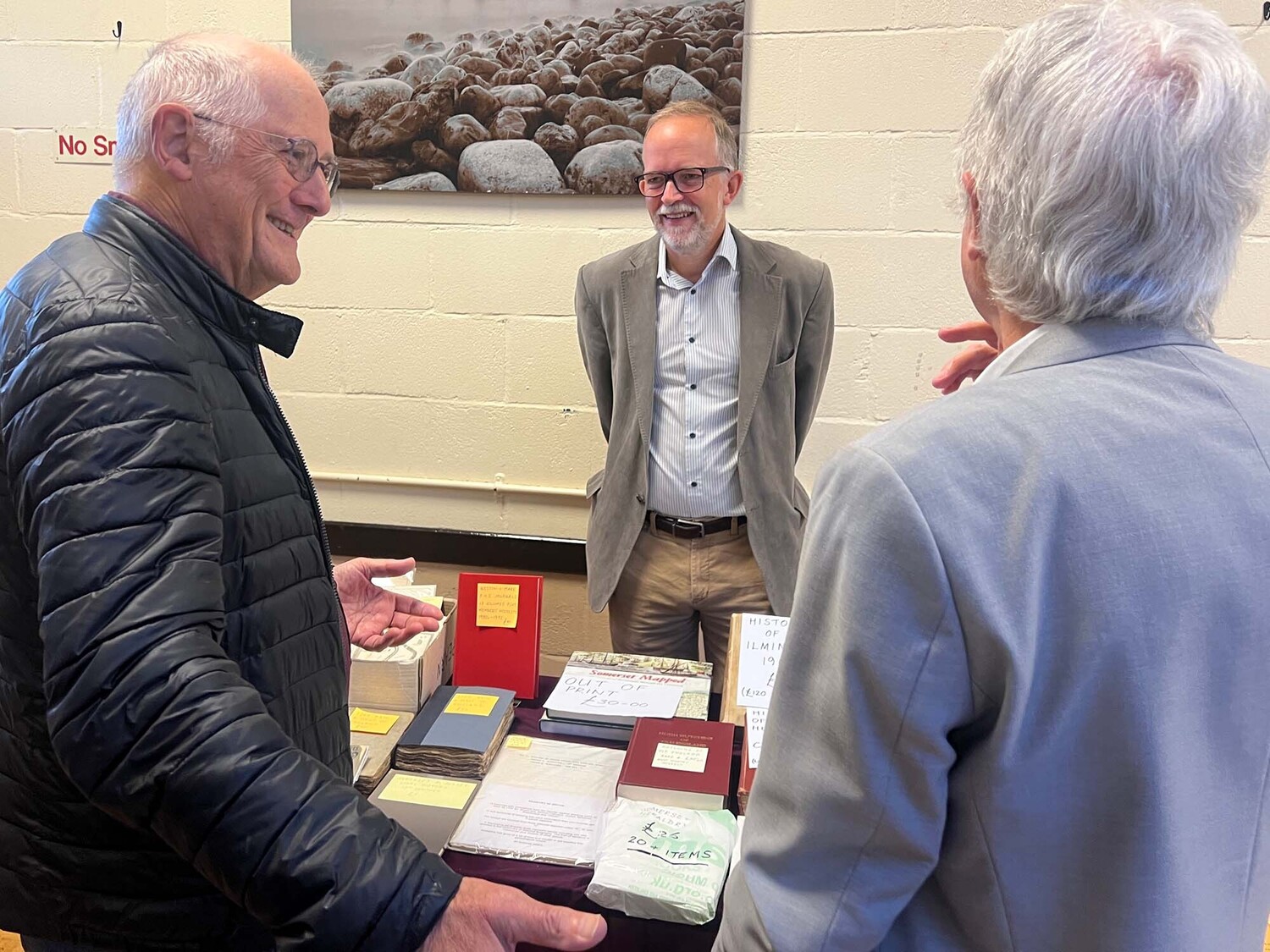
Jane Golding highlighted changes to the way heritage information is managed and by whom. The historic environment is a rich resource to understanding the past. An inquisitive approach that places a building within its landscape context can reveal much about that building’s development, its history, and indeed decline and eventual disappearance. Jane looked at current changes designed to improve and simplify access to the records resulting from many decades of investigation into the historic environment and held as national, local and community layers of information.
Revisiting a case study of Steventon, Oxfordshire written for The Local Historian in 2004, Jane explained that many of the sources described are now available online: photographs from Historic England’s architectural Red Box collection, over 400,000 digitised vertical and oblique views via Aerial Photo Explorer, and information from the National Heritage List for England including community knowledge contributed as the Missing Pieces Project.
She highlighted the Heritage Gateway (a single point of online access to the national network of local Historic Environment Records) and Know Your Place West of England. Jane concluded with a case study from the Rodbourne of Swindon bringing together layers of information from national, local and community sources.
John Chandler began his informative exploration into how maps can be the key to uncovering history, by investigating the very space where the audience was sitting. Aided by map images available online from The National Library Scotland, John guided an exercise in map regression. Working backwards through time, changes to St Andrew’s Church Hall and the surrounding buildings began to unfold, and on reaching the Ordnance Survey Large Scale Plan (1:500) 1888 the site was revealed as an open area opposite St Andrew’s Church.
John highlighted less-common sources to consider including shopping centre plans, railway company plans, navigation charts of coastal areas, road maps, sale catalogues and the 1910 Valuation Office Survey; in addition to the more well-known sources for estate, tithe and enclosure mapping. To round up, John suggested looking out for map features particularly helpful to local historians: fieldnames and minor place names; exemptions, such as, tithe free land; acreages; annotations; and land parcel numbers.
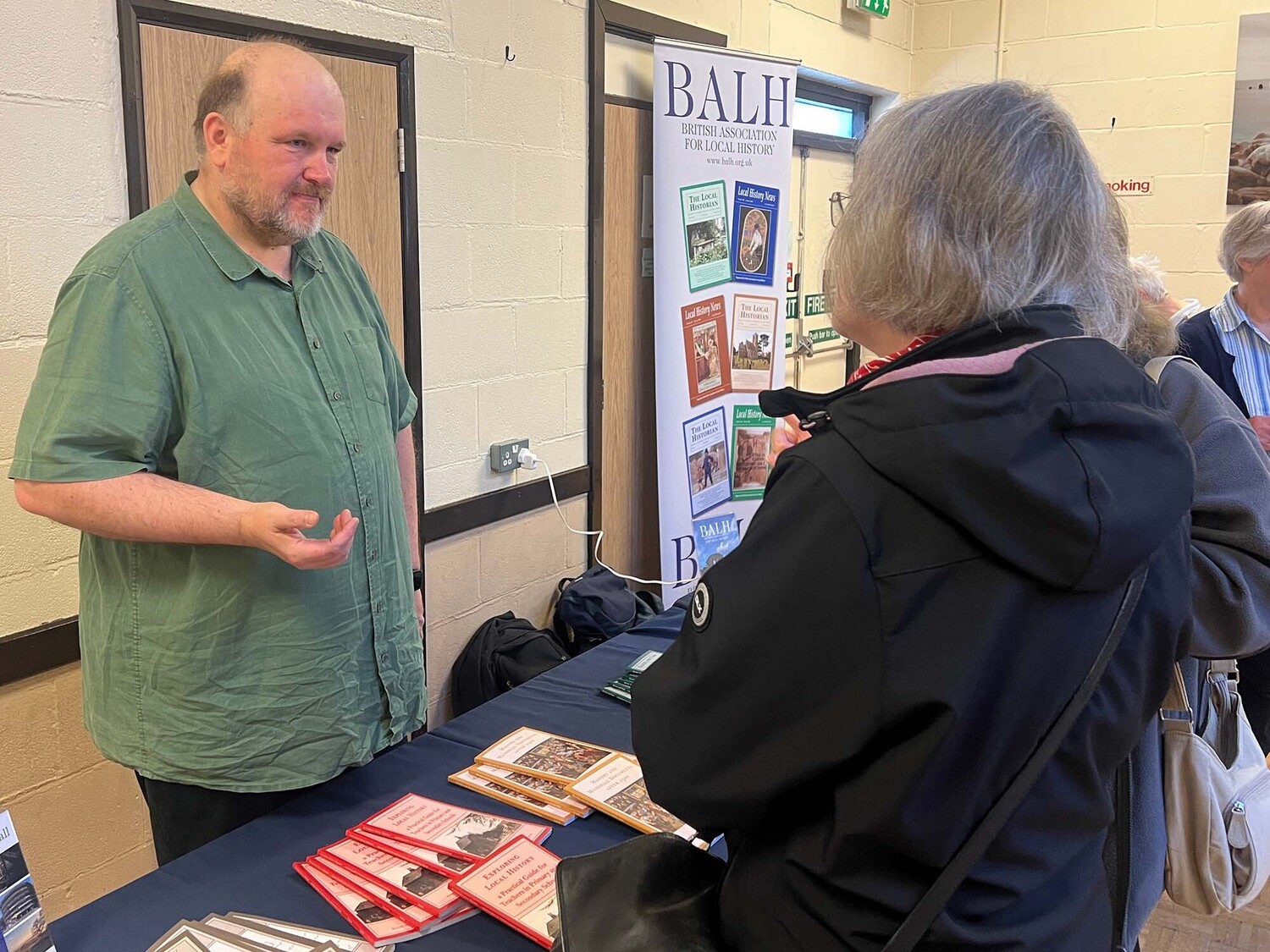
Julian Orbach presented a glorious selection of Somerset buildings that merit mention as being special to the county or are unusual in some way, including fine examples of different building types and architectural styles, plus some oddities!
Naturally, ecclesiastical buildings featured highly in Julian’s list. The scissor arches at Wells Cathedral are a stunning central feature, making up 3 sides of the crossing. The late medieval church towers at Taunton and Evercreech are noted for their height combined with an extraordinary sense of portion and design. The church screen at Norton Fitzwarren stands with the best in the country, whilst the magnificent carved timber roofs at both Martock and Westonzoyland ensure that these churches are renowned. Good examples of ‘show’ aisles financed by families rich on wool can be found at Bicknoller and Crowcombe.
Julian illustrated a range of noteworthy features from Somerset houses, including plasterwork, staircases and over-mantel paintings. Then followed a wide range of building types, grand and small: Quaker meeting houses, follies, garden buildings (for example, the ‘Turkish Tent’ summerhouse at Inwood House, Henstridge), cemetery chapels (an intriguing example is the combined Non-conformist and Anglican Mortuary Chapel at North Petherton where the dividing wall incorporates a narrow gap designed to prevent contact between the two denominations). To conclude Julian brought his tour into the present by looking at several uniquely constructed modern buildings, such as those serving Clark’s shoe manufacturing company at Street.
Speakers:
Joseph Rogers is the author of ‘Tithe Barns’ and ‘Railway Enthusiasm in Twenty-first century Britain’. His research on Tithe Barns saw him to travel to 100 plus historic barns across the UK. He was inspired to learn more about the subject by the many examples found in Somerset.
Lucy Browne is a qualified genealogist based in north-west Devon. She has worked professionally as a freelance genealogist and documentary researcher since 2015, and tutor for the Institute of Heraldic and Genealogical Studies since 2017 and is a Council member of the Association of Genealogists and Researchers in Archives.
Jane Golding is a Trustee and Vice-Chair of the British Association for Local History. Her academic background is landscape history, and she manages Historic England’s Heritage Gateway.
John Chandler is a Trustee and Chair of the Publishing Committee of the British Association for Local History. He is VCH editor and contributor in Gloucester and Wiltshire, a visiting research fellow at the University of the West of England, Bristol and publishes west country regional and social history as Hobnob Press.
Julian Orbach is an author and lecturer in architectural history. He was architectural adviser to the Victorian Society in 1975-7 and has contributed to five volumes of the Pevsner series. He has been President of the Somerset Archaeological and Natural History Society.
The views and opinions expressed in this blog are those of the author and do not necessarily reflect the official policy or position of the British Association for Local History (BALH). Any content provided by our contributors is of their own opinion and is not intended to malign any individual, group, organisation, or entity.