Camp 21 'Cultybraggan'
Published: 13th January 2025

Dan Taylor
archaeowegian@hotmail.com
Dan Taylor is a determined and resilient professional with a background in Forensic Archaeology and Anthropology. He recently completed his postgraduate studies at Durham University and holds an undergraduate degree in Archaeology and History from Glasgow University, showcasing a deep commitment to exploring human history and its physical remains. Dan is an active member of the British Association for Local History, volunteering as part of their outreach Team since November 2024. His passion for community engagement reflects his dedication to making history accessible and engaging to diverse audiences. In his professional life, Dan works as a field archaeologist with MOLA (Museum of London Archaeology), contributing to the discovery and preservation of significant archaeological sites. His work is marked by meticulous attention to detail and a strong ethical framework, aligned with his membership in the Chartered Institute for Archaeologists (CIfA) and the Chartered Society of Forensic Science (CSFS). Beyond archaeology, Dan’s life journey exemplifies resilience as a cancer survivor, former soldier, former professional football referee and Special Olympics referee.
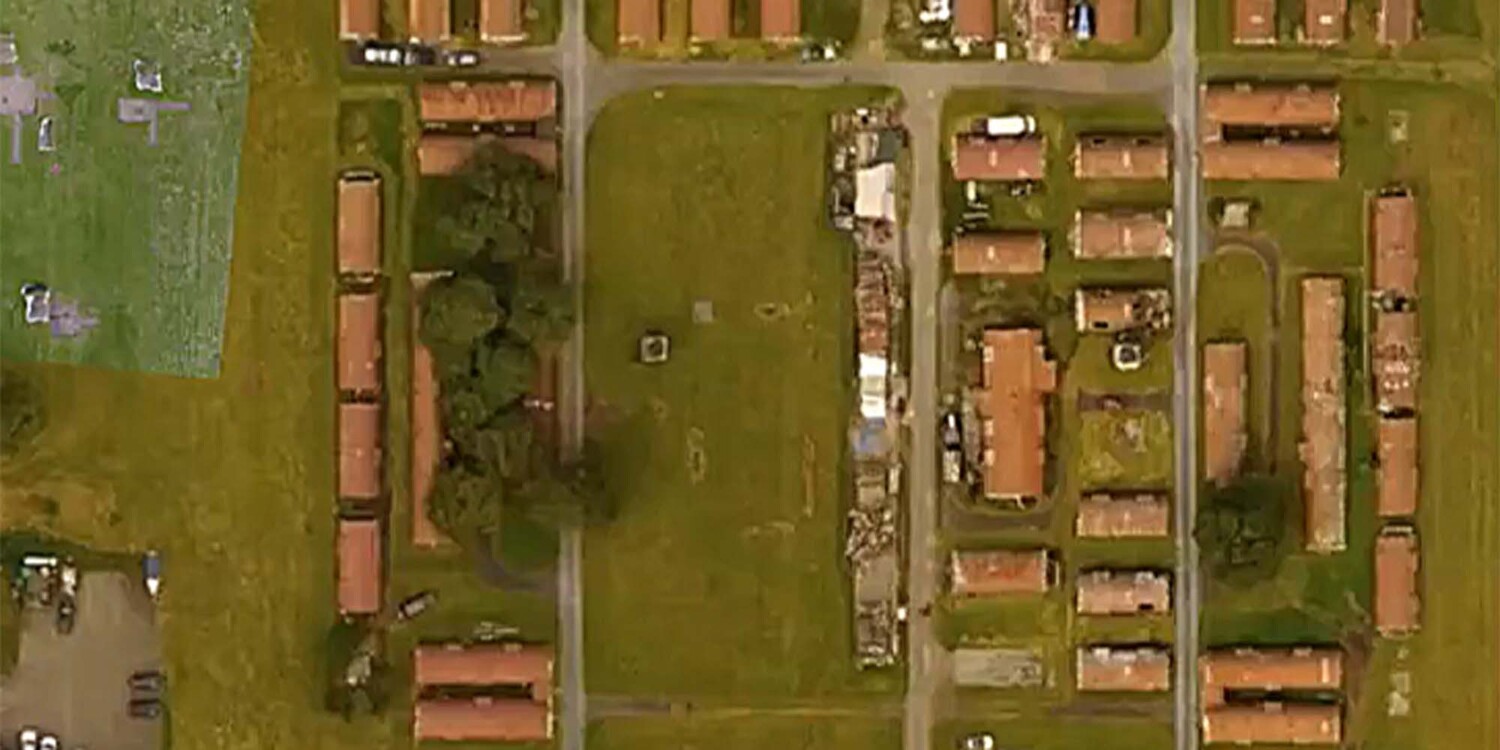
Located near the village of Comrie in Perthshire, Scotland, is one of the most historically preserved sites from the Second World War – Camp 21, also known as Cultybraggan.
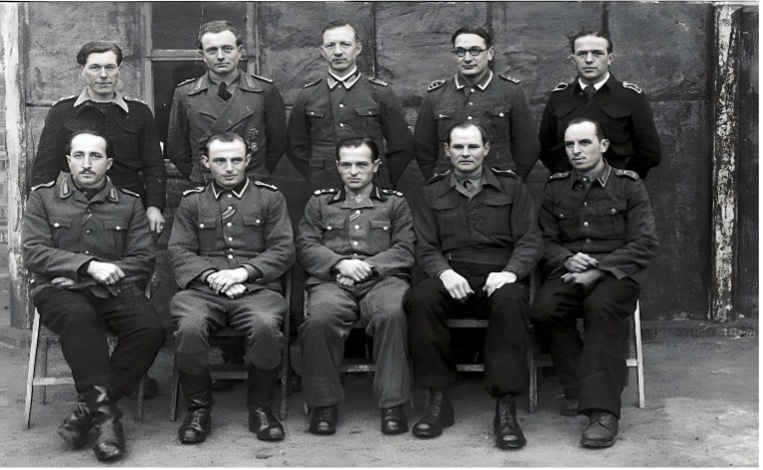
Trigger Warning – Second World War history (with a photo of Nazi PoWs).
This former internment camp, which remains largely intact, stands as a poignant reminder of Britain's wartime history and its involvement in the internment and imprisonment of prisoners of war (PoWs), including some of the most hardened Nazi officers.
The Origins of Cultybraggan
Cultybraggan, constructed in 1941, was initially built by the 249 (Alien) Company Pioneer Corps. This unit was primarily composed of Jewish volunteers from Poland, Germany, and Austria, who had fled their countries and volunteered to support the British war effort. These men played a crucial role in building the camp, which would serve multiple purposes during the war.
The camp was designed to accommodate up to 4,000 prisoners and was organized into several subdivided compounds. This division helped keep various groups of prisoners of war (PoWs) separated and minimized interactions between them. Accommodation for both prisoners and guards consisted of Nissen huts, and mess facilities were also provided within the camp’s wire-enclosed boundaries.
The Role of Camp 21: A "Black Camp"
Cultybraggan was originally used as a training facility, but in 1943, it was repurposed to house Italian prisoners of war (PoWs) following Italy's surrender. By late 1944, however, it earned a darker reputation as a “black camp,” created to detain some of the most dangerous PoWs, particularly senior German officers, SS personnel, and other high-ranking Nazis. Due to its remoteness and strict security measures, Cultybraggan was an ideal location for these prisoners, many of whom were involved in war crimes and deemed high-risk.
Prisoners were classified according to their perceived loyalty to Nazi ideology.
Category A prisoners, identified by a white patch, were seen as non-Nazi or less radical.
Category B prisoners, marked with a grey patch, were considered ambivalent or “Mitläufer” (followers). They were neither distinctly radical nor completely passive, which made them potentially dangerous.
Category C prisoners, designated with a black patch, were regarded as the most extreme. This group often included members of the SS, paratroopers, and U-boat crews, who were viewed as highly untrustworthy and violent, posing a significant risk to the stability of post-war Europe.
Tensions Within the Camp
By 1944, Cultybraggan had become one of Britain’s highest-security camps. It housed a large proportion of Category C and Category C+ prisoners, who were often so dangerous that the British authorities feared they could incite rebellion or escape. This atmosphere of violence and tension was evident in the incidents that occurred within the camp.
Notably, two contentious deaths were recorded in late December 1944. Major Willi Thornan, an officer who was suspected of being a spy, was found hanging from a tree within the camp. Though his death was initially ruled a suicide, suspicions arose that fellow prisoners murdered him. Wolfgang Rosterg, a PoW who had voiced discontent with the Nazi cause, met a far more brutal end. After being interrogated and tortured by a group of extreme Nazi PoWs, Rosterg was strangled to death on December 22, 1944. His death was a significant event within the camp and later led to a trial, with several of the perpetrators executed in 1945 for their roles in the murder.
Escape Plans and British Response
The British authorities were well aware of the threat posed by the most extreme PoWs. In December 1944, a major escape attempt was foiled at another camp, Camp 23, in Wiltshire. This plot involved the coordination of German paratroopers and an elaborate plan to escape, steal weapons, and wreak havoc. The intelligence leak from Camp 23 caused alarm, and a British Parachute Regiment was called in to quell the situation. As a result, several prisoners were transferred to Cultybraggan, which was deemed a more secure location, far removed from the potential threat of an escape to London.
After the War: Cultybraggan's Later Years
Following the war, Cultybraggan's role as an internment camp ended in 1948 with the release of the final PoWs. The camp was subsequently repurposed by the Ministry of Defence and used as a training ground for the Territorial Army (TA) and the Army Cadet Force. It remained in military use until 2004.
In addition to its role in training, the site became a Cold War fallout shelter, equipped with a nuclear bunker intended to protect government officials in the event of a nuclear attack. The camp's use as a training ground has left a lasting mark on those who served there, with many expressing nostalgia for their time spent there over the 55 years of its use.
Cultybraggan Today
Today, Cultybraggan stands as one of the best-preserved Second World War PoW camps in the UK, offering visitors a rare glimpse into the dark and often brutal history of wartime internment. The camp’s role as a site of tension, suffering, and resistance remains a poignant chapter in the story of Britain's involvement in the Second World War. For those interested in local history, Cultybraggan offers a powerful and sombre reminder of the consequences of war and the extremes to which the human spirit can be pushed.
In recognition of its historical significance, the site is now open to the public, and it continues to serve as a place of remembrance for the many lives affected by the events that unfolded there during the war.

Bibliography
Banks, I., (2020). ‘For you, the war is over? Not a chance!’ Captivity and escape at Cultybraggan prisoner of war camp, Comrie, Perthshire. Journal of Conflict Archaeology, 15(1), pp.32-64.
Malpass, A. and Malpass, A., (2020). After Liberation: Migration and the Memory of British POW Treatment. British Character and the Treatment of German Prisoners of War, 1939–48, pp.177-195.
Taylor. D., (2023). Second World War Internment Heritage: A Comparative Analysis of Britain, Germany, and Finland. Undergraduate dissertation. University of Glasow.
Thomas, S. and Banks, I. (2019). Asset, burden, Cultybraggan. Community site ownership in a Scottish village. Journal of Community Archaeology & Heritage, 6(1), pp.51-68.
Thomas, S.E., (2019). Doing public participatory archaeology with “difficult” conflict heritage: experiences from Finnish Lapland and the Scottish Highlands. Post Classical Archaeologies.
The views and opinions expressed in this blog are those of the author and do not necessarily reflect the official policy or position of the British Association for Local History (BALH). Any content provided by our contributors is of their own opinion and is not intended to malign any individual, group, organisation, or entity.