Dulwich Local History Walks
Published: 6th October 2023

Sharon O'Connor
Sharon has lived in Dulwich and been a member of the Dulwich Society local history group since 2004. Now retired, she was assistant archivist at Dulwich College which holds a treasure trove of information on the area of Dulwich as well as the school and its alumni.
Sharon O’Connor, from the Dulwich Society local history group shares some things to consider when organising local history walks, based on the group’s experience.
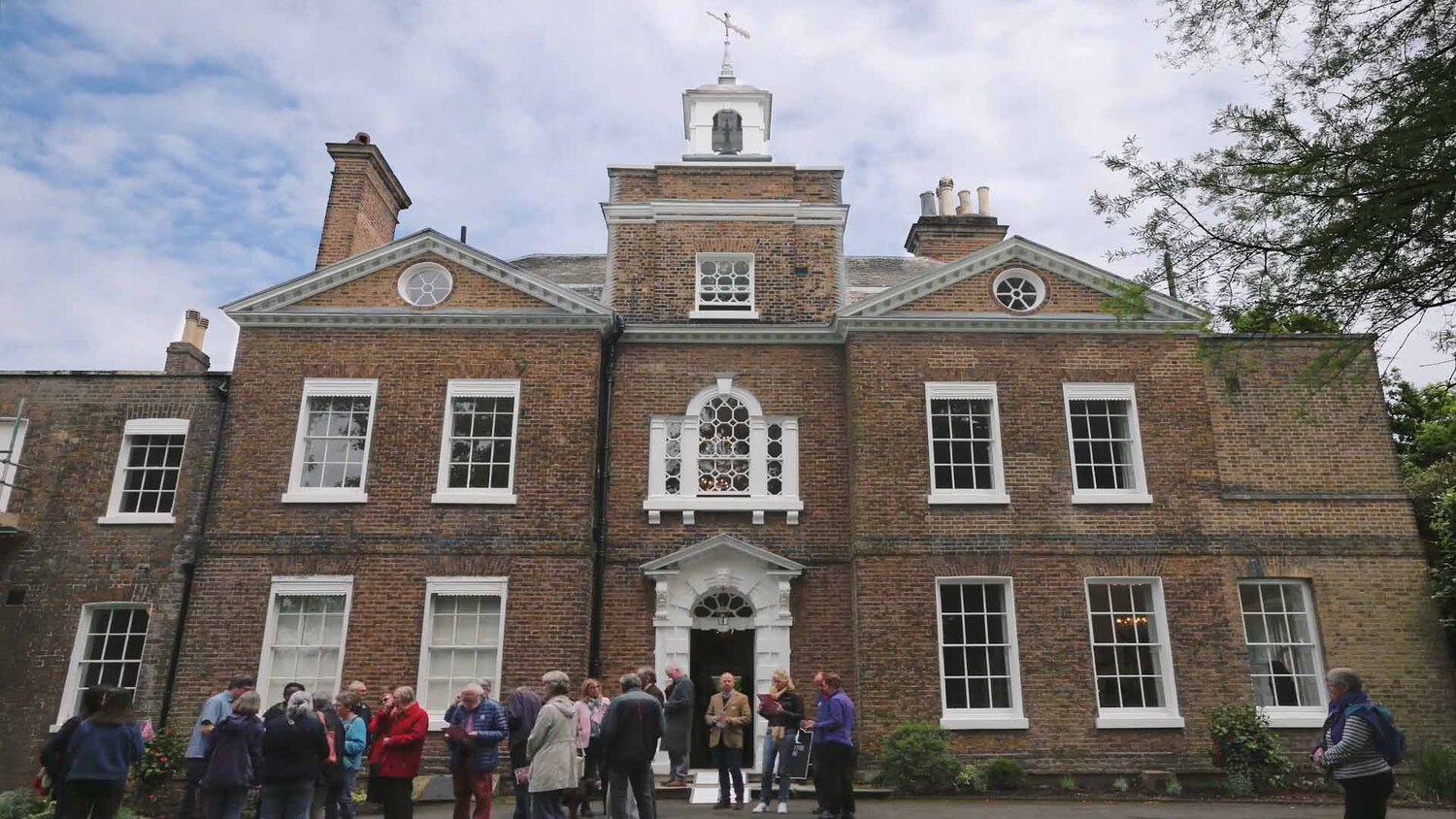
I’m sure every local history group has arranged walks before, and in a pre-pandemic world they were the easiest thing to do. Post Covid however, things got a little more structured so it might be helpful to hear how we organise our walks now.
Planning: this is just the same as for any guided walk: consider the length of the walk (90 minutes seems ideal), terrain, ambient noise (we invested in a megaphone as traffic in London is noisy).
Risk assessment: take the walk yourself thinking about any risks along the way: uneven paths, slippery steps; roads to cross; is there room for the group to stand where you stop to talk; is there any seating people can use. Risk assessment templates are available online which allow you to identify each risk, give it a measure of likelihood, and consider mitigating measures if necessary. Our society has its risk assessment policy and template on our website so any member can access it. Risk assessment might seem excessive, but it is probably what you were already doing in a less formal fashion.
Dulwich architecture walk
Ticketing: we book our walks using Eventbrite now. It used to be turn up and go but now we have slightly smaller groups so we ask people to book to avoid disappointment. We still sell some tickets on the day as there are usually no-shows. Using Eventbrite saves time and effort printing and selling tickets physically, and collecting money on the walk, especially now people pay via contactless - those machines don’t always work well away from a wifi point! Sometimes our walks are free but if we charge it’s around £5. That’s not too expensive and we find it makes people value them more and turn up if they have bought a ticket. We always have bursary tickets for people who need them. If your walk is free then so is the use of Eventbrite but if you charge then Eventbrite takes a fee. The proceeds of our walks (less the Eventbrite fee) go to local charities.
Publicity: we advertise to our members via our monthly digital newsletter, posters on local notice boards and we use our social media.
Numbers: we now find that around 25 is a good number: enough to create a bit of a buzz but not so many that people can’t hear and enjoy the walk.
Stewards: we use more stewards now than we used to and would prefer a minimum of two but ideally three per walk: one at the start of the group up near the guide, one at the back to help anyone finding the pace too much, and one in the middle to help with keeping people on pavements, keeping an eye on traffic, preventing people going the wrong way etc. Stewards allow the guide to concentrate on speaking and answering any questions.
Dulwich Georgian walk

Digital alternatives: we have done Zoom ‘walks’ for our On the Street Where You Live series of online talks and sometimes we make a Google map of a walk and put it on our website – the latter is useful as we can link back to our website. These online aids help make local history accessible but nothing beats actually going out and walking the space.
Local history walks are a great way to share knowledge of your area with others and sometimes you even learn something new from your fellow-walkers. The walks are sociable, allowing people to meet with like-minded folk. They get people out in the fresh air. They are affordable – they can even be free. What’s not to like!
https://www.dulwichsociety.com/local-history
The views and opinions expressed in this blog are those of the author and do not necessarily reflect the official policy or position of the British Association for Local History (BALH). Any content provided by our contributors is of their own opinion and is not intended to malign any individual, group, organisation, or entity.