Micklegate in York: centuries of history
Published: 23rd August 2025

Susan Major
Susan Major is a Fellow of the Royal Historical Society with a research focus on how ordinary people used railways in the 19th century. Based in York, she completed a PhD at the University of York on early excursion travel, later publishing books on Victorian leisure journeys and women railway workers in wartime. She is also active in the Clements Hall Local History Group, writing well-regarded local history books about York.
Behind York’s historic streets are countless stories waiting to be told, and for the past twelve years the Clements Hall Local History Group has been uncovering them. From local shops to entire neighbourhoods, their award-winning books bring to life the people and places that shaped the city.
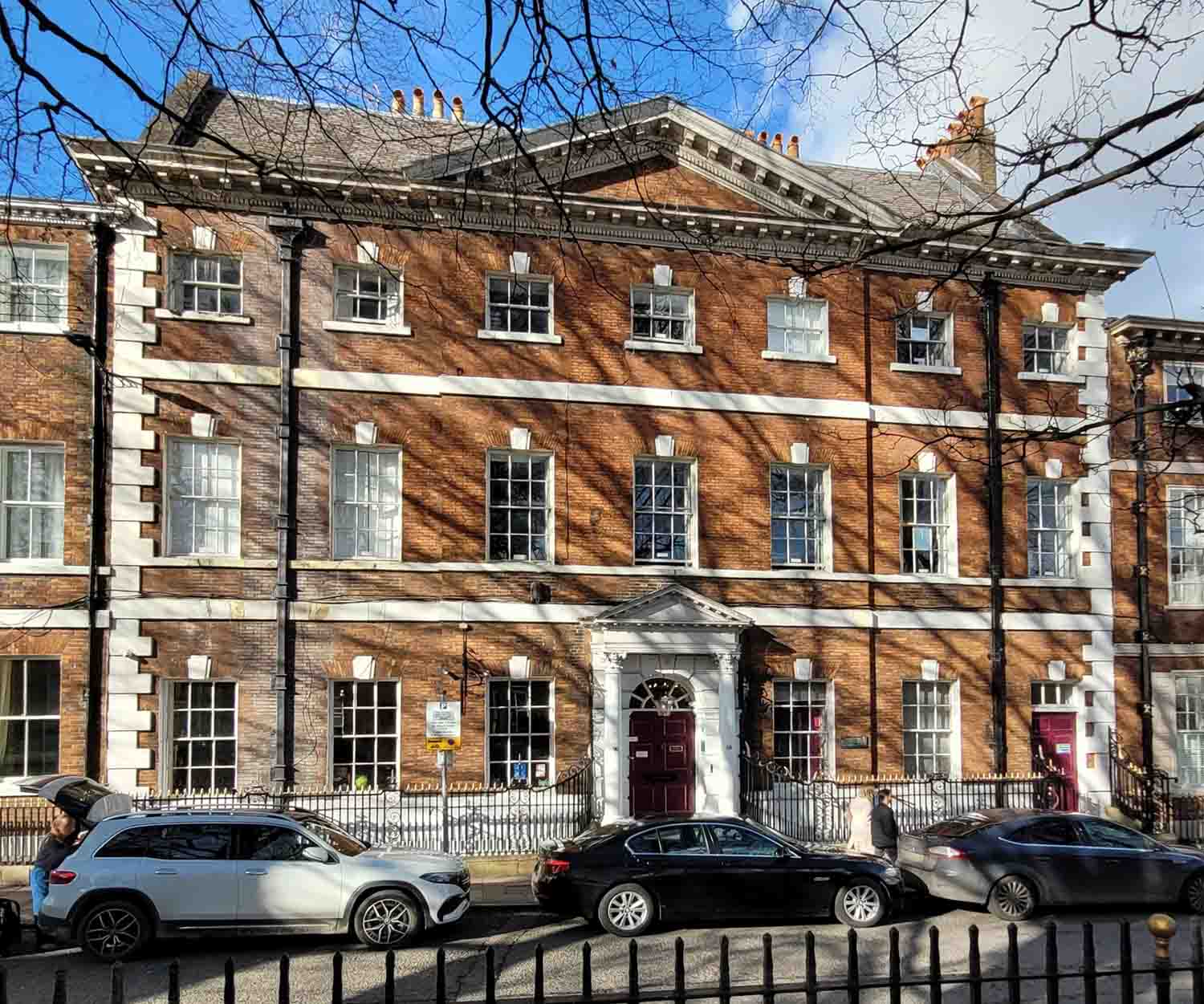
Micklegate House today
In the city of York and its surrounding villages, with such fascinating history over many centuries, we’ve got quite a number of local history groups. I’m now a railway historian, but because of my local research interests I became a founding member in 2013 of our particular local history group in York, Clements Hall Local History Group, focusing on an area south and west of the city centre and the River Ouse, covering Scarcroft, Clementhorpe, South Bank and Bishophill.
During the last 12 years I’ve run their book programme and looked after their website and social media. Our book publishing programme started in 2018, when we published my research into one of our local shopping parades, Bishy Road: a York shopping street in time, quite famous as it had won GB High St of the Year in 2015. The book was tremendously popular, selling 1500 copies in total, well priced at £5. As it featured the history of our local shops we attracted funding from our local traders’ association, and from the Micklegate Ward Fund, the Noel Goddard Terry Charitable Trust and the Yorkshire Architectural and York Archaeological Society (YAYAS). This meant that proceeds from sales could go into a book fund for the next book. As a result we’ve had the funding in place for a good print run of each of our subsequent books.
Our target audience has always been people curious about our local areas, interested in our buildings, occupants and traders. We include memories and old photos, which makes them attractive, especially to people who have moved away. Since then we’ve produced four more books about our local shopping areas and industries. Our last one was about Bishophill and Skeldergate, which we launched in May 2024 in one of our local pubs, The Golden Ball, renowned as the first ever city centre co-operative pub in the country.

We’re about to launch our sixth book: Micklegate: the Great Street of York, this October. Micklegate could be regarded as the most handsome street in York, sweeping down the hill from Micklegate Bar in an elegant curve to the river. Micklegate Bar, at the western end of Micklegate, has always been the traditional point of entry for the reigning monarch, the principal entrance to the city of York. The architectural historian Sir Nicholas Pevsner described Micklegate as “without any doubt the most rewarding street in York”. It’s extremely impressive, with a high density of historic buildings, almost every one protected with listed status by Historic England. Five buildings are Grade I and over 50 are Grade II or II*.

There have been many changes of use of buildings over the centuries. For example Micklegate House, built around 1752 for the Georgian gentry, was being used as a chemical works by the 20th century, but is now a hostel.
With this book I’ve been greatly helped in my researches by a group of colleagues. I’m responsible for the writing and some of the research, but I’ve been able to add and edit contributions from colleagues who each chose one or more buildings to research. It’s been a really fulfilling project, some of our team are experienced researchers, while others have been learning how to investigate the history of houses, traders and occupants for the first time, using our guidelines. But it’s been fascinating to uncover so many interesting stories, lending interest for readers. We discovered a modern flat in Micklegate with medieval wall paintings preserved behind its plasterboard. And around the late 19th century horse trams had to add a ‘trace horse’ to get their vehicles up the steep hill.

Our starting point was the York Historic Environment Record (HER), which draws upon the Royal Commission for Historical Monuments of England (RCHME) as well as other sources, and is an invaluable mine of information. The City Council’s York Planning Portal allowed us to access digital documentation supporting building changes over the last twenty years. But our main focus has been the numerous occupants and traders, as there are many other authoritative sources describing the architecture and construction of buildings.
A complete renumbering of Micklegate in 1910 made our work a little tricky at times. We’ve used trade directories, historic censuses and business directories. The British Newspaper Archive is particularly productive for 19th century press reports, notices and advertisements, also the online modern York Press archive, which takes us back nearly 30 years. To attract memories and old photos we’ve made great use of nostalgia groups on social media, and written articles for the York Press to highlight our need for material. The National Library of Scotland has an invaluable digital collection of Ordnance Survey maps from 1852 until the 1970s. It’s interesting to note that the Ordnance Survey had their office temporarily in Micklegate in 1851, from where Captain Tucker of the Royal Engineers led a team producing the first Ordnance Survey map of York in 1852.
We publish all our books ourselves, bearing the costs, but providing an income for the next publication. We’ve gained a significant reputation for our publishing. Our third book, about Nunnery Lane was judged joint winner of the best Community Publication in 2021, in the national CILIP Alan Ball Local History Awards.
Read more
https://www.clementshallhistorygroup.org.uk
The views and opinions expressed in this blog are those of the author and do not necessarily reflect the official policy or position of the British Association for Local History (BALH). Any content provided by our contributors is of their own opinion and is not intended to malign any individual, group, organisation, or entity.