Scrapbook Time Travel
Published: 13th January 2021
Carolyn O'Hara
@carolyn02
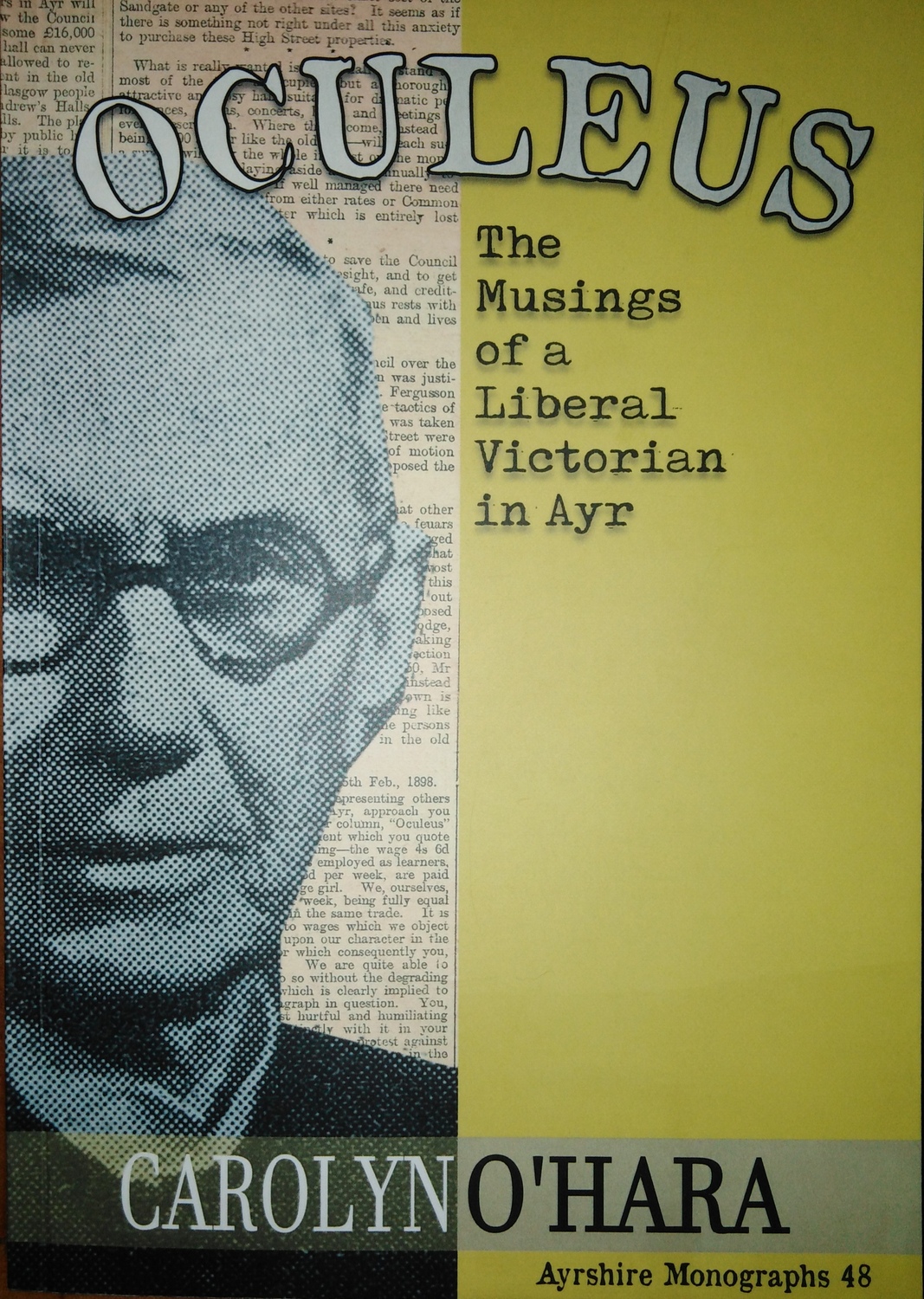
Carolyn O'Hara lives in Prestwick and works as an English tutor and freelance writer. She has had poetry, articles and short stories published, and loves performing at spoken word events. In August 2020, her social history book, which explores life in Ayr in 1898, was published by AANHS.
It takes a seismic shift to jolt an individual into opening their eyes and observing things which bring the past to life in a vivid, and believable way.
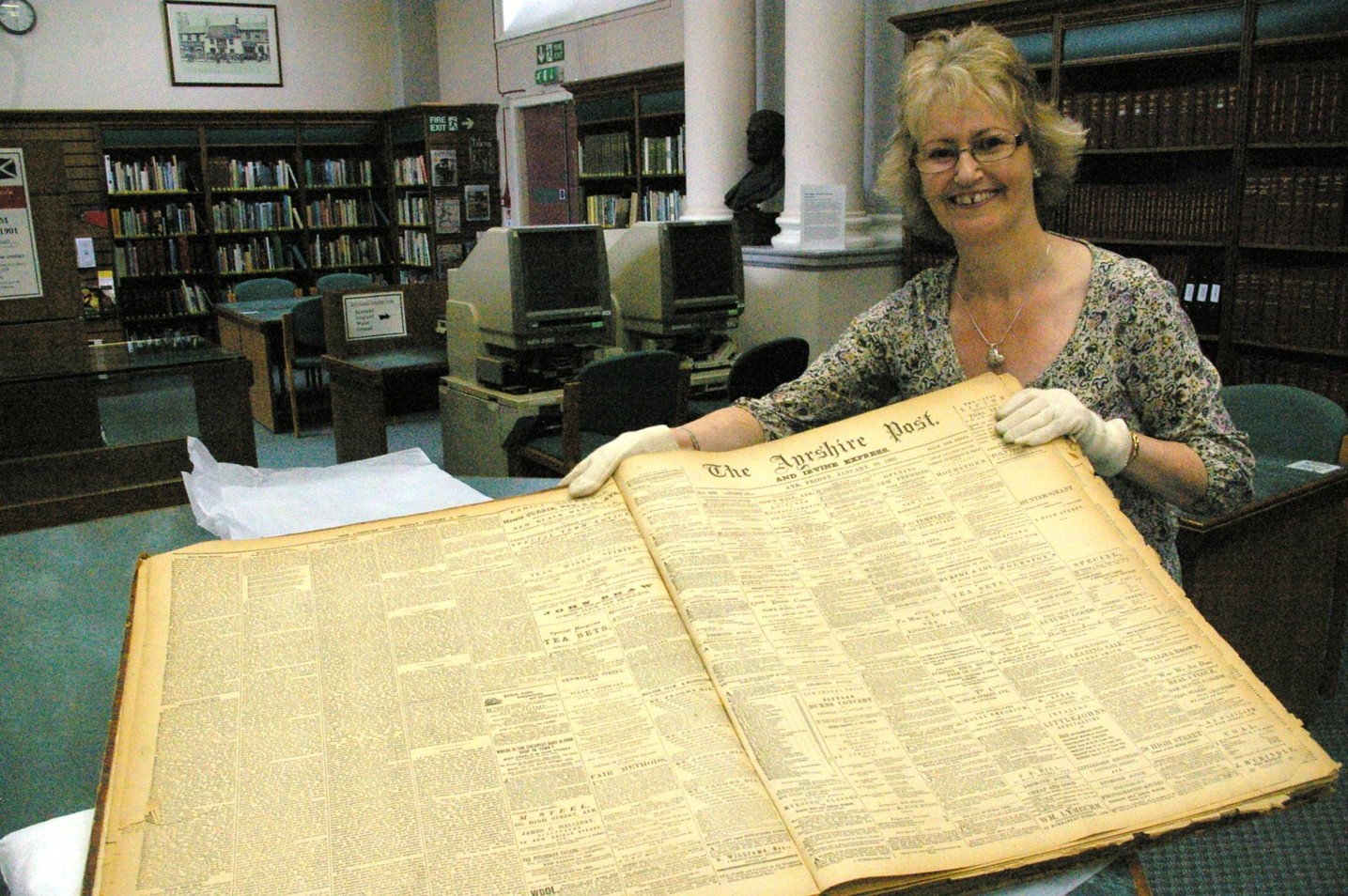
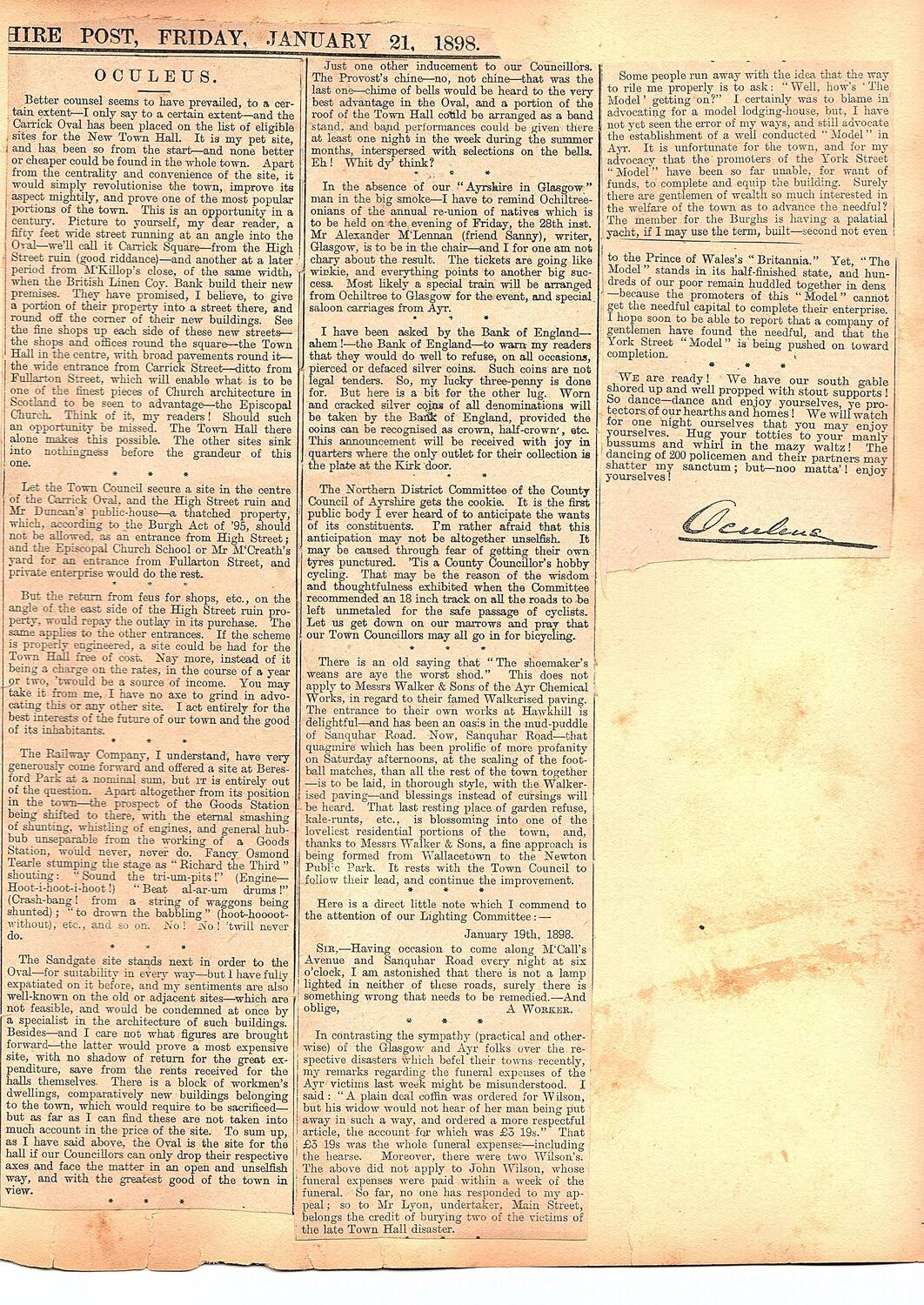
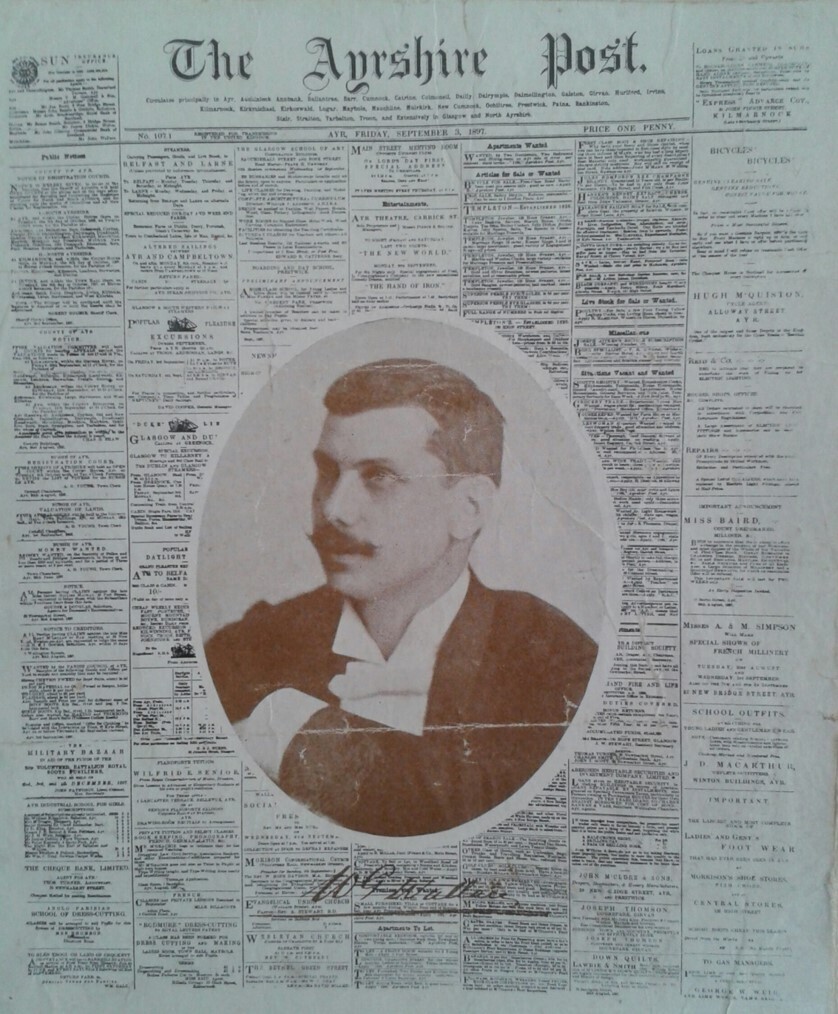
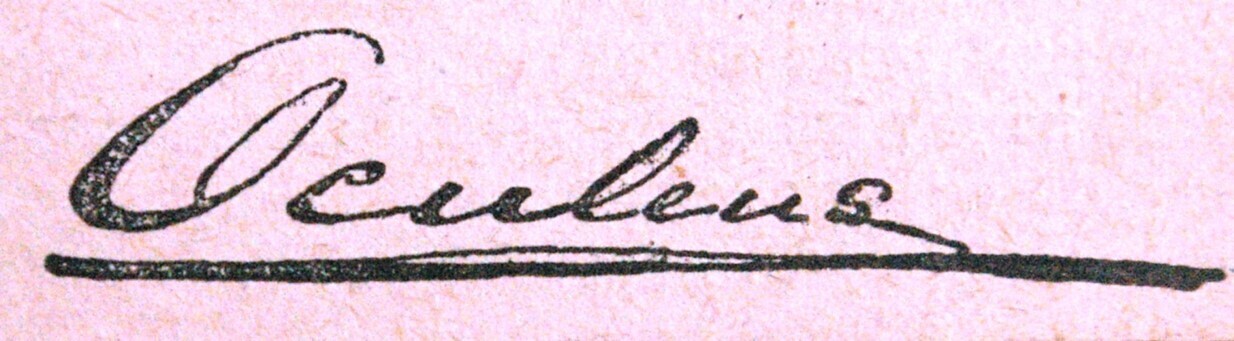
For me it was the discovery of a family scrapbook, packed with dramatic detail about life in the streets of Ayr, in 1898. It contained newspaper columns written, under the pseudonym of OCULEUS, by my great grandfather, William Gilmour Wallace, managing editor at THE AYRSHIRE POST from 1890.
What was life like? There were holes in the roads which the council neglected to fill; women complaining about men wolf-whistling, and foul-mouthed Ayr Academy pupils. But this was also a time when there was a contagious outbreak of scarlet fever, disputes about Ayr Races, and the appearance of cars – all captured in humorous, satirical, and often moving musings.
And so began several years’ reading and researching, ‘beside’ my great grandfather, giving me a fresh understanding of late Victorian life.
Walking past Ayr Academy, I recalled his comment which highlighted -
‘… the large number of crippled sheep being driven through
the streets and roads of Ayr. There’s far too much of this cruelty
.... Not a week passes but flocks of sheep are driven along Fort
Street at night – from the boats – and in the rear of each flock
are a number of poor stragglers with the dogs yacking!
And biting at their heels and forcing them on. Occasionally one
flops down and even the terror of the dogs fails to bring it to its
feet again. I hope … owners will have some consideration for
their dumb animals.’
Immersing myself in this world, I had expected much about crime in Ayr, but this does not dominate OCULEUS’s weekly columns. He is not, however, without strong views about crime, its causes and control.
In January 1898, there is a discussion about the behaviour of police officers on Ayr High Street, one Saturday night. OCULEUS has received several complaints from, ‘... respectable citizens who have been unduly molested and interfered with by the Police.’ This molestation and interference refer to the experience of a gentleman who, while looking in a shop window, is told to:
“Move on oot o’ this.” After enquiring, “Why? What have
I done?” the gentleman is rewarded with ‘a shove which
almost knocked him over, and was told, “Go on or I’ll shove
ye on yer face.”’
OCULEUS sympathises with policemen carrying out the “loitering” order intended to ‘clear the pavements of groups of young men who stand for hours and obstruct and bespatter the pavement with expectorations’ but he warns of the dangers of ‘excess of zeal’, adding,
‘You see if one member of the force is a fool and exceeds
his duty – the whole force is condemned; so it behoves the
members of the force to carefully guard their actions and
cultivate a courteous and respectful manner – and give no
countenance to incivility or excess by any of their colleagues.’
Away from such drama on Ayr High Street, you might think that the seashore would be a relaxing place, but perhaps not. Gazing out towards the Isle of Arran, on a fine summer’s day, your eyes would have been arrested by a spectacle no longer seen today.
Bathing machines are provided ‘in the interests of decency’ but oh, what trials and tribulations their presence provokes. Formidable-sounding Captain Galloway is an Ayr councillor, and the person responsible for setting the charges for these indispensable machines. Money is the subject of an ongoing wrangle.
On July 29th, OCULEUS voices a complaint and begins the paragraph in an attention-grabbing style.
‘Captain Galloway – thine lug! I have a complaint. You
advertised the Bathing Machine charges as follows:- “one
person, 3d; two or more, 2d each,” and so on. Moreover, you
have the charges printed on the stern sheets of the machines as
well, yet in face of all that you instruct the man in attendance
to charge 6d for one person. Fie! – not like you, Captain, at all!
A gentleman went down one morning last week for a dip in the
briny, and 6d was demanded by the attendant. On the gentleman
calling his attention to the rates printed on the back of the machine,
he said, “Nae matter – sixpence is the charge noo!”’
And what about women in 1898? Lady cyclists are causing a stir around Ayr, as this letter demonstrates:
‘Dear Oculeus, - 7/10/1898
Can something be done to caution the hair-brained lassie who
careers madly down High Street on her bicycle with both hands
off the handle bars, at the imminent risk of not only her own
life but the limbs of all who come in her way. I was horrified
and disgusted to see a young lady on Wednesday coming down
the crowded High Street making a feint of putting on her gloves,
and appearing to thoroughly enjoy the universal notice and
consternation her reckless conduct attracted.
– I am, your etc., OLD MAID
OCULEUS is strongly in favour of women cyclists and displays a clear understanding of what they must have to put up with.
‘It must be exceedingly tiring – the incessant friction
of a heavy skirt over the knees, not to speak of the
annoyance and fatigue of going against a head wind.
Besides, the flopping skirt is so ugly and makes the
most accomplished rider look horrid. Ladies who cycle will
require to cast aside this mock modesty, or break through the
barrier of custom and don a costume which will give each of
the nether limbs independent and free action. My dear “OLD
MAID”, of course you will look at such cantrips with different
eyes from me. I cannot help admiring the dear things in their new
found freedom.’
With fifty-two weeks’ worth of historical treasure at my disposal, it was a pleasure creating a twelve-chapter, social history book, which offers a snapshot of life in 1898.
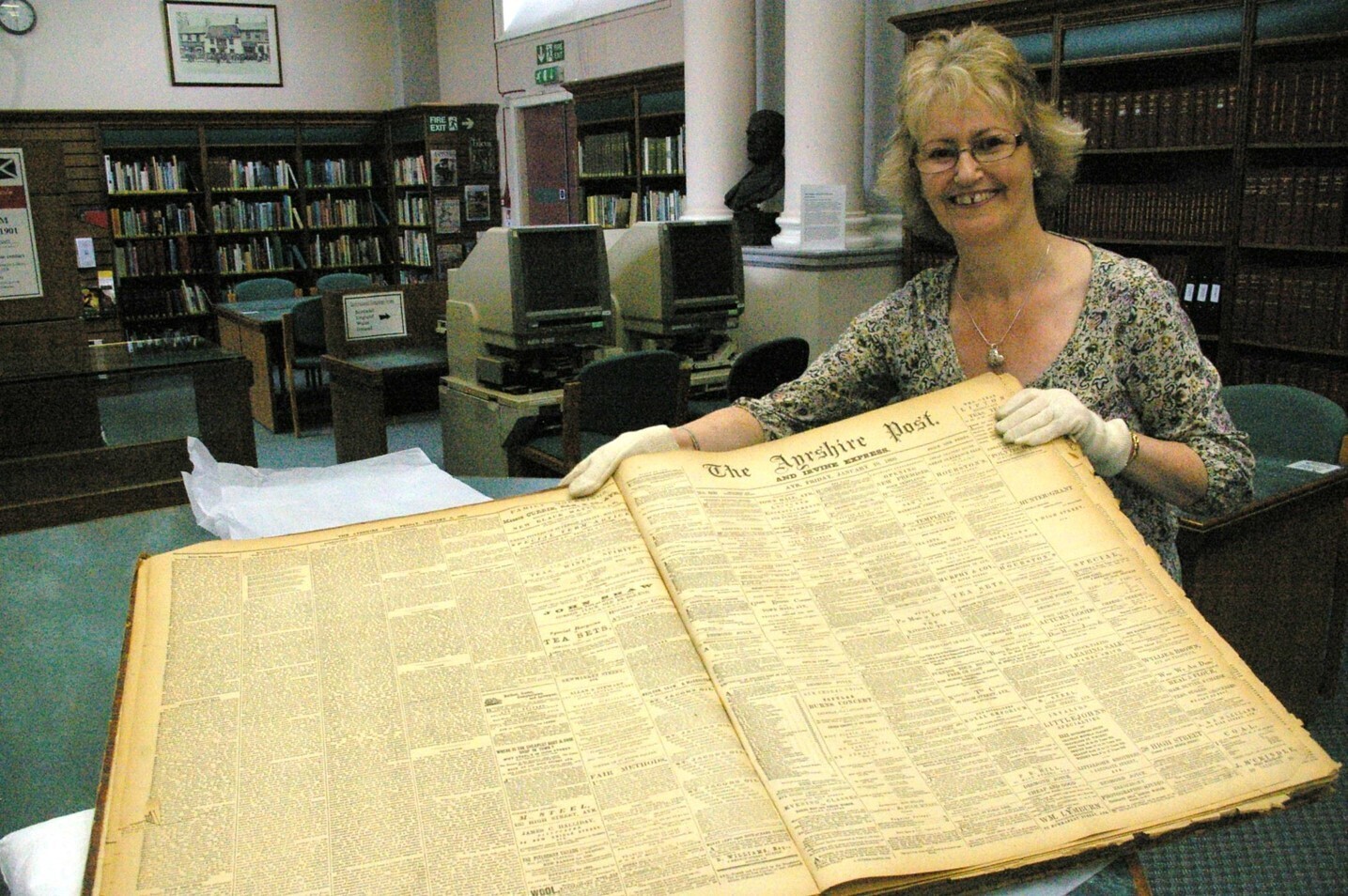
In terms of research, my first port of call was Ayr’s Carnegie Library, where their archive houses original copies of the newspaper, which proved wonderfully helpful. Otherwise, the internet has been an amazing tool, offering a wealth of online documents. Discussion forums can be helpful too. Pose a question by email, to an organisation, anywhere in the world, and an answer can be obtained with remarkable speed.
A local history Facebook page proved useful, as was The Street Names of Ayr by Rob Close (April 2001), an invaluable PDF document from the Ayrshire Archaeological and Natural History Society.
Had I embarked on this project fifteen or even ten years ago, it would have been much more difficult.
So, what now? A podcast? I think the material would lend itself to that medium. Or perhaps a sequel - OCULEUS wrote columns until 1940. But which year to choose?
The views and opinions expressed in this blog are those of the author and do not necessarily reflect the official policy or position of the British Association for Local History (BALH). Any content provided by our contributors is of their own opinion and is not intended to malign any individual, group, organisation, or entity.
Gallery: