Local History Photographer of The Year Winning Images
Published: 17th June 2022
We were thrilled by the breadth and quality of images submitted to our inaugural national photography competition
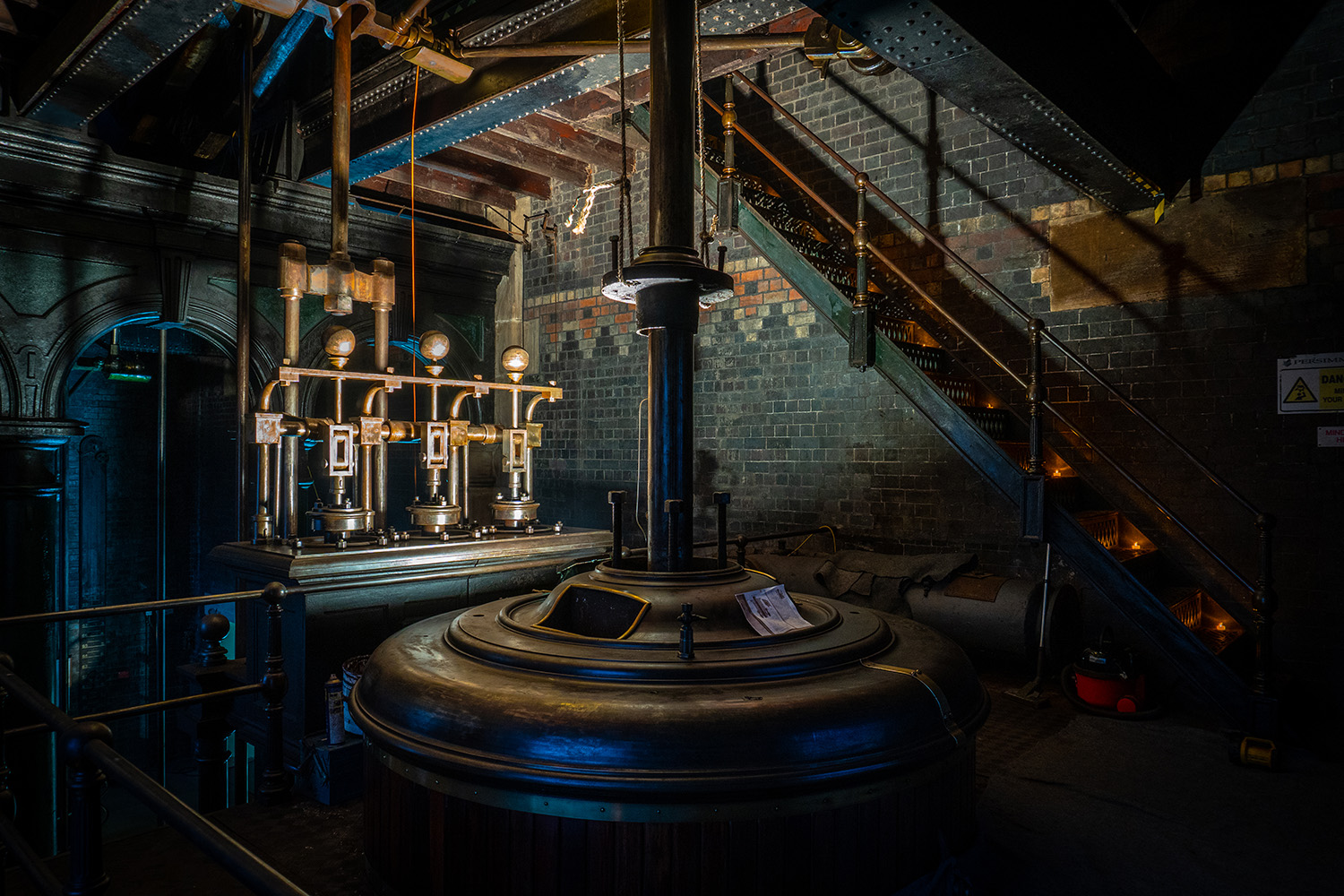
David Moore's winning image of Sandfields Pumping Station
The competition was initially conceived as a way of seeing how local history is all around us, but also how we've also been making history with our experiences of the pandemic over the past two years. But we went further, and really wanted to see a visual census of local history of this country in 2021 / 2022. We asked the nation "What does local history mean to you?" and you answered!
The judging panel managed to reduce the entries down to just twelve, before settling upon our Local History Photographer of the Year and Young Local History Photographer of the Year for 2022, David Moore and Madeline Davies.
Local History Photographer of the Year, David Moore

David's striking image of Sandfields Pumping Station was a unanimous choice with all the judges. His words accompanying the image summed up the importance of this Victorian structure.
The grade II* listed Sandfields Pumping Station is a forgotten hidden historic gem. Like most industrial heritage building, its familiarity in the landscape has eroded away the curiosity of the casual passer-by. Yet this Romanesque styled masterpiece is a cathedral to the industrial revolution, for years unloved, for years abandoned.
Its Romanesque style took the language from the past and built the way to the future. Celebrating new technology and progress, it bought life giving clean water to the beleaguered communities of the industrial Black Country, bringing health and wellbeing to all.
This building and its historic contents showcased the provision of clean water that seeded the developments that enabled Britain to become a modern industrial country. Britain lead the world in technical and scientific developments that have improved the quality of people’s lives worldwide and are a testament the vision of the Victorian engineers and their philanthropic endeavours.
Let us look at this building and remind ourselves of the tens of thousands of people who died in the cholera epidemics of the mid nineteenth century. Most of these unfortunate people were buried in mass graves or cholera pits, with no identity, dignity or recognition of their lives.
This building is a monument to their life, giving them back a voice that allows them to tell their remarkable story.
“The heritage of the modern water industry is almost entirely absent, despite its unarguable relevance to human development. J. Douet”
David said:
My association with history began inauspiciously. I was thrown off the History CSE course at secondary school for failing to show an interest and failing to hand in any course work.
My working career started with an apprenticeship in the construction industry with an upward path leading to management in the private sector.
Despite my worst efforts at school, I have always maintained an interest in history. I travel Britain widely in pursuit of his passion for industrial heritage, social and local history.
Early retirement allowed me to deepen my interests by studying public history at Ruskin college, Oxford, for which I was awarded an MA.
My other skills of photography, filmmaking and information technology support my work in the public history arena.
I found out about the competition through social media. I have been using social media as a key tool in a campaign started to save the historic Victorian waterworks at Sandfields, Lichfield. With my commercial background combined with my knowledge of history, I was able to set up a historic buildings charitable trust that would enable and engage the local community to take responsibility for this industrial building that they love. My strategy was to take every opportunity, via the various medias to showcase the history of this site and the benefits historic places bring to communities.
After just over nine years the trust will now be able to take ownership of the site along with a significant dowery negotiated with the owners. This success enabled me to step down as trust chairman last October.
The location and execution of the image was a first opportunity for the trust to open the building to the public for a Halloween night event. We lit the building with temporary lead lights and LED night lights to bring out the Romanesque splendour of this monument to the past. I told a number of ghost stories to the visitors as a way of engaging them with the building’s past events.
I am personally overwhelmed winning this photographic competition because I believe that our industrial history and heritage often takes a backseat in the historical theatre, the great man theory often taking mainstage. I believe that history is not to be seen as a set of facts or a subjective past. History is a place of possibility, where if we all, as historians, academics and everyday people are able to join in the discussion, we can all expand our knowledge of the past and give voice to the people who lived before us and the gift of wisdom to the people yet to come.
BALH Young Local History Photographer of the Year, Madeline Davies

Madeline's beautiful image of the Druid on the Ruins, and supporting words made her our under 18s winner.
The Druid on the ruins is one of my favourite places to visit while at Shugborough Hall. It is a family favourite as long-standing members of the National trust, but I think that it is a perfect frame for the river behind as you can walk into it and view the wildlife passing by including swans, geese and other waterfowl. The contrast between the well upkept gardens and house and the disappearing ruins is beautiful and I think it intertwines past and present perfectly.
Madeline said:
I am 14 years of age and found out about the competition through my Photography Teacher. I am a keen photographer and love to be creative. I enjoy a wide range of photography but in particular I like photographing nature and animals, including my dog Fudge. As a family we enjoy going for walks and use our membership to the National Trust regularly to visit new and exciting places. This has helped my photography as I love to learn about the people and places I photograph so the history in these buildings is perfect for that. I am still early in my photography journey, developing my skills over the last four years, so I was completely overwhelmed that I had been included in the selection, let alone the fact that I had won.
Runners-up
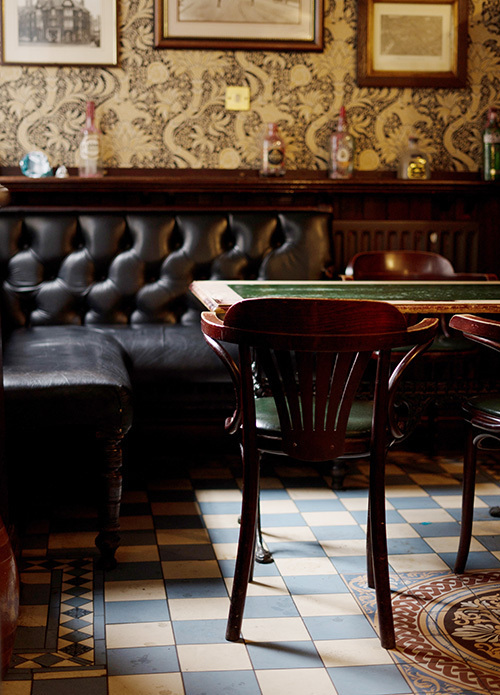
Carol Langford's timeless image of a pub in Wolverhampton was the runner-up in the adult category.
The Posada Pub, Lichfield Street Wolverhampton. This is a Victorian Grade 11 listed building situated in the town (now city) centre, built in 1886 on the site of the old Noah's Ark Inn. It still has many of its original fittings and fixtures, including ceramic tiling inside and out, rare snob screens and beautiful floors that absorb the natural light coming through the stained-glass windows. For me it’s always been the pub where the fans of Wolverhampton Wanderers stream out of, having pre match drinks before supporting their team at Molineux. As a young teenager I always wondered how so many noisy, gold and black fans could fit into such a small place. Once old enough to use the pub for its intended purpose I discovered the big beer yard at the back. An iconic and much-loved building in Wolverhampton.
Carol said:
Photography has been a big part of my life for over four decades, both as a practitioner and tutor. I love seeing and creating images that make people look, think and talk about. I live and work, as a freelance photographer and tutor, in Shropshire but take my pictures wherever I go, especially if I feel that they have a story to tell. I enjoyed taking the shot of the Posada, the locals were so happy to regale tales of the pub’s history and background. I love to find out about social history, especially the working classes experiences in the early decades of the 20th century in the Midland’s. One of my photography students, who has become a good friend, told me about this competition, she knew that I would enjoy taking part.
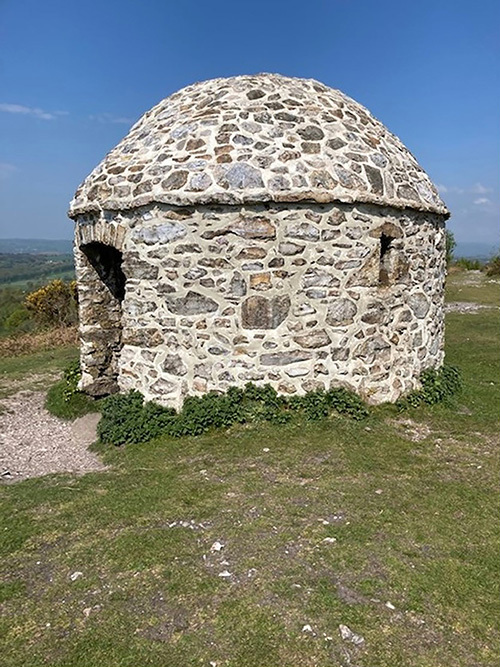
Our youngest finalist is Sophie Poore, with her beautiful image of Culmstock Beacon supported by an eloquent description of what this place means to her.
Throughout the lockdown I spent most of my time walking up on the beautiful and rugged Culmstock Beacon, exploring the wildlife, stunning views and magical surroundings. It’s a wildlife haven and attracts a great amount of animals, reptiles and birds.
One of the many reasons why I love walking up there is the change in the atmosphere at the different times of the year. In the spring you can see the frogspawn metamorphosis into frogs. In the summer you might catch a glimpse of the disguised adders cloaked in with the terrain and astounding sunsets shimmering on the horizon. In Autumn time you can feel the familiar breeze brush upon your shoulder once again and in winter you can wrap up warm and see the frost, ice and snow glimmer on the paths.
High on the southwest point on Blackdown Common is Culmstock Beacon. It is one of a chain of Elizabethan beacons used for lighting fires to warn of advancing enemies, for example, The Spanish Armada. The beehive-shaped structure was built of flint and was rebuilt after the collapse of the earlier one. The beacon has been lit up for numerous celebrations including the Queen’s Golden Jubilee in February 2002.
Victoria, Sophie's mother said:
Sophie heard about the competition through her school, Sampford Arundel primary school. One of the parents told the school about the competition and Sophie was keen to enter. She loves taking photographs of nature but also action photos of her sister riding! I think she enjoys the excitement of entering competitions but this one was particularly important to her because of the topic. She immediately knew what picture she wanted to take. The Culmstock Beacon is a magical place for us as a family. We walk there frequently; the views are amazing. There are wild horses up there that Sophie and her little sister Jemima have named. Having moved around a fair bit this feels very much like our home. To celebrate the Queen’s Jubilee they lit a fire beside the beacon and we all went up to watch ours as well as the other beacons all lit up. It was very special. Sophie is also a bookworm and loves writing especially creative writing. She entered this competition entirely by herself!
Congratulations to all who took part. We will be showcasing many more of the entries over the coming weeks and months.
Look out for details of next year's competition. We will be opening this in late-July, allowing you even more time to submit your entries.
Watch the announcement at Local History Day