Thoughts from BALH digital workshop: Community Created and Curated Collections
Published: 11th August 2021

Jane Golding
BALH Joint Vice-Chair & Outreach Team Member
@CArchives
Jane Golding is a member of the BALH Outreach team and CAHG Chair.
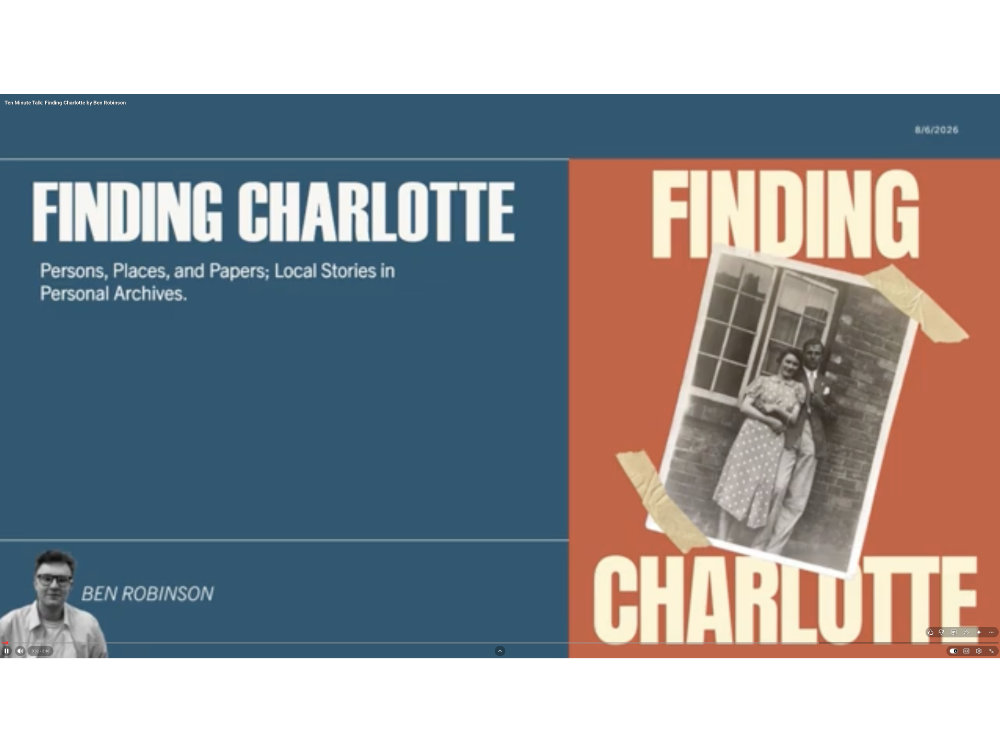
The Community Archives and Heritage Group (CAHG) joined BALH for this workshop at the end of June. Here we share thoughts about the importance of conversation within group interactions as we begin to move forward out of the pandemic. You can also find slides of the two projects featured in the workshop; Rainbow Street, Gloucester and 100 Homes, Plymouth and links to practical resources.

It is often said that history is a conversation between the past and the present.
In providing context for the present, history helps us to better understand who we are. It can transform our understandings and help us to think from other perspectives. We will all have experienced such moments in our research, writing and debate but how often do we look for them in our group interactions?
At the same time as accelerating a move to digital and online communication, Covid has reinforced the importance of kindness, belonging and community within a common necessity to stay connected. Thus, as we begin to reconnect beyond the world of Zoom and online platforms, it is perhaps a timely moment to reflect, take stock and re-evaluate what is important. To think afresh the purpose of our group interactions. We are not the same people as we were in March 2020. The enormous change brought about by the pandemic calls for an understanding of what we have learned from the past year and thoughts to how we want to be within our groups going forward.
Community archives are often seen as a bridge between formal archives and voices that are under-represented or mis-represented by mainstream collecting institutions. However, there are no hard and fast rules to a definition. As the name suggests, a community archive is essentially a collection created and curated by the community. It will contain primary material, and may be physical, digital or both. Community might be defined by a place or location; or could be a community of interest around a sporting activity, occupation or business. And yet, some elements - community participation, ownership and control in the project - are essential.
The highly participatory nature of community archiving creates spaces where conversations around identity, place and belonging can happen, and where sameness and differences are explored. Conversations that are sometimes uncomfortable and challenging but always best supported by tea and cake - the mainstay of any community project.
We suggest starting with a clear intention and connecting it back to your group’s vision and mission. What are your values and how will these guide what you do? To share an example from CAHG: ‘know that mutual support, empathy, respect and kindness are actions’ – was easy for us to write and believe to be implicit in our work, but far tougher to demonstrate as real-life actions within a strategic plan. In moving beyond established means of bringing grass-root groups and heritage professionals together, our values have helped to guide decisions on how we can do more to create greater intersection between groups and create more spaces where conversations can happen. We have recently set up two community heritage networks, one in the South West and the other in Scotland. We will learn from these initial projects to extend provision across the UK.
Online connectivity during the pandemic has been a lifeline, enabling our organisations and groups to continue meeting and staying active. As we reach out to more people, more regularly, the benefit of increased digital connection is evident. In fact, you may feel that you have got to know some people better as a result. And, of course, not everything has had to go online. Street exhibitions, audio events, trails and tours have all been possible with careful social distancing. We will want to retain the rich, resourceful and creative solutions to both on and offline ways of working that have been realised during the pandemic.
It is also important to recognise what we might be missing.
As you click the ‘leave’ button on Zoom, it can feel as though the conversation has come to an abrupt end. We have no opportunity to catch up over a last cup of tea nor to share ideas when making the journey home. Jumping onto social media can allow the conversation to continue – and good social media is about conversations that connect with authenticity, honesty and open dialogue – but it cannot replicate the multi-layered experience of meeting face-to-face. When we give each other time and listen with an open heart and open mind, we feel heard, recognised, understood and validated. The experience of the pandemic has opened up a new landscape where we can choose our own blend of virtual and real-life communication. We must rise to the challenge and find ways to create more places and spaces where our online conversations can also encompass moments of active listening in a meaningful two-way process.
Featured Projects
Sally Middleton and Kim Kenny, Gloucestershire Archives
Rainbow Street Project: a neighbourhood history project in the Kingsholm an area of Gloucester City with high level deprivation. The project is an example of ABCD - asset based community development – a collaborative way of working within communities.
Donna Maughan, CAHG
100 Homes: oral history project recording the stories of people living in the Stonehouse area of Plymouth both past and present, and dating back to when the three towns of Stonehouse, Plymouth and Devonport first joined. This project won the 2018 CAHG award for community engagement and the overall award for best community archive of the year.
https://www.100homesproject.com/
Resources
CAHG – Community Archives and Heritage Group
Brings together the best available online information, guidance and tools for community archives and heritage, including cataloguing guidelines, digital preservation, ethical working and copyright.
https://www.communityarchives.org.uk/resources
Webinars
https://www.communityarchives.org.uk/content/category/about/webinars
The National Archives – Manage Your Collections
Advice for non-professional archivists. Upload your catalogue description to Discovery as a free and low maintenance way of getting collections information accessible online.
https://www.nationalarchives.gov.uk/archives-sector/advice-and-guidance/managing-your-collection/
The Digital Preservation Coalition – Novice to Know How
Online digital preservation training
https://www.dpconline.org/digipres/train-your-staff/n2kh-online-training
NCVO - The National Council for Voluntary Organisations
How-To advice on writing vision and mission statements, and much, much more
https://knowhow.ncvo.org.uk/how-to
Community Archives and Heritage Group supports and promotes community archives and community heritage by bringing together groups, organisations and professional bodies, and provides a forum for the regular exchange of views and information. CAHG is a special interest section of the Archives and Records Association, the main professional body representing archivists, records managers and archive conservators in Britain and Ireland. Membership to join CAHG is free https://www.communityarchives.org.uk/content/get-involved/register
The views and opinions expressed in this blog are those of the author and do not necessarily reflect the official policy or position of the British Association for Local History (BALH). Any content provided by our contributors is of their own opinion and is not intended to malign any individual, group, organisation, or entity.