The Local Historian Volume 11 Number 5 February 1975

Contents
The work of a county local history committee - Kent Show more
By Patricia R. Stones
Description of the Kent Local History Committee and its work, covering its organisation and then discussing the main objectives of the Committee: i) to provide a service for local history societies; ii) to maintain contact with local authorities; iii) to provide a link with national bodies; iv) to provide a link with other groups outside the organisation; and v) to provide a service to the public. There are many quoted examples of specific projects and instances of the work of the Committee in practice, and the article includes a diagram showing the administrative structure of the Committee.
Kirk session registers Show more
By Rosalind Mitchison
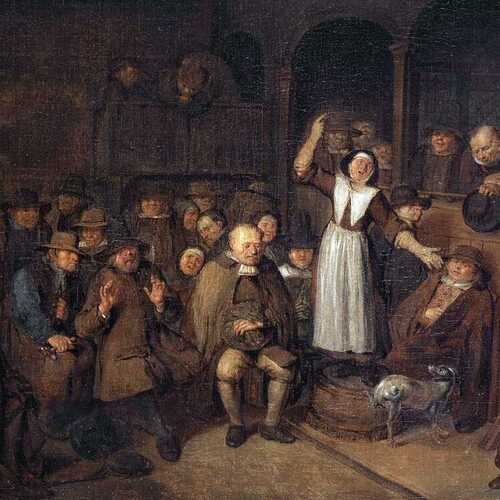
The second in a series on 'Sources for Scottish local history'. Kirk sessions, the lowest level of church courts in Scotland, were established after the Reformation of 1560 although a few are clearly earlier. Their role was crucial as they were the courts 'most intimately concerned with the real problems of a self-governing community'. Almost all their records are now held in the Scottish National Archives in Edinburgh. In the Lowlands many records survive though they are much less common in the Highland parishes. The article outlines the system which generated these records and discusses their content and quality as a historical source. The extremely wide range of business (social, economic and religious) which they dealt with is explained, as is the gradual relaxation of tight social controls during the 18th century. There is a more detailed discussion of the limitations posed by the ending of entries concerning the poor law after the parish had adopted assessment which required separate records. Finally, it is noted that these documents are not only very informative about matters such as moral and disciplinary controls exercised by the kirk, but also give much incidental detail and are often phrased in particularly vivid and immediate language.
Local history in Italy Show more
By Sergio Bertelli
Wide-ranging review of the development of local historical studies in Italy from the 16th century to the late 20th century, including a lengthy bibliography; the paper was first given at a meeting of the Standing Conference for Local History in 1973. Bertelli covers the 17th and 18th century interest in the history of individual towns, and local biographical studies; the use of local historical approaches in writing the histories of the small states and city-states of pre-19th century Italy; the publication of documentary sources such as medieval town records; the role of the state in promoting historical studies after 1860; historical theory and local history, and the growing influence of politics; town histories after the Second World War, and major publishing projects; local history in the context of Marxism, the partisan movements, labour history and Catholic history; and the current state of the subject.
The primary towns of England Show more
By Alan Everitt
Important and substantial contribution to the study of urban history - a paper given at the 1973 Standing Conference for Local History meeting. Everitt propounds the argument that certain towns, to which he gives the label 'primary towns', antedated the Norman Conquest and had a supremacy within their regions, as central places, which can be traced back over a thousand years to the beginnings of the post-Roman urban system. He contrasts these with the medieval new towns such as Market Harborough or Devizes, clearly founded as a conscious decision after the Norman Conquest, and the 'organic' towns such as Lutterworth or Tonbridge, which grew up as expanded villages. The distinguishing characteristics of primary towns are, he suggests, sevenfold, though not all show every one of these equally. They may be listed as: i) the antiquity - they are very ancient settlements, may have Roman or early Saxon origins, and frequently have evidence of pre-Roman occupation; ii) they are associated with prehistoric tracks or Roman roads; iii) they were early religious centres, with minster churches, often at the centre of a large ecclesiastical estate; iv) they were often the centres of royal or regional administration, with large and ancient Crown manors; v) their parishes are unusually large and they had numbers of daughter-churches; vi) they show evidence from archaeological or other sources of serving as major trading places before or shortly after the Conquest, and their market function is likely to predate the first market charters or documentary evidence; and vii) they rarely dwindled and never died, unlike many organic towns and medieval market creations, and in the 18th and 19th centuries acquired a new prominence as regional market centres, route centres and they also tended to acquire industries. In the article Everitt uses as a case-study the town of Banbury, Oxfordshire, but includes frequent references to a wide range of other English market towns.
The condition of urban history in England Show more
By Anthony Sutcliffe
Paper given to the 1973 meeting of the Standing Conference for Local History, reviewing the current state of urban history in England. Sutcliffe looks first at the background to urban research, noting the absence of a 'school' but also listing some of the organisations and recent general works which have led to greater depth and understanding of urban subjects. He then identifies certain criticisms which have been levelled at urban historians and to developments in the United States. A lengthy tribute is paid to the work of H.J. Dyos, and his active role in fostering urban history as a separate branch of study, as well as his own research work in Camberwell. The article notes that urban history relates to other disciplines, such as geography, sociology and architecture. Sutcliffe then categorises the evidence for recent approaches to urban history research: i) historical studies or urbanisation over extensive areas; ii) biographies of individual towns in their entirety; iii) aspects to themes in the history of towns (e.g. the class struggle in Oldham or politics in Leeds); and iv) studies of the impact of urbanisation on other aspects of society (e.g. the city in art and literature). He suggested that about 70% of current research was in the third category and 23% in the second, and concludes that this might reinforce the view that not enough work was being done on the process of urbanisation. Breaking down category (iii) he found that 32% were researching politics and administration, 19% urban morphology, 17% institutions, 14% economic activity, and 13% society. Finally, Sutcliffe notes that research in the future might become more systematic, but that 'the health of historical scholarship in this country still reposes, as it always must, on the imagination and endeavour of the individual'.
The uses of contemporary suburban history (1918-1950) Show more
By Nigel Todd
Suburbia, and its development, is a neglected theme among historians, according to Todd, and he identifies the political history of the suburbs as a notably uncharted area, despite the fact that their predominantly middle-class social composition had an important bearing on the evolution of right-wing politics in the 20th century. He investigates the example of Bexley, Kent, to identify the rise of right-wing politics and the attitudes of local people to the growing importance of the Labour Party. He observes the complexity of local politics in the 1920s, when there were ratepayers' parties, and then traces the activities of the right-wing up to the late 1940s. The article suggests that Bexley's very rapid growth in the 1930s was damaging to the local Labour Party and that population changes in the late 1940s also led to a loss of Labour supporters. He discusses possible sources for information on the subject, including the use of oral history, in which he interviewed local politicians, party workers and supporters.
[Hide]



Hugo Javier Freitas


Laura Yeoman