Local History News Number 158 February 2026

Contents
Complex histories where East and West meet Show more
By Alan Crosby
Early December is probably not the best time to visit Bucharest, but we were on a kind of cultural exchange in which local history was not the main consideration. However, we had some free time and were able to explore parts of the city centre and I could look at the local history of this great city. The capital of Romania is the eighth or ninth largest city in the European Union – much larger than I’d expected, and with a real metropolitan feel about it. But the weather was grey and overcast most of the time, and the city itself seemed rather grey. It is not a beautiful place but there is a fascinating recent history.
In Olivia Manning’s Balkan Trilogy, published between 1960 and 1965 but set in the 1940s during the Second World War, Bucharest is ‘the Paris of Eastern Europe’. It was a glamorous place, a meeting point between East and West, with beautiful socialites sipping cocktails, brilliantined lounge lizards with two-tone shoes, impoverished Russian émigrés and mysterious spies, but subsequently, under communism, it decayed and deteriorated.
During the long reign of Nikolai Ceauşescu (1965–1989) the city fell victim to the dictator’s architectural megalomania. Much of the old centre was demolished or transformed by the construction of new boulevards, great concrete buildings blocks of flats and other public buildings. These are now 40 or 50 years old and have worn very badly. The concrete looks stained and dirty, and the architecture seems drearily old fashioned, so what was supposed to be a showpiece of socialism has turned into a townscape that’s often rather depressing and unimpressive. The traffic problem is overwhelming – the city is gridlocked throughout the day despite the building of the six lane boulevards slicing through the old urban fabric, and the metro is rather limited in extent. The centre of the city is built around the small river Dâmbovița – it is a common misconception that it’s on the Danube, which is actually 40 miles away – and the river is insignificant in townscape terms.
The topography is flat and the dominant feature visually is the House of the Republic or Palace of Parliament, the centrepiece of Ceauşescu’s Grand Design. Said to be the biggest civilian building in the world, it is a monstrous sight, stained and dirty in parts, with 12 storeys and thousands of windows. The homes of 40,000 people were demolished to clear the site, yet 70 per cent of it stands empty. Now, though, the palace is rivalled in prominence by the new National Cathedral of Romania, consecrated in 2018 and claimed as the tallest (436 feet) and largest Orthodox cathedral in the world. A dazzlingly white building with huge golden domes, its dominating presence is a reflection of the transformation that has taken place since the fall of the communist regime.
What remains of the old city is on a much smaller scale of course, a warren of small lanes and cobbled streets which now have some high class shops, restaurants and cafes. Some churches have been restored, but many buildings are still propped up by huge timbers and await renovation. Maybe one day… but their dereliction is very much in evidence and gives a melancholy air. Bucharest was a small country town until the uniting of the two principalities of Wallachia and Moldavia as independent Romania in 1878. Its growth as a capital is relatively recent but already its townscape bears the imprint of the troubled polities that have bedevilled Romania ever since. No longer the Paris of Eastern Europe, perhaps, but full of interest nonetheless, and that’s even before we reach the Treasury in the National History Museum, of which more another time!
An archives ABC Show more
By Helen Palmer
Every year Explore Your Archive provides an opportunity for archives all over Britain to introduce new users to their amazing collections. Explore Your Archive week 2025 fell in the first week of December.
Ceredigion Archives always responds to this challenge with enthusiasm and imagination. Which of us was it that decided an Archives ABC was the answer? We can’t remember! But the resulting volume is beautiful, has proved very popular and the concept could have many applications.
Anyone who has read Edward Gorey’s darkly humorous alphabetised rhyming couplets, or indeed those produced by unidentified Victorian children’s authors, will get the general idea. The English side of the volume starts with ‘A is for ARCHIVISTS welcoming you, into the ARCHIVES to try something new’ and proceeds all the way through to ‘In the days before telly to see a gnu, One had to go to the circus or ZOO’. The rhymes are often execrable (it doesn’t matter!) but each page is lavishly illustrated with items from the collections and a brief bilingual text explaining the context and significance of the documents we used. Z for Zoo, for example, contains a diary entry concerning a visit to London Zoo to view the hippopotami by a Cardiganshire woman in 1856, an advertisement for visits by Bostock’s ‘Grand Star Menagerie’ with its 600 beasts, birds and reptiles at venues between Aberystwyth and Dolgellau, and – of course – an Aberystwyth newspaper report of new gnus at Regent’s Park in 1893! Oh yes, and a photograph of the Mechanical Elephant, a seaside novelty in coastal resorts all over Britain in the 1950s. Exciting stuff – and examples of the diversity within our collections.
The Welsh alphabet contains several differences to the English one – for instance there is a Ch, Ff, Ll and a Rh (opinions differ about how many extra letters there are) and there is no K, Q, V or Z. We therefore had the opportunity to do a second, Welsh language ABC using entirely different items from the collections. ‘H’ is for ‘Hybysebion’ (advertisements), for example, and ‘I’ is for ‘Iechyd’ (health). More excellent opportunities to showcase items in the collections.
Designed and produced entirely in-house, the general effect is very attractive and there is a great quantity of information within its pages to be enjoyed by everyone with even the slightest interest in local history. Ceredigion Archives was supported by Welsh Government grant funding in the production of this volume, and it was printed by the authority’s own reprographic unit.
The idea of an ABC is familiar to most people with children – or anyone who was once a child! We would thoroughly recommend it as a light-hearted medium for transmitting information. It was also great fun to compile – our efforts led to much laughter and groaning at the qualities of the rhymes and eagerness to discover the most appropriate illustrations. Local history societies and groups might enjoy a similar project, with outcomes anything from a booklet to an exhibition or town trail.
Stories of mental health from York: past, present and future Show more
By Laura Yeoman
In December 2024, the Borthwick Institute for Archives at the University of York was awarded £9,000 from the University’s Mentally Fit York fund to undertake the engagement project ‘Stories of Mental Health from York: Past, Present and Future’. This year-long project, which has just concluded, has engaged new audiences with the mental health archive collections held at the Borthwick Institute in new and more creative ways, demonstrating the importance of archives in helping us contextualise and make sense of our lived experiences.
The Borthwick Institute holds significant and notable archives related to the history of mental health in York between the late 18th and 20th centuries. Collections include the archives of Bootham and Clifton Hospitals, Naburn Hospital and The Retreat, a Quaker-run private hospital. ‘Stories of Mental Health from York’ took as its focus the surviving personal archives created by, rather than about, patients at The Retreat between 1800 and c.1924.
Opened in 1796 to treat members of the Society of Friends, The Retreat quickly attracted international attention for the astonishing success of its pioneering mild methods of treatment of patients, under its lay superintendent George Jepson (superintendent 1797–1823). From the early 19th century onwards, patients were a mixture of Quakers and private middle-class patients of all denominations. The fees paid by the latter group were used to subsidise poorer Quaker patients. The Retreat did not join the National Health Service in 1948, and continued to provide private care until the closure of inpatient services at the site in late 2018.
Through a series of facilitated workshops delivered by local artists Stephen Lee Hodgkins and Griselda Goldsbrough, over 100 participants from a range of target audiences explored the representation of patients with poor mental health in the 19th and early 20th centuries. The workshops also allowed participants to reflect on to what extent circumstances have changed today (or otherwise). Stephen and Griselda both have extensive experience of working with patients at York Hospital, Foss Park Hospital, St Nicks and other local health and wellbeing initiatives.
Having researched the surviving archives created by nearly 200 patients, Stephen and Griselda chose three Retreat patients on whom to focus their workshops:
Alfred Smith, a long-stay patient at The Retreat in the 19th century
Eliza Mary ‘Minnie’ Harrison, a patient at The Retreat in the 1880s
James Newby, a patient at The Retreat in the 1860s.
We believe Alfred Smith may have kept a diary throughout his time at The Retreat, although a volume covering 1877 to 1878 is the only one to have survived. In it, Alfred notes many things in detail, such as fixing his eight-day clock, seeing the new gas lights at the station, watching Fulford New Church go up in flames and buying a Portuguese onion! He also notes ‘awful accounts’ from the Yorkshire Gazette about the battle of Waterloo, visits to The Retreat by government inspectors, New Lodge being built on the site and a ‘racoon’ (sic) in the back yard. Alfred’s diary also includes several walking routes that he took around the streets and pathways of York. It was these walks which inspired Stephen to create ‘The Walk of Alfred’, initially a series of facilitated group walks focusing on Alfred’s journeys, and later a printed map version which can be picked up from the Borthwick Institute for people to undertake themselves.
Minnie Harrison wrote a series of letters to family members about her feelings of isolation at The Retreat and that no one was coming to visit her. Unbeknown to her, it appears that many of her letters – sometimes written hastily on scraps of paper – were being intercepted by staff and never reached their destinations. Her words inspired a series of artworks based around a Victorian love token in her possession, printed with the words ‘Come to the Point’.
James Newby was admitted to The Retreat with melancholia. A poet, a number of his original works survive in the archive, alongside copies of poems he had copied out from other authors. One poem in particular features a kite, inspiring Stephen to create a physical kite and a kite craft using his words.
The artists were also very keen to explore an extensive series of photographs of 19th-century female patients at The Retreat who are currently unidentified as the images aren’t attached to the relevant case notes. These images inspired a number of participants to create cyanotype prints of artworks incorporating the photographs, exploring the concept of identity.
While the original project plan stipulated that project participants would contribute to a single collective artwork on the theme of representation in mental health care today, it soon became clear that participants had a range of interests in the collection and were inspired in multiple ways. As a result, 11 artworks were created and showcased in a free public exhibition for World Mental Health Day on 10 October 2025. Thanks to a collaboration with P.J. Livesey Group, who are in the process of redeveloping The Retreat site for housing, we were able to bring a selection of the original archives back to the building they were first created in, alongside new artistic works inspired by them. The artworks have now become part of the University of York Art Collection and will shortly be on display in the Borthwick Institute as part of a public exhibition. The project has also inspired a second exhibition, currently on display at Foss Park Hospital in York.
In December 2025, the project team joined with Jane Stockdale, curator of the Mental Health Museum in Wakefield, for a panel discussion on how archives and cultural heritage records can support conversations around present-day policy and decision-making, ensuring the voices of today are heard. Part of York Disability Week, the discussion explored themes found in the surviving archives, questions about moral and ethical research in mental health archives, and the project’s outcomes and representation.
It is hoped that this project will be a pilot for future, larger engagement projects around the mental health archives in the care of the Borthwick Institute. By working with archives relating to mental health patients in the past, we also hope that we can work towards normalising mental health and attitudes towards it. Having poor mental health is not a new phenomenon, and we feel this project will support participants to recognise this.
The art exhibition at the Borthwick Institute for Archives will be open to the public from spring 2026. Please see the Borthwick Institute website for further details. If you would like to explore the archives created by patients at The Retreat that were used as inspiration for this project, you can find them on the Wellcome Collection website at wellcomecollection.org/works/gsbfdm32.
Kite installation made by artist Stephen Lee Hodgkins using poetry written by patient
James Newby

Come to the Point: an art installation inspired by patient Minnie Harrison. The envelopes contain responses from members of the public about what the future of mental health provision should be.
Telling the story of Denbighshire Historical Society Show more
By Chris Roberts
The Denbighshire Historical Society (Cymdeithas Hanes Sir Ddinbych) was one of the last county history societies to be formed in Wales. (‘County’, in this context, refers to one of the counties that existed in Wales from the Laws in Wales Acts of 1535 and 1542 – often referred to simply as the Act of Union – to the 1974 local government reorganisation.)The group celebrated its 75th anniversary last September for which I agreed, at the Society’s governing Council’s request, to produce a history of the Society. Denbighshire Historical Society: a History 1950–2025 was published, appropriately, on St David’s Day 2025 and a free copy sent to all members.
In many ways, the decision to publish the History and to celebrate its 75th anniversary was a possible last hurrah for the Society. From the heady days of nearly 1,000 members in the mid-1960s, the Society’s membership has fallen to fewer than 90 individual members today. Like other societies, it struggles to attract individuals – especially younger people – to become members, let alone engage in running the Society, and to attract learned articles on the old county for its annual Transactions.
If the Society is to fold – and the History shows that it has had several near-death experiences over its 75 years – the council decided that there should be a written record of the Society’s contribution to the learning and knowledge of the old county.
A previous attempt, back in 1999/2000, to produce a history for the Society’s half century failed when that author decried a lack of source material and appeals to members for information had proved fruitless. So, when I began this project, I had little idea as to just what original source material might exist. The Society retained none of its minute books or other records. Notwithstanding this, I determined to base the History upon written source material rather than oral history or increasingly distant recollections of older members or council members.
The first exercise was to read through all 70 of the Society’s previously published Transactions to see what they revealed. In fact, they contained a lot of information about the Society’s first 25–30 years as most editions included notes from the secretary, treasurer and editor plus lists of officers and council members and the whole membership, and financial statements. The notes gave a fair idea of the Society’s activities, the personnel involved in running the Society, its membership and the financial and other pressures upon it. They also demonstrated the breadth of the academic research being undertaken – by professional academics and amateur local historians – into the county’s history. Then the ‘Dark Ages’ descended as such ‘extraneous’ material and lists were omitted to reduce publishing costs.
Fortunately, the Society’s minute books for the years 1976–1988 had been deposited, along with various loose papers and newspaper articles about the Society, in the local archives. (Originally, the archives of the old Denbighshire County council which merged into the Clwyd Record Office and now the North East Wales Archives, covering both the old Denbighshire and Flintshire, with documents stored in Ruthin and Hawarden pending the building of a new purpose-built archive.) For the last decade or so – a period when I was involved in running the Society – I could rely upon my own written records. Of course, searching archive indices is very dependent upon the search words used. Slightly broadening the search parameters revealed a decade’s worth of papers from the old county treasurer’s office referring to the Society while a search into a neighbouring county history society revealed further material.
Having read the bulk of this material, it was then a question of deciding upon the approach to the History. Besides telling the Society’s story, I wanted it to be a record repository in relation to the Society and a potential guide for future researchers. Therefore, I decided upon an information-based approach rather than a generalised narrative overview.
I divided the History into chapters detailing, first, the Society’s foundation and legal structure before looking at how the Society was run, who was involved in running it and providing lists of key officers. This chapter considered the changes in the composition of the Society’s council and its selection of vice-presidents (or local patrons). Over time, they reflected broader changes in society with the withdrawal of local government and the local gentry and from involvement with the Society. While the former may be reflected in other similar societies, the latter is not necessarily so – for instance, a neighbouring county history society still has the local bishop and gentry fulfilling patronage roles.
The next two chapters considered the composition and fluctuating size of the Society’s membership before looking at the Society’s activities. Membership levels played such a key part in the Society’s financial health, and the current falling membership was a key driver in considering whether the Society could even continue beyond its 75th anniversary, that it was important to consider these changes in detail. What drove the changes? To what extent did they reflect wider societal changes?
The Society had a full programme of lectures and excursions, and, from its inception, it published, annually, its Transactions which aimed at high quality, referenced articles about the county. This publication was a major part of the Society’s raison d’être, but, for over half its existence, membership subscriptions failed to cover the publishing costs and the Society diced with bankruptcy several times during its first 50 years – principally due to editors’ desires for bigger publications, with more articles, crashing up against the fiscal reality of the Society’s income, especially in the high-inflation environment of the late 1960s and 1970s.
Key to the Society’s continued existence were its finances. How did the Society survive and flourish? Clearly, the old county council played a major part in supporting the Society in its first quarter century – not just by providing practical and administration support through an overlap of council officers and members with membership of the Society’s council, but by providing the financial support vital for the Society’s continued existence and publication of the Transactions.
The Society benefited hugely from donations from the old county council’s Welsh Church Act Fund (charitable funds given to the 13 Welsh counties following the disestablishment of the Anglican Church in Wales). Without these, the Society could not have continued or, at the very least, the quality of the Transactions would have been greatly diminished. One senses that the Society was almost educational outreach support from the county council. In return, the Society often combined with the county authorities to celebrate particular places or individuals.
From the 1990s onwards, as the Society became less dependent upon this support – and, perhaps, reflecting more the interests of its leading members – it played a part for several years in commenting upon planning applications which impacted buildings of local historical significance.
Over its whole life, the Society, in its own small way, has been a reflective mirror of its times and their social mores. Even the nomenclature of a council, vice-presidents and Transactions are redolent of earlier times. It has also reflected the changing role of women in society and I included a chapter on ‘Women and the Society’. It was interesting to see how the Society was, initially, completely male dominated. Although, in time, women came to play a larger role, as council members, contributors to the Transactions and lecturers, women have always been in a noticeable minority of contributors to the Transactions. Why? Do other societies notice a similar phenomenon?
The last chapter looked at how the Society overcame its various financial crises before recognising that today’s existential challenge is a shortage not of money but of participants and members. It discusses how, following the 1974 local government reforms, consideration was given to the Society’s merger with the Flintshire Historical Society as the two counties were being merged into the new Clwyd. But, it seems that parochial – or personal? – considerations in both societies stymied such a merger. Indeed, one notes that, after the 1974 reforms, none of the old Welsh county historical societies merged to reflect the new local governmental boundaries.
Finally, thoughts and questions kept arising through writing this History. First, how the Society’s operations painted a picture of social life and operations. It seems rather quaint today, but, until the 1970s, all arrangements for lecture meetings and excursions were conducted by post and the Society organised coaches to bring members to meetings. Were the changes and challenges the Society encountered unique to it? Critically, why – given the old county’s rich history – is it now facing such an existential challenge? Why, for instance, is it difficult to find many people today who know anything of the old county: you need to be of my generation to be able, instantly, to think of its geographical boundaries.
Does an area’s much longer-term history play a part? Whereas most of the other Welsh counties had a longer history as distinct administrative or area units, Denbighshire was Thomas Cromwell’s creation in the 1530s by the amalgamation of four distinct lordships with no common history between them. The area covered by the old Denbighshire had never been a distinct unit or area but had been fought over and disputed between Gwynedd and Powys even before the incoming Normans. The 1974 local government reorganisation abolished the old county and even the new, post-1994 unitary Denbighshire County Council’s boundaries have no great contiguity with the old county’s boundaries; only the name is the same. Since 1983, even the two old Denbighshire political constituencies have been abandoned and now there is no single entity or authority which in any way relates to the old county – unlike, for example, Anglesey, Montgomeryshire or Radnorshire which still have constituency or administrative areas largely matching the old counties and, seemingly, thriving county history societies.
There is scope for an academic comparative research study of several societies to consider these questions.
While stocks last, copies of Denbighshire Historical Society: a History 1950–2025, published by WPG Limited of Welshpool, are available from the Society for a nominal sum. denbighshirehistoricalsociety.wordpress.com

Christopher Saxon’s 1576 map showing the (then new) historic counties of Denbighshire and Flintshire.
Relations between local and family historians Show more
By Roger Ottewill
Towards the end of 2025 the Society of Genealogists invited the Victoria County History (VCH) Hampshire team to make a contribution to their Researching in Hampshire event held on 8 December (portal.sog.org.uk/Event/view/1575013). This provided team members with an opportunity to reflect upon the ways in which local history interacted with family history and how VCH Hampshire could assist family historians. The results of such reflection paralleled comments made by Jude Rhodes in the last issue of Local History News (no 157, p.21). As she put it, although a genealogist her passion was for ‘putting people and families in their local history… [which] gives the identity of a place; the landscape, culture, migration and provides the backdrop for the people and communities in that place.’ Local history also offers insights into patterns of employment and the economic activities in which our forebears engaged; the organisations with which they might have been associated; the churches and chapels which are likely to have met their social as well as their spiritual needs; and the institutions of local government, with which they might well have come into contact for various reasons. In the light of these considerations, the VCH Hampshire team came to the conclusion that they could support family historians in three main ways.
The first is through publications focusing on individual parishes. Until recently known as ‘shorts’, these are now ‘partnership publications’, and follow a blueprint laid down by the Institute of Historical Research, which oversees the VCH project. Thus, each Introduction covers boundaries and parish origins, landscape, communications, population, settlement and the built environment. This is followed by chapters on the economic, the social and the religious history of the parish and on local government. Such histories show how diverse conditions were at the local level, compared to those commonly accepted, as well as the similarities between communities. Since its establishment in 2007/8 the VCH Hampshire team has focused its efforts on researching parishes in the north-east of the county and to date its publications relate to Mapledurwell; Steventon; Medieval Basingstoke; Cliddesden and Farleigh Wallop; Dummer and Kempshott; Basingstoke Reinvented, covering the period from 1900 to 1925; and Herriard. Recently the team has turned its attention to the parish of Old Basing situated two to three miles from the centre of Basingstoke.
Second, although much of the team’s research focuses on groups and whole communities, inevitably in doing so many individuals who played a part in shaping the life of their village or town or can shed light on what was happening at the ‘grass roots’ come to fore. In highlighting their presence and activities the team is conscious of the fact that this is likely to be of interest to their descendants. For example, in the autumn 2024 edition of the team’s bi-annual Newsletter, an item about May’s Brewery in Basingstoke mentions the pattern of long service with the brewing company in the 19th and well into the 20th century, focusing on several families, such as Thomas and William Sims and the Goodyears (vchhampshire.org/wp-content/uploads/2024/12/VCH-Hants-Newsletter-Autumn-2024.pdf). Also two members have been researching six noteworthy women who contributed to the history of late Victorian and Edwardian Basingstoke – Elizabeth Sealey, Catherine Edney, Harriot Eaton Stanton Blatch, Alice Blatch, Ellen Edith Mitchell and Sarah Jane Wallis – which it is hoped will form the basis of a publication in the Basingstoke Histories series (bahsoc.org.uk/publications).
Third, sources used by the VCH team are also likely to be of value to family historians. One, in particular, are 17th and 18th-century wills which a sub-group has been transcribing over a number of years. Because they are the records of named people these are a ready-made resource for family historians. Unfortunately the transcriptions are no longer available online, but access can still be provided if contact is made through the website (vchhampshire.org). Likewise, guidance can be provided with respect to other sources, such as census reports; manorial records; school log books; poor law records; the minutes of public bodies; business and commercial records; photographs; local newspapers; and maps.
Although VCH Hampshire has limited geographical coverage, it is hoped that members of the Society of Genealogists, Hampshire Genealogical Society and other family historians will make use its work. Opportunities for learning from each other are increasing in Hampshire as well as elsewhere, with respect to, for example, biographical material and that relating to occupations. Local and family historians can benefit from collaboration since both have a vested interest in constructing narratives that bring the past to life and in helping to navigate what L.P Hartley characterised as a ‘foreign country’.
Engaging with maritime history Show more
By Cheryl Butler
March 2026 will see the launch of the database ‘English Merchant Shipping, Trade, and Maritime Communities, from the Spanish Armada to the Seven Years War c.1588–c.1765’.
This three-year research programme led by the University of Southampton was the subject of the BALH Dymond Lecture in 2024. Led by Prof Craig Lambert, the project charts the growth of England’s (later Britain’s) emergence as a global trading nation and maritime power, challenging pre-existing notions of how and why the nation’s maritime empire emerged as it did. It charts, for the first time on a grand scale, the trade of foreign shipping and maritime communities – from Europe and further afield – to and from Britain.
The project also had a focus on engagement and Southampton was the case study for community engagement. This work was led by BALH outreach committee member Dr Cheryl Butler and BALH group member the Sarah Siddons Fan Club Theatre Company, a community group who specialise in site-
specific theatre based on original historic archives held in Southampton.
In the first phase of the project saw three guided walks developed which took the themes:
- Discovery and Empire covering the Elizabethan maritime history in the town
- Departures and Decline, which looked at the Stuart period
- Sugar, Slaves & Seabathing, which covered the Georgian period
These walks were offered as guided walks (as members of the team were also trained tour guides) but also are available as self-guided walks downloadable from the project website, www.maritimebritain.org/english_merchant_shipping
The Sarah Siddons Fan Club Theatre Company were also asked to create and film a series of vignettes of real people who lived in Southampton between 1588 and 1765, based on archival research. These short three to five-minute films had the characters telling their stories, and these again can be found on the website: www.maritimebritain.org/english_merchant_shipping/impact_&_engagement/
The outreach team were asked in the second year of the project to focus on the events around the Spanish Armada. The national project research team had discovered that the story of the Armada that was projected by the Elizabethan establishment and which has now become part of the myth and legend of the story of England was not quite as portrayed.
As part of the project development there was a workshop, and the local team were able to highlight material that was held in local archives and had previously been overlooked. The accepted wisdom was that Southampton did not send a ship as part of the English fleet but the Southampton archives show very clearly in the Mayors Book of Fines that the town did send a ship, The Elizabeth, and that it was used by Drake as one of the fireships that finally broke up the Spanish Armada. Elizabeth I even paid the local merchant owner, Richard Goddard, compensation. This story would become the focus for the next period of outreach.
The Armada programme which took place in August 2025, to coincide with the week the original Armada was sailing up the coast, was developed by the local team and included a 40-minute film The Armada Chronicle, a piece of street theatre, The Reverend Shapcott’s Historical Armada Pageant, a study day with speakers from Spain and England, guided walks and a talk at the medieval God’s House Tower about the town’s defences that would have been used should the Spanish have landed. The Study Day had 57 participants plus speakers and helpers, so was at venue capacity of 70 and achieved great feedback from both speakers and attendees. Seventy-seven per cent of respondents to the event feedback forms reported that the Study Day had changed their understanding of maritime history, enhancing their appreciation of its formative role in British history more generally. A particularly reflective comment noted that the event had alerted them the need to be more aware of, and critically assess, the ‘biased versions of events [that appear] in history text books’ and traditional accounts. The film, The Armada Chronicle, was a standout success, widely praised by attendees. The opportunity to hear about the Spanish perspective on the Armada (or ‘Enterprise of England’) was also especially welcomed, prompting many to reconsider long-held narratives.
The project was a great blending of academic research using national archives and local history research undertaken by community public historians and performers which brought sources to life.

A scene from the street theatre production, The Reverend Shapcott’s Historical Armada Pageant.
How and why certain families were chosen for a local history Show more
By Elise Langdon-Neuner
I had already researched my own family’s history and produced a book for relatives when I set out to trace other families who lived in the village of my childhood, Compton Chamberlayne in Wiltshire. Covering everyone would have entailed a lifetime’s work. Without that lifetime left, I had to choose which ones to research for my book These Humble, Unremembered Lives: Stories of Families Passing through Compton Chamberlayne. Here I will describe the inspiration for some of my choices and the main sources I used.
Compton’s parish registers survive from 1538, and wills from 1545. I accessed parish register transcripts and newspaper articles on Findmypast and wills on Ancestry UK. Although the records are incomplete, the Wiltshire and Swindon History Centre (WSHC) holds Compton’s manor court rolls from 1576 to 1896, leases from 1588 and depositions made to the Bishop of Salisbury’s consistory court. Taxpayer records that provide personal information are available for 1332,1 1545 and 1576,2 and have been published in Wiltshire Record Society volumes. WSHC hold those of 1641,3 as well as later land tax assessments — for Compton from 1780 to 1837.4 In between, one hearth tax set from the Restoration era has survived for the village, dated 1662.5
My project’s start date, 1274, was established by an inquisition post mortem (IPM) abstract published by the British Record Office that named the villein Johannes Skydemor.6 His family was included because I could trace it further back, albeit with an alias, through a will in 1564 and the 1576 taxpayer list, along with a deposition which Edith Skidmore made at the Bishop’s Court in 1600. My end date, 1920, was when my great-grandfather left the village.
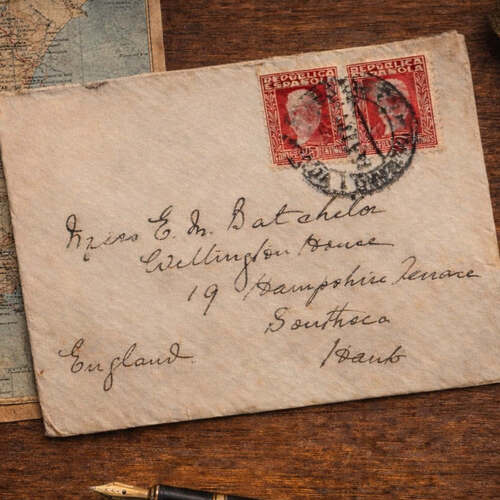
An internet search for old pictures of Compton led to the acquisition of an 1890s drawing of the Watts’ cottage (see back cover of this issue), sparking my interest in that diverse family as recorded in parish registers from 1576. They were husbandmen, yeomen, cordwainers, and in later years no strangers to the criminal courts. Another serendipitous discovery was made while ambling through the churchyard. Two grade II listed tabletop tombs caught my eye. It came as a surprise to find a will made by the yeomen buried beneath one of them that named the earlier tomb and requested a similar memorial for himself. Were the families friends or rivals?
Consistory court depositions provide a window onto Elizabethan life. Two gentlemen from the Nicholas family, John and Francis, were opposing parties in suits which centred on the marital desires of a child. Francis supported his daughter’s wishes, and John thwarted his son’s future wedded bliss. Depositions were also critical to unravelling the Lawes’ story, as they provided helpful information when parish records were not available. Usually the witness’s residence, age, place of birth, length of residence in the parish and occupation are entered. Thus, we learn that Nicholas Lawes was born at Winterbourne Stoke, for which 16th-century baptism records are missing. A John Lawes who married at Dinton in 1562 and lived in Winterbourne could have been Nicholas’s father. His slave owner namesake Sir Nicholas Lawes was the governor of Jamaica. Sir Nicholas’s father was a Wiltshire yeoman with Dinton connections, a good reason to investigate his possible relationship to Nicholas of Compton.
I grew up on Naishes Farm. Of the three farms in the village, it alone was still named after a former occupant. Naturally, I wanted to discover who had pinned his moniker to the homestead. Its first surviving record is a lease to Richard Naish dated 1698. Sadly, his wife bequeathed her sons’ christening spoons in her will. They had died in childhood, and the farm passed to her cousin. Richard was the one and only Naish to ever farm at Naishes, and this for only 17 years.
Percy Case was our dairyman. The vicar in his incumbent’s book, spanning 1847–1876, described his family as so poor that they had no hut. Wiltshire Family History Society’s transcription of this book is invaluable as it records parishioners’ vital events, their occupations, employers and income. Family relationships and movements in and out of the parish are also noted, and candid comments occasionally added. I wanted to know if Percy’s family descended from Richard Case, whose first footstep in the village was planted at his marriage in 1621. The inventory taken after his death reveals that he was wealthy.
A local history book claimed that John Piggot, reputedly the last survivor of the Black Hole of Calcutta, was buried at Compton. First, I questioned whether this could be true, searching out his burial record and visiting the churchyard. I found a blog that discussed the likelihood of John being that last survivor. The information the blogger gave me and our subsequent co-operative research led to the discovery of John’s even more intriguing daughter Constantia and her husband, who might have been the fraudster reported to have been tried at the Old Bailey, convicted and transported to Australia.
King is a difficult surname to study, given its substantial number in the area, not to mention royalty to contend with. My reluctance to tackle this clan was overcome by a will in which John King stated that any future sons of his youngest son were to inherit – except if born of the body of Nicholas Plowman’s daughter. Whatever was the story there?
John Keevil came to Compton with his wife and four children in 1861 to take up the tenancy of the Manor Farm. By 1881, he tilled most of the village’s land and became a dominant force with, according to The Salisbury Times, an unchallenged sway over the community. He was the bailiff at the manorial court for 20 years and sat on its two-man jury alongside the squire’s steward. Until 1882, he was also the hayward. Earlier, each of these positions had been held by different men. Keevil was buried in the church cemetery. Rather than continue his legacy, his children left the village. Newspaper reports hint that they were defying their father. My great-aunt sued one of his sons for breach of promise. This story is revealed by newspapers, assizes pleadings held by The National Archives and family letters.
George William Wyman was the village thatcher when I was child. He stuck in my memory because one of our thatched barns was destroyed by a lightning strike in 1960. Only the day before, he had finished refurbishing its roof. On that day, he had stood back and admired the neat golden crown with the pride of an expert craftsman, and the next, he wept at its disintegration into a heap of black straw. His father William first appeared in Compton as an agricultural worker in the 1901 census. He married into the Wyatt family, who were sawyers and hurdle makers, which prompted me to investigate that family too, intrigued by a newspaper article which reported that Annie Bailey, whose mother was a Wyatt, was charged with having committed perjury when she declared there was no impediment to her marriage.
My aim with the 55 chapters of my book was to present an overview of the social history of a small village in Wiltshire. But this is not the end of the story. The research continues. I completed my newspaper searches on Findmypast at the end of December 2024. Since then, insertion of 01.01.2025 in the ‘date added to the archive’ tab has produced 1,174 new matches for Compton Chamberlayne. To my amazement, I found a photo of my 11-year-old self with Arthur G. Street, taken when he opened the fete at Compton. Street was a well-known writer who described Wiltshire agriculture in the 1920s and 1930s. His fiction Strawberry Roan was set at my great-grandfather’s farm. Thus he provided me with important background, but I have absolutely no memory of this momentous meeting.
Notes
- Crowley, D. A. The Wiltshire Tax List of 1332. Wiltshire Record Society, vol XLV, 1989.
- Ramsay, G. D. Two Sixteenth Century Taxation Lists 1545 and 1576.
- Wiltshire Archaeological and Natural History Society Records Branch 10, 1954. Wiltshire Records Society.
- WSHC 1641 subsidy book, bundle 163 (on p41 of NRA 2nd-stage report).
- WSHC 345/123.
- Hearth Tax Digital. Online at https://gams.uni-graz.at/context:htx
- Fry Edw. Alex. ed. Abstracts of the Inquisitions Post Mortem Relating to Wiltshire, returned to the Court of Chancery in the Reigns of King Henry III, Edward I and Edward III. A.D. 1242-1326. British Records Society, 1908.
The Livelong tabletop tomb.
Arthur Street opening the Compton Chamberlayne church fete. The photograph was published in the Salisbury Times and South Wilts Gazette on 16 June 1961. (Photo © Salisbury Museum)
William Wyman.
The Parson Woodforde Society’s resources for local historians Show more
By Margaret Bird
The Parson Woodforde Society’s redesigned website celebrating the 18th-century cleric is a valuable resource for those researching local history. It offers free access to a long series of indexed journals from the Society’s foundation in 1968: www.parsonwoodforde.org.uk
The Rev James Woodforde (1740–1803) is usually considered a Norfolk diarist, having served as resident rector of Weston Longville, north-west of Norwich, from 1775 until his death. However his detailed daily diary, which occupies 17 hefty volumes in the Society’s unabridged edition, ranges far more widely.
Woodforde was a Somerset man, born at Ansford near Castle Cary. At the start of his career he held four Somerset curacies: those two parishes, also Thurloxton and Babcary. His diary opens in 1759, while he was an undergraduate at Oxford, and life at the university features prominently until he resigns his college fellowship and moves to Norfolk.
The full series of the Society’s journals is available for free access and download from the website; those covering the latest five years are reserved for members. Importantly, the articles in the journals are indexed, and the set of five indexes (Names, Places, Subjects, Authors, Book reviews) has hyperlinks to the journal issues.
Many readers will be familiar with the abridged diary first published 1924–31 in five volumes and edited by John Beresford. The Diary of a Country Parson. This spawned further compressed editions, yet none of these works enables us to hear the diarist’s authentic voice, nor learn of his wide coverage of his parishioners’ lives and the pressures on them. Some of his visits to other parts of the country are not transcribed, with the consequence that readers do not realise the extent of his acquaintance with areas beyond his rural parish.
Now local historians can readily access the full text of his diary, annotated and edited by members of the Parson Woodforde Society. The digitised content, and the index for each of the 17 volumes, can be viewed and downloaded by paid-up members. Membership details are on the society’s website, together with many topographical studies in the public part of the site under Features. This part of the site also carries ten richly illustrated pages on Great Yarmouth in the late 18th century.
A Norfolk Record Office blog post from May 2024 highlights the usefulness of Woodforde’s record and the Society’s website for local and family historians: https://norfolkrecordofficeblog.org/2024/05/28/parson-woodforde-and-his-diary-a-new-website
Margaret Bird is chair of the Parson Woodforde Society.

The start of the long list of journals on the Parson Woodforde Society website.

The Rev James Woodforde, Rector of Weston, Norfolk, by his nephew Samuel Woodforde, RA. (Reproduced courtesy Weston Longville PCC; photo Kiffy Stainer-Hutchins)
Historic Towns Trust: London on the eve of the Great Fire Show more
By Vanessa Harding
The Great Fire of London swept through the city in four days in September 1666. The rebuilding took several years, and some elements, such as the new St Paul’s cathedral, were not completed for decades. Our project to map London on the eve of the Fire will take rather less time and manpower than that, but it is still a big task.
We announced the project a couple of years ago; a blog post (see www.balh.org.uk/YKR225) outlined the context and the challenges involved, and some of the sources we will draw on. Thanks to generous support from the London Topographical Society, the City of London Archaeological Trust, the British Academy and others, the project got under way in 2025, with publication planned for 2027. The project team comprises project lead Vanessa Harding, cartographic editor Giles Darkes, volunteer project manager Adele Sykes and research assistants Richard Asquith, Michael Powell-Davies and Joe Saunders.
Our map (to be published in bound atlas format in 2027) will cover the whole of London as it was in 1666 – not just the city, but the built-up area from Westminster to Wapping and from Shoreditch to Southwark. The major, central phase of the project will be to map incrementally, parish by parish, but we began with the target of creating two resources covering the whole of London. The first of these is a database or ‘Working Directory’ of streets and street-names in immediate post-Fire London, using the maps of Ogilby & Morgan (1676) and Morgan (1682). Joe Saunders has collated and located the information from these maps as the baseline for our parish mapping, to be amended and enhanced with data from pre-Fire sources such as the Hearth Tax Returns from 1662–6. The second target was to survey and gather the available information on the archaeology of early modern London’s built environment, which is plentiful but widely scattered, and collate the results in usable form. Richard Asquith and Michael Powell-Davies searched a large number of journals, monographs, reports and the ‘grey literature’ from archaeological investigations for references to mappable features, and created a bibliography of sources, searchable by various keywords including place and parish. The Working Directory and Bibliography will be vital tools as we move to mapping London parish by parish.
In July/August 2025, the researchers collaborated with the cartographic editor on two pilot mapping studies, of the adjoining parishes of St Botolph Billingsgate and St George Botolph Lane in the City, and the parish of St Giles in the Fields in Westminster. The areas were chosen as presenting different challenges for both research and mapping: the first, in the area burnt in 1666, had been occupied since before the Norman Conquest, and was well documented in a variety of sources; the second, on the fringe of the metropolis, well outside the burnt area, was undergoing rapid development in 1666 and was much less densely documented. While the pilot maps are still very experimental in form and appearance, doing this enabled us to develop a defined and transferable process for communicating mappable data, and to establish or refine parameters such as the appearance and conventions of the map, features to be represented and place-name forms.
As the examples show, 1666 features and place-names are overlaid on a late 19th-century Ordnance Survey base. The 44 sheets at 1:1056 were acquired from the National Library of Scotland, and have been vector digitised for us by Lovell Johns, the firm co-founded by the first cartographer of the Historic Towns Atlas, Col. Henry Johns. The digitised base is now in the hands of the present cartographic editor for further work, before being used as the base for our historical mapping.
Thanks to a second grant from CoLAT, we will be able to employ two of the research assistants for several more months, focusing especially on mapping sites with a complex archaeological and documentary record such as palaces and playhouses.
While grants and donations already received have gone a long way towards funding the totality of the project, we are still seeking support from individuals or organisations to help us bring the atlas to publication in 2027. Donations (with GiftAid, if possible) can be made through the website (shop.historictownstrust.uk/product/donate), or contact us via www.historictownstrust.uk for further information. All donations will be gratefully received and acknowledged in the published atlas.
Joe Saunders also gave an online talk on the project on Tuesday 27 January as part of the series of evening lectures by the BALH in partnership with the Historic Towns Trust (see Supplement with this issue).
Professor Vanessa Harding is project lead and chair of the Historic Towns Trust.

Members of the Historic Towns Trust Team in discussion. (Photo: Daniela Luquini)
While out walking… Show more
By Jude Rhodes
There are many reservoirs in my rural and hilly local area in Yorkshire which provide water for Leeds and Bradford, most of these were built from the mid-1800s to the mid-1900s. Over the hot and dry summer we have had in 2025 many reservoirs became depleted of water reserves; on 1 September I decided to visit Scar House Reservoir in Nidderdale to see how low the water was and if any clues of the landscape before being flooded were visible.
I was met with an amazing insight into the local history from before 1930 when the valley was flooded; standing on the drained and dry bank were the remains of a farmhouse sitting next to a lane.
It was incredible to be able to walk through a gate, complete with iron work, that had not been used for almost 100 years and to follow the lane imagining a horse and cart trundling along with agricultural produce.
I met a delightful local farmer who explained that the ruined farmhouse was Haden Carr, also referred to as Heathen Carr – this gave me a lead to start some research. Never underestimate the knowledge of local farmers who retain the stories of the area passed down through generations – the pride of their local area shines through with a joy in sharing their innate knowledge.
In 1891 there were two farms at Heathen/Haden Carr. One was the household of Thomas Simpson, born in Carlton in Coverdale, and his wife and five children; the second farm was of Matthew Verity with his wife and two children.
By 1911 Matthew Verity and his wife were farming near Ripon before he moved to Northallerton; by 1921 he was living in Northallerton as a retired farmer, quite a change from the isolated farmhouse in Nidderdale.
Not only were farms lost but the village of Lodge on the far hillside was abandoned when the reservoir was built as there were concerns that the everyday life of the village residents would contaminate the reservoir and therefore the drinking water for the destination of Bradford.
Lodge was a thriving hamlet on a packhorse route from Nidderdale, over to Coverdale and then on to Wensleydale; the village had historical connections with Byland Abbey, which is between Thirsk and Helmsley.
As a village and some farms were lost a new settlement appeared at Scar House. Nearby are the remains of the temporary settlement, known as Scar Village, that developed from 1904 during the seven years of the building of the reservoir; the settlement housed 1,250 people with a school, cinema, post office and a shop as well as a railway to transport materials. The evidence can still be seen today of the buildings running alongside the narrow road.
Bradford was in desperate need of clean drinking water to supply the burgeoning population of the city – the total population grew from 50,000 in 1800 to over 400,000 in 1900. And the building of the reservoir brought employment to families for a few years but at the cost of the loss of a village and of farming communities. I feel quite honoured to have been able to witness a lost piece of local history but despite the amazing view I left with a feeling of sadness while I was trying to cling on to
the past.
Right: ruins of nearby New Lathe (SE of Haden Carr) revealed in the drought of 1995.
(Photo: Gerald Hardwick)

Walking down the banks of the reservoir to the ruins of Haden Carr. (Photo: Jude Rhodes)

The lane running past the farm and on up the valley. (Photo: Jude Rhodes)

Before and after: Haden Carr (marked with the pin) in the 1890s Ordnance Survey map and the Scar House Reservoir in the mid-20th century. (Maps: TheGenealogist/National Library of Scotland)

News round-up Show more
With thanks to John Chandler, Jonathan Comber, Heather Falvey,
Chris Hills, Stuart Manton, Joe Saunders
Funding has been obtained for a new project with the Leicestershire Victoria County History Trust (LVCHT) to undertake historical research introducing the history of the various communities of Charnwood Forest. When complete, this will be made available online for the public. This project builds on work undertaken between 2013 and 2017 as part of Charnwood Roots, with volunteers playing a prominent role in bringing records together and researching the forest’s history. This year LVCHT will begin part of this project in Thornton and Botcheston, and is seeking volunteers – contact Dr Susan Kilby at sk565@leicester.ac.uk for details.
The cost of ordering copies of wills from the government’s Probate Search service (probatesearch.service.gov.uk) rose from £1.50 to £16 on 17 November, ‘to ensure it is closer to cost recovery’, according to a government memorandum. The same memo noted, ‘A new fee for bulk access will be implemented in a subsequent instrument.’
UCL Press has released a free open access edition of Thomas Cranmer’s Register, recording the turbulent religious and administrative changes between 1533 and 1553: uclpress.co.uk/book/thomas-cranmers-register The book includes previously unpublished records from the Diocese of Norwich relating to the order for removing altars from English churches.
A new, seventh edition of Padfield on Copyright for Archivists and Records Managers, by Tim Padfield and Victoria Stobo, has been published (Facet Publishing, ISBN 9781783307364). This comprehensive manual outlines copyright law in the UK with special reference to the unpublished materials commonly found in archives and records collections such as maps, legal records, records of local authorities and parish registers. It also gives in-depth information on authorship and duration of copyright in older as well as
modern works.
Archaeologists working at West End Farm on Brackley Road in Buckingham have uncovered at least 73 individual bodies in 34 graves, first discovered in 2018 during site preparation for development. The burials – predominantly adult males with some juveniles and no females – include 26 skeletons with hands tied behind their backs and show signs of childhood stress, healed fractures and diseases like tuberculosis; carbon dating of one skeleton places the site in the late 13th century, and the lack of grave goods and
unusual layout point to a medieval execution cemetery.
Restoration work at Blenheim Palace in Oxfordshire has uncovered century-old graffiti scratched into the ceilings of the Great Hall and Saloon, revealing names and notes left by workers dating from the 19th to mid-20th centuries. Conservators are now asking the public to help identify the individuals behind the markings as part of a major, £12 million restoration effort.
Mia Hansson, a Cambridgeshire artist, has spent the years since 2016 creating a stitch-by-stitch, full-size replica of the 11th-century, 70m Bayeux Tapestry and has completed almost 55m so far. She is racing to finish by October 2027 – working at roughly 6m a year – spurred by the British Museum’s planned display of the original in London in September.
Plans to restore the Grade II* listed Bethesda Chapel in Hanley – the 1819 ‘Cathedral of the Potteries’ that closed for worship 40 years ago and is on the Heritage at Risk register – have been approved after Re-Form Heritage secured more than £500,000 from Historic England. Stoke-on-Trent City Council has granted permission for extensive internal and external repairs.
Volunteers cleaning rock pools at Ogmore-by-Sea in the Vale of Glamorgan have uncovered hundreds of black hobnailed boots, thought to be Victorian and with more than 400 items reported (around 200 found in one small area). Locals and experts speculate the shoes may have come from a 19th-century shipwreck – possibly an Italian cargo vessel near Tusker Rock.
Kent county council is facing criticism for removing Canterbury’s Victorian cast iron lampposts and replacing them with modern steel alternatives described by campaigners as ‘clumsy’, ‘crude’ and damaging to the city’s historic character. Preservationists argue the lampposts are rare, locally made, inexpensive to maintain, and integral to Canterbury’s World Heritage streetscape, with only a few cities still retaining complete
19th-century sets.
The British Museum’s Portable Antiquities Scheme recorded Norfolk as England’s top county for treasure in 2024 – with 138 treasure finds and over 7,120 total objects – as part of a record 79,616 finds nationwide (mostly by metal-detectorists), while standout discoveries included a Romano-British copper-alloy vehicle fitting near
Harlow and a hoard of Harold II pennies near York.
Ipswich has installed six augmented/virtual reality binoculars at historic venues that let people view free digitised images and sounds from 1895 – drawn from the Ipswich Maritime Trust archive – as part of the council’s Digital Ipswich project to bring the town’s Victorian past to life and attract visitors to boost local trade.

The Friends of the Centre for English Local History have issued a call for papers for this year’s New Voices in Midlands History conference at the National Civil War Centre, Newark on 6 June. The deadline for proposals – from researchers on any aspect of the history of the Midlands – is 31 March. Further details via www.balh.org.uk/YAW229
Heanor & District Local History Society in Derbyshire is circulating a questionnaire on the subject of carnivals, resurrecting of a previous campaign asking members for their memories on different themes related to the past of the area. Anyone with carnival-related contributions can email secretary@heanorhistory.org.uk or ask for the questionnaire.
Bradford Historical and Antiquarian Society reports in its 2025 journal, The Bradford Antiquary, on its Antiquarians School Competition, tied to the city’s City of Culture status and inviting Year 6 primary school children to submit poems or prose on the theme ‘What makes where I live special?’, preferable with some historical element. The three winners were Ahmed Mirzayee with a poem celebrating a variety of Bradford’s institutions and individuals from Saltaire and the Alhambra Theatre to artists David Hockney and Jamal Khan; Yousef Seedat’s poem on Bradford’s culture from textile history to football; and Annabelle Pickard with a piece on the Cow and Calf rocks on Ilkley Moor.
Spalding Gentlemen’s Society has been awarded nearly £46,000 from Art Fund to support the first large-scale redisplay of its collections in more than a century, in a project titled ‘Museum Reimagined’. The town centre museum is the second oldest in Britain.
The Borough of Twickenham Local History Society published its 200th newsletter in December (the first was published in 1963). The articles include a piece on Teddington’s role as the venue for the first ever National Olympian Games in 1866, a forerunner of the British Olympic Association and 30 years before the first modern Olympiad in Athens.
Lancashire Local History Federation now has an index of all articles from the 50+ editions of its Newsletter, and an index of books mentioned in them, available at www.lancashirehistory.org/publications.html.
The Society for Lincolnshire History & Archaeology will hold the Lincolnshire Churches Conference at Heckington Village Hall on 18 April. Talks include ‘Tudor Paperwork: the Louth Churchwarden’s Accounts, 1527-1570’, ‘Exploring Heraldry in Lincolnshire’s Churches and ’New Work on Old Monuments at St Wulfram’s Church in Grantham’. There will also be a guided tour of St Andrew’s, Heckington.
The 2025 Journal of Ruislip, Northwood and Eastcote Local History Society has a theme of the importance of pictures, collections and archives to the recording of local and personal history – it notes modern-day challenges to this from the demise of local newspapers and the ephemera nature of many digital records.
Hebden Bridge Local History Society has published Everyday Life in Seventeenth-Century Calderdale by Peter Brears, focusing specifically on the 1688–1700 period.
The Bath branch of the Historical Association has joined Avon Local History & Archaeology. ALHA’s December newsletter refers to an interesting article by Bristol Record Society’s Evan Jones about four jokes (in Latin) which are hidden in James Millerd’s 1673 map of the city – see bristolrecordsociety.org/stories-from-the-archives/four-jokes-on-the-millerd-map
Richard Royal, vice-chairman of Hessle Local History Society, has produced an A3 history-trail handout – an illustrated map highlighting 45 key historic sites around Hessle – to promote the town’s past. The centrefold pull-out will be delivered to residents and copies will also be available from locations such as Hessle Town Hall and All Saints’ Church.
Scotland’s Dig It! project, coordinated by the Society of Antiquaries of Scotland, has listed its top archaeological finds of 2025 spanning five millennia – including Neolithic feasting evidence from Hebridean crannogs, a Bronze Age burnt mound site in Shetland, a Dumfriesshire hillfort that may have been besieged by Romans, and a newly excavated medieval village at Horndean.
The Society for Church Archaeology has published its latest annual journal, Church Archaeology (No. 25), including articles on Bakewell and Bedford.

Cheshire Archives and Local Studies has now fully suspended access to collections (including copying and research services) in preparation for moving to two new premises in Hoole and Crewe. Normal services are expected to resume in early autumn. Staff at the archive have recently cataloguing tens of thousands of images – more than 40,000 glass negatives and 35mm slides – documenting a century of county life.
Lancashire Archives and Local History in Preston has an exhibition about the rituals, friendships and joy of local football, ‘Journeys to the Match’, on until 8 May.
The National Archives’ latest comprehensive survey of the UK’s archive sector opens on 2 March and closes on 15 May. Findings from last year’s survey can be found via www.balh.org.uk/YWH227. Meanwhile TNA has begun providing access to Parliament’s Archives Collections, now relocated to Kew. Collections will become available in phases until June this year – details via www.balh.org.uk/VJB226 TNA has also partnered the Royal Institute of British Architects (RIBA) to house, conserve, digitise and provide public access to RIBA’s Drawings and Archives Collections from autumn 2027.
The Archives and Records Association (ARA) will hold its conference this year in Glasgow on 5–7 August. The theme is authenticity: ‘How do we approach the practices of record keeping in an age where “truth” feels increasingly under fire?’. Further details at archives.org.uk
East Riding Archives supported the new Middleton on the Wolds Heritage Trail through providing archival sources and visits to see original collections relating to the village. The trail features sculptures of hares placed throughout the village, each representing a unique aspect of local history and ecology, and featuring a QR code that visitors can scan to access stories, photos and historical insights.
The All Party Parliamentary Group on Archives and History bestowed its Lifetime Achievement Awards for 2025 on the TV historian and former chief curator of Historic Royal Palaces, Lucy Worsley, and archivist Geoff Pick, whose many roles have included chair of the National Council on Archives, director of The London Archives and chair of the Archives and Records Association.
Moray Council archivists, led by local heritage officer Scott Reid, are digitising hundreds of previously hidden boxes from a secret Elgin archive – including 1841 prison plans, Duffus Estate papers, poorhouse registers and old maps – and expect to publish an early online archive within a few months to widen public access and support outreach (about 350 images have been catalogued so far).
The Community Archives and Heritage Group Scotland (CAHG Scotland) is marking its fifth anniversary with an event on 20 March celebrating intangible cultural heritage which will feature talks and performances. Further details will appear at https://www.scottisharchives.org.uk/latest. The body is currently seeking applications from Scottish archives to its web feature, ‘A year in the life of a community archive’.
A team of researchers at Shropshire Archives are working on the Drapers’ Research Project 2025/26, transcribing hundreds of pages of records from the Shrewsbury Drapers Company. Their work, led by Dr Cathryn Talbot, chair of Newport and District History Society, and Nigel Hinton, both members of the Drapers, builds on earlier transcriptions created by Irene Rope and Lilly Chitty between 1900 and 1924. The Archives are still in the process of completing last year’s move to new premises at Castle Gates in Shrewsbury and are only open on Wednesdays and Thursdays until March, with full opening hours expected from April.
A rare 1586 hand-drawn Tudor map of Kingsbridge, Devon – likely commissioned by Sir John Petre and described as being in outstanding condition, showing detailed town features – will go on display at Devon Heritage Centre after more than 400 years in private hands, secured with grants from the Friends of the Nations’ Libraries and Friends of Devon Archives.
The Queer Norfolk archive, housed in Norwich’s Millennium Library and featured in a recent BBC Radio Norfolk series, collects artefacts and stories – like those of 19th-century philanthropist lesbian Anna Gurney and partner Sarah-Maria Buxton, trans ally Barbara Ross who founded Oasis Norfolk, and the Ferrow brothers, early documented medical transitions – to preserve and showcase Norfolk’s often-hidden LGBT+ history and its impact on local communities.

Dundee’s Maryfield Tram Depot will be restored and converted into a new transport museum after a £2.7m UK government grant (on top of a previous £1m Scottish Government award) enabled contractor works on the 1901/1913 sections to begin, with demolition and refurbishment expected to take about 12 months and the site aiming to open in the first half of 2027.
A £50m ‘Reawakening Project’ – £40m from Stormont’s Department for Communities and £10m from the National Lottery Heritage Fund – will fund a major redevelopment of the 62-year-old Ulster Folk Museum in Cultra to bring collections out of storage, add new buildings and interactive exhibits, create more than 20 jobs, boost tourism and community engagement, and is due to start in 2027 and finish by 2029.
The Department of Culture, Media and Sport has announced up to £1.5bn of cultural investment between 2025 and 2030 – including a £760m museums package (£600m for national museum infrastructure and £160m for local/regional museums) added to last year’s £270m Arts Everywhere fund – to tackle maintenance backlogs, help save about 1,000 local arts, libraries and heritage venues, support free-access national sites such as the Tate, National Museums Liverpool, the Science Museum Group (including Bradford’s Science & Media Museum and York’s Railway Museum) and the Royal Armouries, boost jobs and community access, and ‘restore national pride’.
Sittingbourne Heritage Museum in Kent has had to move out of its premises at the Forum Shopping Centre due to a new tenant coming in. The collection is in storage while a new home is sought – details and online resources at www.sittingbourne-museum.co.uk
The Postal Museum has launched a new Digital Collections Portal. This platform will provide public access to ‘born-digital’ archive and museum materials held by The Postal Museum and dating from the 1980s to 22005. Highlights of the collection include oral histories, advertising materials and posters. www.postalmuseum.org/collections/
digital-collections
Banbury Museum & Gallery, which draws about 100,000 visitors a year, says it could be forced to close if Cherwell District Council cuts its grant under a 2026/27 budget consultation as the authority looks to save £1.79m. The council has proposed a new operating model that could save £258,000 in 2027/28 but says no final decision has been made, will review consultation responses and aims to help the museum shift to a sustainable alternative funding model ahead of a full council meeting on 23 February.
East Staffordshire Borough Council has failed to secure National Lottery Heritage Fund money for its plan to turn the old Bass Brewery in Burton-upon-Trent – intended to house a National Museum of Brewing with a visitor centre, exhibition space, hotel and public events area to replace the closed National Brewery Centre – into a heritage and visitor destination.
The Ministry of Defence has agreed to transfer ownership of Bodmin Keep – the 165-year-old army building that houses 300 years of Cornish military records – to the museum’s trust.
The Museum of Carpet in Kidderminster – which operated for 13 years and housed an extensive collection including two 19th-century handlooms named Victoria and Albert – closed permanently in December amid financial pressures.
A planning application has been submitted to convert the Walsall Leather Museum into an education facility, effectively dashing campaigners’ hopes of blocking the closure (see LHN157, p.28). But Walsall Council leader Mike Bird said in January that a new site for the museum would be announced in six to eight weeks as negotiations continue.
A gravestone discovered during renovations at Leeds Industrial Museum has led to the rediscovery of Robert Morrow, a largely forgotten railway pioneer of the Industrial Revolution. Research revealed that Morrow was one of the first drivers on the Stockton and Darlington Railway, opening the line in 1825 and operating its early locomotives alongside figures connected to George Stephenson. The museum now plans to display his headstone prominently in its refurbished locomotive gallery.
The planned reopening of the 145-year-old Ipswich Museum – closed since 2022 for a £11.4m remodelling to add a new gallery, café and improved facilities – has been pushed back again to the end of 2026 while the council secures contractors for display cases and considers a phased opening.
A new exhibition, ‘Warneford 200 – Mental Health Through the Ages,’ has opened at the Museum of Oxford to mark the 200th anniversary of Warneford Hospital, using archival images, personal stories and clinical artefacts to trace two centuries of psychiatric care in Oxfordshire. The exhibition runs until 21 March. The museum recently introduced an admission charge (£4 for adults, £2 for children) for the first time. In January a leaked council report showed the charges were expected to halve visitor numbers and still leave the museum making a loss – prompting campaigners to warn the fees will threaten its future while the council said all income will be reinvested.
The National Trust, which will take over the Ironbridge Gorge Museums Trust in March, has launched a consultation affecting 188 staff that could lead to about 50 redundancies.
Work to revamp the 18thcentury Living Barracks at Berwick – combining the King’s Own Scottish Borderers, Burrell and English Heritage collections into a single interactive museum, adding studio space, improved accessibility and opening the previously gated area to the public – began in January after a further £1m National Lottery and regional boost to the £14.5m already raised, with new galleries due late 2027 and full completion in 2028.
Despite controversy over China’s new ‘mega-embassy’ at the former Royal Mint near the Tower of London, the conversion will preserve parts of the 14thcentury St Mary Graces Abbey and Black Death cemetery remains unearthed by MOLA and create a free heritage interpretation centre that will display the abbey’s history and the site’s later uses as a victualling yard and tobacco warehouse, and incorporate any further medieval finds.
A National Lottery Heritage Fund grant, alongside £236,808 in cash and £28,000 of in-kind support, will enable Reading Museum to open the Discovering Calleva Gallery in 2028 to redisplay nationally significant Iron Age and Roman finds from Silchester – including the Silchester Eagle and a rare Roman wooden water pump – with accessible, interactive interpretation informed by University of Reading research and delivered with local partners, volunteering, learning and outreach programmes.
Stourbridge Glass Museum’s ‘Raise a Glass’ exhibition (running until 26 June) traces the evolution of drinking vessels – from 17th–18thcentury rummers and affordable 19thcentury pressedglass tumblers to 1920s–30s cocktail designs and beyond – exploring how changing form, technology and taste have shaped social drinking and the anatomy of glassware.
Volunteers in Oldcroft, Gloucestershire — including Kathy Cook and local historian Roger Deeks — have restored a disused pre-1955 red phone box into a community mini-museum with exhibits, prerecorded stories and events that are uncovering and celebrating the area’s rich local history.
A report from Stoke-on-Trent City Council argues that the area faces a ‘national heritage emergency’, with many internationally significant assets – especially museums and collections – at risk without urgent, coordinated investment, despite their central role in the city’s identity, cultural tourism, and economic regeneration – see www.balh.org.uk/JNZ230
Herefordshire VCH updates Show more
The Herefordshire Victoria County History Trust has published its latest book, on Cradley. This continues the series of books on parishes around Ledbury. The principal authors, Dr Anastasia Stylianou and Dr Fergus Eskola-Oakes, are pictured outside Cradley Village Hall, built in the 1530s. The Trust has now raised the funds to complete the Ledbury Red Book which will be the first Red Book on the county since 1908 and the first topographical volume; it will cover seven parishes on the Herefordshire side of the Malvern Hills.
The group is also starting work in the north-west of the county. Work will initially start with Leintwardine. A very successful launch event was held in October attended by 78 locals who were enthralled by a talk by Duncan James on the buildings of Leintwardine. About 20 volunteers have expressed interest in being involved in researching Leintwardine’s history. If anybody would like to assist with the research on either Ledbury or Leintwardine or give a donation to help fund the work please contact the Trust’s treasurer, Jonathan Comber at Jonathan.Comber49@gmail.com
Online news Show more
A new initiative has been launched to preserve Wales’ linguistic heritage by safeguarding Welsh language and historic place names. A newly developed website (https://datamap.gov.wales/survey/wpnc/) aims to address the absence of many Welsh names on online maps, including those for various geographic features like mountains and streams. The public is encouraged to contribute to this effort by recording pronunciations and providing phonetic spellings for online resources such as Wikipedia. These initiatives not only seek to protect language heritage but also aim to educate people about the rich histories behind local names.
TheGenealogist has added the National Probate Calendar for 1858–1879 to its collections, plus more than 100,000 new early marriage records (mainly 16th to 18th centuries) relating to Durham, Lancashire, Leicestershire, Somerset, Surrey and Sussex, as well as marriage licences from the Faculty Office 1543–1869.
Findmypast.co.uk has added 5,000 records for Grantham Union Workhouse to its collection of Lincolnshire Guardians’ Minutes. Other additions include 8,000 memorial inscriptions from 21 churches and graveyards in Northamptonshire as well as militia lists and land/window/poll tax records for the county, and marriage and banns records for ten more parishes in Essex.
The National Library of Scotland has uploaded and georeferenced more than 6,000 detailed maps showing land use in the 1960s, compiled by the Second Land Utilisation Survey of Great Britain. Other additions include early British printed maps from the 16th century onwards and large-scale OS maps published in 1975 (details via maps.nls.uk/additions).
Ancestry.co.uk has added 2.5 million parish registers for around 80 parishes in Doncaster and the surrounding area, plus 360,000 marriage licence records from Worcestershire.
The Courtauld Institute’s National Wall Paintings Survey is a vast archive of all known British medieval wall paintings and it is now being digitised. The new database so far can be explored online – see www.balh.org.uk/UFM228
Full details of Historic England’s final 2025 Heritage at Risk Register, mapped online, can be found at historicengland.org.uk/whats-new/news/heritage-at-risk-2025
Working with primary schools
Cheltenham Local History Society has produced a brochure entitled Local History Resources for Cheltenham Primary Schools, as a free publication for local primary school teachers to support the development of topics within Key Stage 2 of the National Curriculum. This aligns with the Society’s mission to explore, record and celebrate Cheltenham’s heritage and is objective to work more closely with schools. The brochure is freely downloadable from the Society’s website (cheltlocalhistory.org.uk/schools), the production costs being entirely met from a bequest from a former member, the late Carolyn Greet. It is being promoted to all local schools with the assistance of Jemma Fowkes, the Community & Heritage Officer at Gloucestershire Archives, and contains over 60 local history resources, ideas for classroom topics, types of available teaching materials and a real life case study, where the group teamed up with Naunton Park Primary School in Cheltenham in 2023 and 2024 to explore the history of the Bath Road shopping area.
Good ideas to borrow… Show more
St Albans & Hertfordshire Architectural & Archaeological Society launched an initiative last year to put interpretive notices inside city centre shop windows – starting in the city’s George Street. The collaboration between local heritage groups and businesses has used ‘blue plaque’-style stickers to tell the story of individual premises.
Celebrating Chippenham history Show more
The Wiltshire town of Chippenham has two reasons to celebrate its history during 2026, and a host of local organisations are coming together to programme a year of events. On 12 March 1626 the pioneering antiquary, scientist and biographer John Aubrey (pictured) was born just outside Chippenham at Kington St Michael. His 400th birthday will be celebrated by an exhibition – Wiltshire & the World: John Aubrey and the Quest for Knowledge – which will run at Chippenham Museum from 12 June to 19 September 2026, and will include loans from the Ashmolean Museum, Bodleian Library and Royal Society. New editions of two of Aubrey’s works will also be published: a facsimile of his manuscript Villa, of local landscape sketches and his thwarted plan to build a great house; and the first complete edition of his Natural History, from the Royal Society manuscript, hitherto only available in a heavily abridged Victorian version.
Later in the year volume 20 of the Wiltshire Victoria County History will be published after a decade in preparation. It will cover Chippenham itself and a group of nearby parishes, including Aubrey’s Kington St Michael. In a departure for the VCH, illustrated popular histories, derived from the red book research, have been written and produced as tie-in publications for three of the parishes and for Chippenham itself, the latter giving its title, Chippenham Our History, to the overall programme of events.
Another local author, poet William Lisle Bowles, will also be celebrated in an exhibition, at Chippenham Library, and there will be creative writing workshops inspired by Aubrey’s Brief Lives, public art and drama, children’s events and lectures. Details of all events are being posted on the Chippenham Our History Facebook page.
Book reviews Show more
By Heather Falvey
Eurig Davies, Heather James and Dylan Rees, editors, Carmarthenshire in 100 Objects/Sir Gaerfyrddin mewn 100 gwrthrych (Carmarthenshire Antiquarian Society/Cymdeithas Hynafiaethau Sir Gaerfyrddin 2025 224pp ISBN: 9781036935313) £20
As in the British Museum’s A History of the World in 100 Objects (2010), this book depicts 100 objects representing the history and historic people of the original Carmarthenshire. They have been selected and described succinctly in English and Welsh by various members of the Carmarthenshire Antiquarian Society. The objects, numbered 1 to 100, have been arranged chronologically and are presented in high-definition full-colour photographs.
Some are held in the Carmarthenshire Museum, Abergwili, such as: the ‘Paulinus’ Stone found near Dolaucothi (no. 9), which provides evidence of Christian belief in the area in the fifth century AD; the portrait of Richard, 2nd earl of Carbery (no. 23), the most powerful man in the county in the 17th century; and ‘Margret’ Davies’ 1853 sampler (no. 50), depicting the ship the ‘Brins Royal’, probably the Princess Royal, which from 1841 carried emigrants from Carmarthen to Quebec. Some are held by other public bodies, such as: the Welsh Bible now in Tynewydd Methodist Chapel, Caeo (no. 53), that belonged to Jane Evans, who nursed in the British Army hospitals in Koulali and Scutari under Florence Nightingale; John Harries’ holograph book of incantations (no. 54) in the National Library of Wales – he was one of Wales’ most famous ‘cunning men’ or soothsayers, who attracted clients from far and wide, but also drew the condemnation of church and chapel; and the carved figurehead of the schooner Alice Williams (no. 80), built at Llanelli, launched in 1854, which ran aground on Skokholm island, now a national nature reserve. Some objects are in private hands, such as a painted constable’s truncheon from Llangyndeyrn (no. 36) – the decoration ‘displayed to a largely illiterate populace the holder’s authority under the Crown’.
Objects range from the exotic, for example, the Llansteffan ‘coconut’ chalice (no. 31), to the mundane, such as a stone cockle washing trough at Laugharne (no. 67), or a brick from the Cynghordy brickworks (no. 69). The woodcut of Carmarthen’s first railway station (no. 48) is an object lesson in itself: taken from a report in the Illustrated London News of 25 September 1852, it shows the opening of the station – except that in the picture there is a completed station with two platforms, two tracks and an overarching roof, but on the day of opening the station was unfinished and had only a single track. Some objects relate to industries that have now gone, such as coal mining and tinplate, but no. 100 comprises components made from metal alloy powders with a wide range of hi-tech applications, the powders being produced on the Cilyrychen Industrial Estate.
The numbered entries in ‘Sources and further reading’ correspond to the objects, enabling the reader to follow up any entry that particularly interests them. This would be an excellent model for other societies wishing to commemorate their area in a similar manner.
Michael A Smale and Henry S Woledge, Some Commercial Aspects of the Work of a Late 19th Century Humber Keel Skipper (East Yorkshire Local History Society 2025 115pp ISBN: 9780900349690) £9 + £3 p&p from EYLHS, 825 Anlaby Road, Hull, HU4 6DJ
This latest publication of the East Yorkshire Local History Society is based on the ‘Thirds Book’ of Robert Wood (1847–1921), a Humber keel skipper closely connected with the River Hull and the village of North Frodingham. From the payment received on delivery of a cargo, a keel skipper (also known as the master or captain) who did not own the boat would pay one third to the keel’s owner and would use the other two thirds pay the mate’s wages and any haulage costs etc. The remainder was his earnings. Wood’s ‘Thirds Book’ records the finances of his operation of the Humber keel Enterprise during the years 1872–1875 and 1880–1896 and the Mary Jane during 1896–1916.
The first part has 864 entries detailing, among other items, cargoes carried, towing costs, delivery locations; the second part has 954 entries relating to Wood’s outgoings. His calculation of ‘thirds’ and the costs of running a keel are recorded. From 1880 Wood continued to calculate thirds but no longer specified any payments as such, so the authors conclude that by then he had bought the Enterprise (or a proportion of it) and that later he purchased the Mary Jane. They have analysed the numerous entries to reconstitute (as the title says) ‘some commercial aspects’ of Wood’s work. These are set out in 18 appendices. His cargoes included coals (6 different types), agricultural produce, cereals, chemicals, manure and minerals. The numerous firms he dealt with are listed according to whether he delivered to them, or took goods from them, and also the category of their goods. The firms’ locations are mapped (pp.108–111). The ‘analysis of catchment area and problems’ (pp.11-14) discusses the waterways used.
The area’s rivers had long been used for water transport, and over time canals were built and other improvements made to avoid stretches where navigation was difficult. In Wood’s time this canal and river network was at its peak: ‘the use of railways and road transport were not yet sufficient to prevent a keel skipper from making a reasonable living from the waterways’ (p.12). Also, keels could serve places that had no convenient rail access, such as North Frodingham, where Wood’s operation was based. His destinations are analysed in the text and listed in various appendices. Over the years there were 14 destinations to which he delivered 10 times or more, including Frodingham 262 times and Hull 119. His work was dominated by the carriage of coal from West Riding collieries to Frodingham and other places in the Hull valley, whence he took agricultural produce to the city of Hull. The map on pp.112–113 shows the rivers, canals and towns relevant to Wood’s journeys. The authors’ various analyses will be of use to anyone interested in late 19th-century transport and commerce.

Books for review should be sent to: Dr Heather Falvey, 119 Winton Drive, Croxley Green, Rickmansworth WD3 3QS – or contact her via reviews.editor@balh.org.uk
BALH Small Grant Scheme: first recipient report Show more
By Margery Hookings
In 2025 BALH piloted a new grant scheme targeting local history and heritage organisations who might need a small seed funding grant to get projects off the ground.
The pilot scheme has now come to an end. Eleven projects received funding of between £300 and £500 for a variety of schemes including photo archives, touring exhibitions, publications, and festivals. The grants committee are busy with the final analysis of how the scheme went but have already decided that it has been a success and we just need to refine the application process before launching the full scheme later in 2026. In the meantime, each of our pilot organisations have been asked to write a little summary of their project for the website as an inspiration for future applicants. The first such report is below.
Windrose Rural Media Trust:
Born & Bred, Broadwindsor, Dorset
The Born & Bred community project in the village of Broadwindsor, Dorset captured the memories of local people for a book and a short film. Run by Windrose Rural Media Trust, a charity which works in Dorset, Somerset and Wiltshire, the year-long project also delved into the life and work of Dr Thomas Fuller, who was a rector of Broadwindsor in the 17th century. He was a prolific author and one of the first English writers able to live by his pen. His many sayings are still relevant today, including ‘we never know the value of water until the well is dry’ and ‘charity begins at home – but it should not end there’.
Fuller’s aphorisms were interpreted by village organisations for a flower festival in the church where he preached. A selection of them were painted on the beams of the community pub by a local artist. Funding from the BALH helped Windrose facilitate oral history sessions with older people who were born and bred in the village, as well as helping to pay for the compilation of a local history book, which was edited by a local writer. The book includes a wealth of old photographs, life stories of local people and potted histories of, for example, the school, allotments and cricket ground. Copies were given to project participants and sold to the public in aid of Windrose, the community shop and the community pub.
The project received the following feedback from participants:
- ‘I enjoyed every minute of this! It brought back many happy memories, conversations with family. Nice to remember the village as it was and how it is now – still lovely with friendly people.’
- ‘Hopefully because of this project, it will show the villagers of Broadwindsor to come what it was like growing up in rural Dorset in the 1950s/1960s when life was much slower and more fun.’
- ‘The front page made me feel quite emotional. My cousins and several old village residents are no longer with us. I will spend much time reading the book and it will be an asset for the village to keep many memories alive.’
- ‘Thank you for all your time and effort. The meetings you organised where I met up with old friends of the village were very enjoyable.’
- ‘A lovely book which will bring back many memories. I also enjoyed meeting people who lived in the village years ago.’
- ‘It is so interesting to hear what happened years ago in the lovely village of Broadwindsor. A real keepsake to pass on to my family.’
The Born & Bred initiative marks a meaningful step in preserving the village’s living history, giving voice to those whose recollections might otherwise fade, and reinforcing a sense of community in Broadwindsor. All Windrose’s work is based on outreach into dispersed communities and close involvement of local people from a very wide range of ages and backgrounds. Windrose receives no core funding. Its projects are delivered in partnership with funders and communities.
Local history at the heart of the plot Show more
By Alan Crosby
The novelist Barbara Pym (1916–1980) wrote a handful of novels, published mainly in the 1950s. They were social comedies, set in dreary inner suburbs of London or in country villages with the archetypal hierarchy of rector, owner of the Big House, middle-class residents and ordinary folk. Her success was considerable in the period from about 1950 to 1965 then went into decline, to be revived in the 1980s and 90s. I’ve just read her last book, which appeared in 1980. Called A Few Green Leaves, its plot revolves around lonely people, with the promise of romance but nothing very explicit. Amazingly, the dramatis personae includes a local historian. What’s more, he is a sympathetic character, not a bore or a nuisance – he is Tom Dagnall, the widowed rector, and Barbara includes several episodes in which his interest in local history is identified as among his particular passions.
Tom is seeking a deserted medieval village (Pym correctly abbreviates this to DMV). This is a somewhat specialist theme, with which she was obviously familiar. In the 1950s and early 60s Maurice Beresford and John Hurst were undertaking major research to identify and explain DMVs across England, and Barbara was clearly aware of this. Tom’s other interest is his own parish records, not yet deposited in the local record office. He’s transcribing them and discovers that in the 1680s there was the practice of burying in woollen – another remote and esoteric subplot.
The first reference to local history is when Tom meets Emma Howick, an anthropologist in her 30s who has come to live in the village. They go on the annual walk which the villagers are allowed to enjoy in the great park, and it seems inevitable that they are destined for each other. Tom is impressed by Emma because ‘she is possibly capable of talking intelligently about local history, his great interest and passion’. Other people think he’s tedious or eccentric, his sister being one of them: ‘you know my brother’s obsession with local history? Now he’s discovered that in 1680 something people had to be buried in wool’. Yes, a whole plot depends on attitudes to local history!
Tom’s project to copy the parish registers introduces several elderly and middle-aged women who form the local history society – local history is not a subject for manly men. The young village doctor feels it would be a way of keeping his mother-in-law out of mischief: he and Avice, his wife, ‘had the idea that her mother might be usefully occupied in copying parish registers or something of that nature, which it was thought might help to keep her brain in good trim… rather than endlessly knitting and watching television’. Indeed, the rector has the same idea: ‘he was hoping to enlist Mrs Raven as a help in some of these local history researches. A meek woman of retirement age could be of inestimable value’.
Barbara Pym knows about a problem which probably all of us have encountered. In the context of the Big House, she notes that the original family had gone and documents were lost forever to the local historian: ‘if only he could be been here in the 30s when the Tankervilles left the Manor as the family died out… the last surviving male killed in the Great War with no dependents, the sisters selling the house not long after that, the present owner a man who took no interest in the village’. Such people, who didn’t appreciate local history, were baffling: ‘[Tom] did not care for his sister’s friend very much though he respected her as a librarian… her interest in local history was a little excessive at times and there was something forced and unnatural about her frequent reference to the sites of deserted medieval villages and the appearance of ridge and furrow in the landscape… could any normal woman be quite so interested, he sometimes wondered’. He even ‘wished that Emma might show a bit more interest – might express a desire to study rent rolls or to search for the site of their DMV’.
Shockingly, some people even derided his interest in local history, among them Adam, a former rector. One character is told keep a lookout for the remains of the deserted mediaeval village – ‘heaps of stones, even the foundations of buildings’, but Adam said ‘I prefer to let the past remain hidden… no good can come of all this delving’. Isabel, one of the acolyte ladies, ‘remembered the last time that she was in the woods she had noticed a scattering of stones at some point… could Tom explain what might be the possible significance of that’? ‘Somebody has been scattering stones,’ said Adam. ‘He was bored by local history and despised Tom’s researches into the subject. The short and simple animals of the poor were in his opinion of minimal interest—those boring and limited occupations listed in the census returns where practically everybody was an agricultural labourer’.
BALH Outreach Team news Show more
By Jude Rhodes
The Outreach Team met in January and were joined by new team member Gemma Ward, who brings a wealth of local history experience working in education with children and younger people.
The team discussed forthcoming opportunities for BALH including collaborative work with the organisers of the 1926 Strike centenary programme. Members plan to attend the Institute of Historical Research annual History Day and meet the Battlefields Trust.
Members are encouraged to visit The Spaces, Places and Belonging: Community Hub (www.nationalarchives.gov.uk/community-hub), a UK-wide programme supporting the heritage sector led by TNA and partners: the UK & Ireland Community Archives & Heritage Group, Leeds Museums & Galleries and the National Library of Wales.
A relatively new hub is the Local History Hub (www.localhistoryhub.org.uk – see LHN 157, p.20), which is a teacher-led initiative aiming to change how local history is taught and celebrated in primary schools across the United Kingdom. Through building partnerships with museums, archives and community groups, the Local History Hub develops smaller local hubs ensuring that local stories are preserved and passed on to the next generation. Could you set up a hub in your local area? You can find out more at www.localhistoryhub.org.uk/hub-lead-schools-1
A new series of Historic Towns Trust talks will continue in 2026 to guide us through their most informative maps and the work of the Trust – see details in the Supplement with this issue.
To support online talks, members are encouraged to contact the Outreach Team at outreach@balh.org.uk with ideas for talks, suggested speakers for talks and member contributions to support a programme of informative and enjoyable events.
Now is the time to start planning Heritage Open Days for September throughout the UK; the theme this year is ‘Everyday Histories’, and it would be great to hear any member news about planned events. For more information visit: www.heritageopendays.org.uk
BALH has two conferences this year, the first one is in May in the Yorkshire Dales as advertised in this issue of Local History News; the second conference is in September in Sherborne – more details to follow. These events provide the perfect opportunity to meet fellow local historians in person as well as engaging in a range of talks from respected speakers.
Would you be interested in joining the Outreach Team? We are a vibrant team covering the UK and currently would like to chat with members in the East of England, Scotland and Northern Ireland if you want to help shape BALH Outreach with planning, education and activities. Contact outreach@balh.org.uk if you would like to find out more.
Here’s to a year full of opportunities to explore local history.
Notes News Issues Show more
By The BALH team
Scam warning to BALH members
Some BALH members have reported receiving emails claiming to offer lists of BALH event attendees’ contact details for sale. These are of course ‘spam’ and not legitimate.
Local history online short courses
BALH, in collaboration with our Education Partner Pharos Tutors, run two four-week courses:
- Getting Started with Local History is aimed at any local historian looking for inspiration and advice though it will especially appeal to those of you who have recently started or would like to start researching local history. The focus is on modern British history from c.1780 to the present day.
- Progressing your Local History Research is for any local historian looking for inspiration and advice though it will especially appeal to those who have already begun their research. The course builds upon the themes, skills and records considered in the Getting Started with Local History course, developing research skills and moving to the period before the Industrial Revolution. We then move onto bringing the pieces of your research together for analysis, selecting appropriate analysis techniques and thinking about how to share your findings.
The course tutor is Joe Saunders. Joe has degrees in history from the University of Glasgow and is a PhD candidate at the University of York where he also teaches. He is a freelance historical researcher, a BALH Trustee and currently Vice-Chair of the association.
For more information on these and other Pharos courses visit their website at: www.pharostutors.com. A 15% discount on both courses is available to BALH members using codes found in the Members’ Area of the website: www.balh.org.uk/members/
Next copy deadline
The copy deadline for the May issue of Local History News (No. 159) is 7 April. Please send news, letters, articles and proposals to
editor.lhn@balh.org.uk
Special offer on BBIH
Last year BALH negotiated a discounted subscription rate to the Bibliography of British and Irish History (BBIH) for our members – this special offer has now returned for 2026, from February until the end of December, for only £50. BBIH is an indispensable aid to historical research. It will help you to quickly discover over 650,000 books, journal articles and chapters in edited collections published about British and Irish domestic and global histories from Roman Britain to the 21st century. You can search BBIH by place (village, town or county), by period and by theme. For further details of the BBIH/BALH discount, see www.balh.org.uk/bbih2026
Miller moving on
Stephen Miller, our Outreach Coordinator is leaving BALH after several years of work. We thank Stephen for his contributions toward our activities including assistance with events and especially coming up with and putting into practice a Small Grants Scheme pilot. We wish him the best in his future endeavours.
Somerset and Dorset events
The Outreach Committee has been busy planning and preparing two conferences in partnership with other history groups.
The first conference is going to be held in Watchet on 3 October: ’When Maritime History meets Local History’. The key theme is where a small port like Watchet sits in the maritime and local setting. This is being jointly run with the South West Maritime History Society.
The second is in Sherborne on 17 October: ‘Rebellion and Protest across Six Centuries’. The venue is going to be Digby Hall and we have some great speakers lined up. There will be stall holders and plenty of local attractions to see. This is being jointly run with Somerset & Dorset Notes & Queries.
Full details will be shared with members as soon as they are finalised. If anyone has any questions please contact Dr Adrian Webb, somersethistorian@gmail.com. For other 2026 events see this issue’s Supplement.