The Local Historian Volume 24, Number 2 May 1994

Contents
Medieval feet of fines: a study of their uses with a catalogue of published sources Show more
By Jonathan Kissock
The foot of a fine was the copy of an agreement (the final concord) reached in a court of law in a dispute over land ownership. They were introduced in 1185 and continued in use until 1834, but the original purpose was quickly lost - rather than being a true record of a real dispute, they became a legal device for transferring land by the creation of a fictitious lawsuit. The 'decision' was written out three times on a sheet of parchment which was then cut with indented lines into three portions. The 'feet' became the record of the court and they survive in extremely large numbers. This article describes their form and the background to their creation and then outlines where they may be found. The second part of the article emphasises that they are a valuable source of information because of their very long duration, their number and their standardised form. It considers, with clear and detailed explanation of possible methods, various topics which can be researched using this source: i) medieval and early modern land-use patterns (with a very full account of a research project undertaken on Wiltshire records); ii) past landscapes; iii) the land market; iv) urban history research; v) mills; vi) place-names; vii) surnames; and viii) monastic corrodies. Finally, the article has a comprehensive list of published feet of fines, arranged on a county basis.
The Romanesque frieze of Lincoln Cathedral: information technology, conservation and archiving Show more
By Phillip Lindley and David Emmony
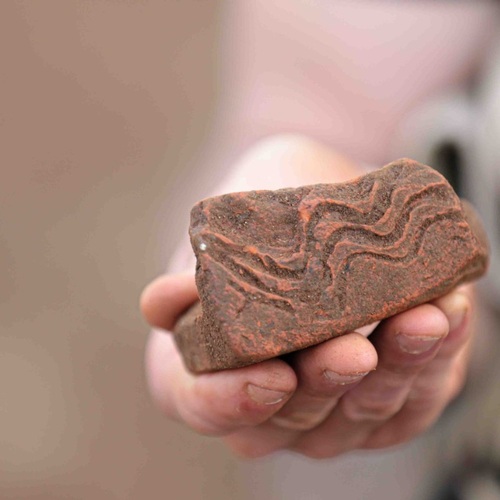
A detailed description of the major conservation and research project on the Romanesque frieze which runs across the facade of the cathedral, and is one of the most important collections of medieval sculpture in Europe. The article discusses the origins of the frieze, inserted from 1141 onwards across the earlier facade (late 11th century) and explains its artistic and thematic content. It then explains the major difficulties encountered in the conservation project as a result of atmospheric pollution and stonework decay and the issues of conservation in situ or moving to safer locations are debated. The last section deals with the important project, undertaken with the universities of Leicester and Loughborough, for the comprehensive recording on CD-ROM of images of the frieze and its conservation. The potential applications of this are outlined, and the technology involved in explained.
Local History from Spanish archives: a view from the Biscay coast Show more
By John K. Walton and Jenny Smith
Report on the present state of local history in Spain, looking in detail at San Sebastian, a centre for the study of the Basque culture. The article includes a review of available sources and compares them with British practices and resources. Many archive holdings remain in the control of local authorities and are shown to be extremely comprehensive, as are family papers. Particular emphasis has been placed by local government on raising public awareness of local and regional history, but records of voluntary organisations and commercial operations are much more difficult to locate.
The British Book Trade Index Show more
By Peter Isaac
Analysis, based on the 1851 census evidence, which is focussed on a computerised index of names and brief biographic detail of those who worked in the book trade and who started work before that year. It includes investigation not only of publishers, printers and booksellers, but also those who worked in ancillary trades and who supplied the industry, such as papermakers, auctioneers, pen and quill sellers, and ink-makers.
[Hide]